
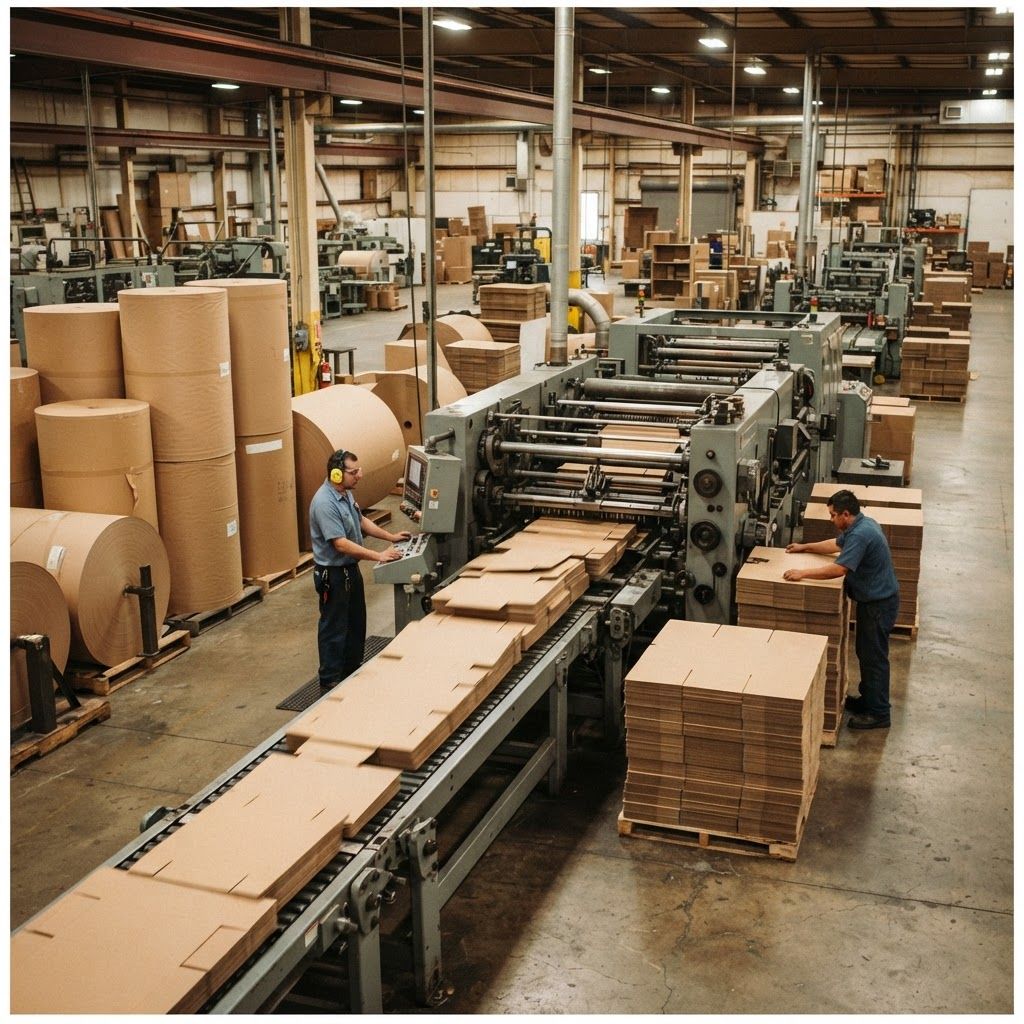
Paper manufacturing arrived in Western New York for the same reasons everything else did: water, power and transportation. Abundant hydroelectricity, Great Lakes shipping and proximity to Canadian pulp supplies made the Buffalo region a natural home for converting operations. While the industry has consolidated considerably, a substantial paper goods sector remains, and it is experiencing renewed demand as brands shift packaging away from plastic toward fiber.
Mills Versus Converters
The paper industry divides into two distinct activities, and confusing them leads to poor supplier decisions. Mills produce paper and paperboard from pulp, a capital-intensive business concentrated in relatively few locations. Converters transform that stock into finished goods such as boxes, cartons, bags and labels through cutting, printing, folding and gluing. Most Buffalo-area companies are converters, which is a strength for buyers because converters compete on design service, print quality and responsiveness rather than raw tonnage.
Ten Paper Goods Manufacturers to Know
Queen City Paper Company operates as a broad converter producing sheeted paper, industrial wraps and specialty rolls. Its value lies in inventory depth and slitting flexibility, allowing customers to order unusual widths and weights without committing to mill minimums.
Niagara Tissue and Towel manufactures away-from-home tissue products including toweling, napkins and wipers for institutional and commercial customers. Consistent supply matters enormously in this category, and the company serves distributors across the Northeast with reliable regional delivery.
Erie Corrugated Container produces corrugated boxes ranging from standard shipping cases to custom die-cut protective packaging. Structural design services and drop testing help customers reduce damage in transit, which typically saves far more than any per-box savings.
Buffalo Packaging Papers supplies protective and void-fill materials including kraft wrap, honeycomb and molded fiber inserts. Demand has grown sharply as e-commerce shippers replace plastic air pillows and foam with recyclable fiber alternatives.
Frontier Label and Print manufactures pressure-sensitive labels, tags and shrink sleeves. Short-run digital printing capability lets brands produce seasonal variants and regional versions economically, a genuine advantage for the region's growing food and beverage producers.
Lakeshore Folding Carton specializes in printed retail cartons for food, personal care and pharmaceutical customers. High-quality offset printing, specialty coatings and structural design support shelf presence, and the company handles regulated pharmaceutical packaging requirements.
Cataract Specialty Papers converts coated and barrier papers for food service and technical applications. Grease-resistant and moisture-barrier grades that avoid problematic chemistries have become a focus as regulations restrict certain fluorinated treatments.
Harbor Mills Paperboard produces recycled paperboard used in book covers, set-up boxes, partitions and game boards. Recycled content is inherent to the process, giving customers a credible sustainability story without reformulating.
Allentown Stationery Works manufactures notebooks, journals and printed stationery, serving both retail and corporate gift markets. Small-batch production and custom imprinting appeal to independent retailers and organizations wanting distinctive materials.
Lackawanna Recycled Fiber collects, sorts and bales recovered paper for mill feedstock. Recovery operations are the unglamorous foundation of the circular paper economy, and this company provides regional businesses with documented recycling streams that support their own reporting obligations.
Sustainability Is Driving Real Growth
Paper is enjoying a rare tailwind. Corporate plastic reduction commitments, extended producer responsibility legislation and consumer preference have all pushed packaging toward fiber. Paper recycles at high rates through well-established infrastructure, which gives it a credible position that alternative materials struggle to match.
That shift has created technical work. Replacing plastic requires barrier performance against grease and moisture, and converters are developing coating systems that deliver protection while remaining recyclable. Meanwhile e-commerce continues to reshape box design, with right-sizing algorithms and mailer formats reducing material use and dimensional shipping charges simultaneously. Digital printing has also matured, making short runs and versioned packaging economical for smaller brands.
Selecting a Paper Goods Supplier
Prioritize structural design capability. A converter who engineers a box to survive the actual distribution route prevents damage claims that dwarf packaging cost. Ask whether the supplier performs transit testing and will review current packaging for over-specification.
Understand minimum order quantities and setup costs, especially for printed work, since plate and die charges make small runs expensive unless the supplier offers digital alternatives. Verify sustainability claims with documentation such as chain-of-custody certification rather than accepting general assurances. Finally, assess lead time reliability, because packaging shortages stop production lines just as effectively as component shortages.
Controlling Total Packaging Cost
The cost of packaging extends well beyond the unit price of a box or label, and the most effective buyers evaluate the whole picture. Dimensional weight pricing from carriers means an oversized carton costs money on every single shipment, often exceeding any savings from buying a standard size in bulk. Right-sizing frequently pays for custom tooling within a few months.
Damage rates deserve equal attention, since a single damaged shipment consumes the margin from many successful ones once replacement product, freight and customer service time are counted. Labor is the third hidden cost, as packaging that assembles awkwardly slows a packing line measurably. A converter willing to analyze these factors alongside material cost typically identifies savings that a purely price-driven comparison would miss entirely.
Final Thoughts
Buffalo's paper goods manufacturers are well positioned for a market moving decisively toward fiber-based packaging. With strong converting capability, design services and regional delivery reach, they offer brands a practical path to more sustainable packaging without sacrificing performance or responsiveness.