
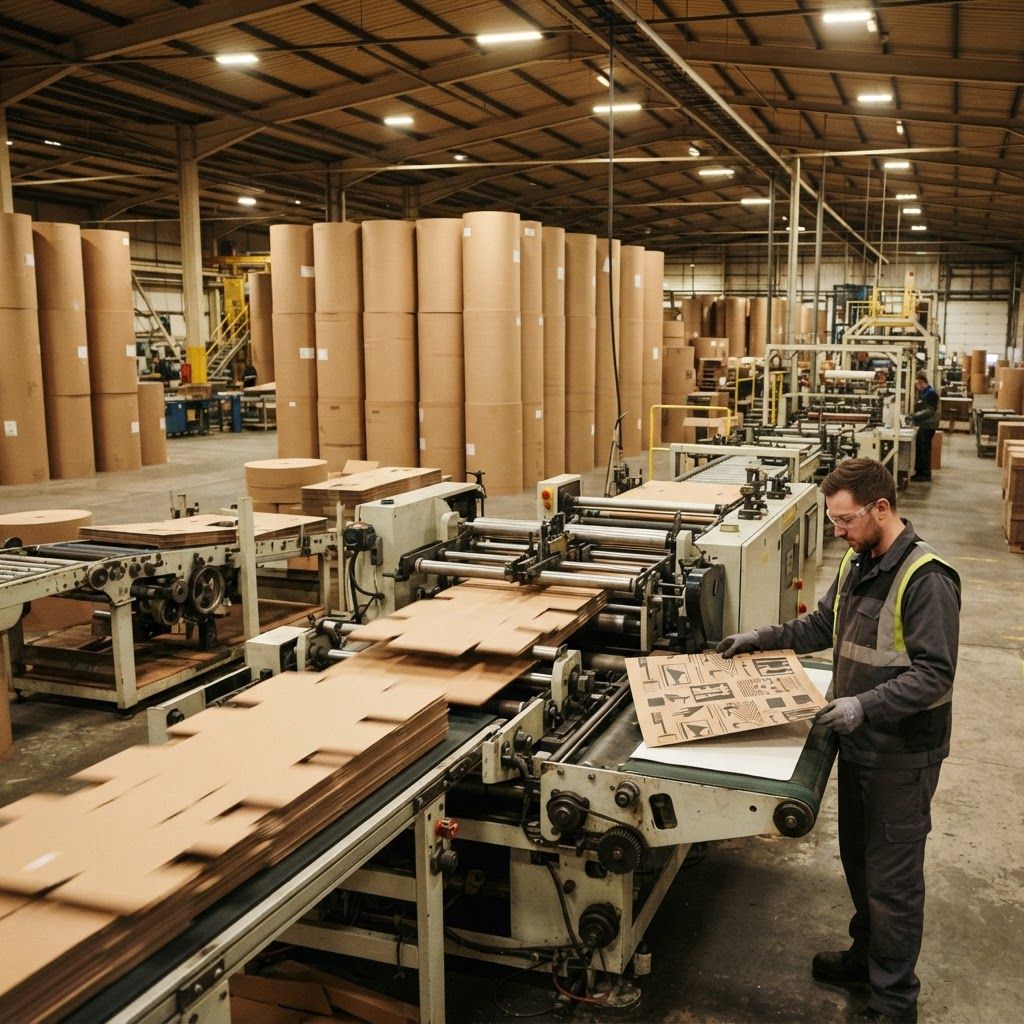
Why Paper Goods Manufacturing Still Thrives in St. Louis
Paper is one of the oldest continuously manufactured products in the St. Louis region, and it has survived every wave of digital disruption for a simple reason: physical goods still need to be protected, shipped, displayed, and consumed. The metro area's position on the Mississippi River, its density of Class I rail interchanges, and its access to I-70, I-44, I-55, and I-64 give converters an unusual freight advantage. Corrugated boxes and paper products are bulky and low in value density, which means transportation cost is often the single largest variable in delivered price. A converter that sits within a two-hour drive of a customer's distribution center can frequently beat a lower-cost plant several states away once freight is loaded in.
The region also benefits from a diversified customer base. Food and beverage processors, pharmaceutical and medical device firms, agricultural shippers, automotive suppliers, and a large e-commerce fulfillment footprint all consume paper packaging in volume. That mix insulates local converters from the boom-and-bust cycles that hurt plants tied to a single industry, and it gives them the experience to handle very different specification regimes in the same building.
The Main Segments of the Regional Paper Sector
Buyers often use "paper goods" as a single category, but the manufacturing base breaks into several distinct disciplines, each with its own equipment and economics.
Corrugated converting is the largest by tonnage. Sheet plants buy corrugated board from integrated mills and convert it into regular slotted containers, die-cut cartons, partitions, and heavy-duty shippers. Because they do not run their own corrugators, sheet plants can be nimble on short runs and unusual flute combinations.
Folding cartons and printed packaging serve retail-facing brands where graphics matter. These converters run offset or digital presses, apply coatings and foils, and hold much tighter registration and color tolerances than a typical shipping-box operation.
Tissue, towel, and away-from-home converting takes parent rolls and converts them into rolled towel, napkins, facial tissue, and dispenser-specific formats for janitorial distributors, healthcare systems, and food service operators.
Specialty and industrial paper goods covers everything from edge protectors, cores, and tubes to interleaving sheets, slip sheets, gummed tape, and protective void fill. These products are unglamorous but often mission-critical to a shipping line.
Commercial print and business paper goods rounds out the sector with forms, labels, envelopes, tags, and point-of-purchase displays, frequently produced in the same industrial corridors as packaging plants.
What Separates a Strong Converter From an Average One
The best paper goods manufacturers in the St. Louis area tend to compete on engineering and reliability rather than price alone. Several markers are worth checking directly.
Structural design capability. A converter with in-house packaging engineers and a sample table can redesign a box to use less board, reduce cube, or eliminate a secondary component entirely. That kind of redesign often saves more money than a per-unit price negotiation ever will.
Testing and validation. Look for compression testing, drop and vibration testing, and the ability to run transit simulations against recognized distribution standards. If a customer ships fragile or high-value goods, documented package performance is far more valuable than a supplier's assurance that the box "should hold up."
Quality and food safety certification. Converters serving food, beverage, pharmaceutical, and medical customers typically maintain a recognized food safety scheme along with documented sanitation, pest control, and traceability programs. For regulated buyers, an audit-ready plant is a hard requirement.
Chain-of-custody and recycled content documentation. Corporate sustainability reporting has made fiber sourcing a procurement question. Converters that can supply certified chain-of-custody paperwork and verified recycled content percentages remove a compliance burden from their customers.
Inventory and release programs. Many strong regional converters will manufacture to an annual forecast, warehouse finished goods, and release them weekly or daily. This smooths the buyer's cash flow and protects against board price volatility, but it requires the converter to have real warehouse capacity and disciplined inventory rotation.
Industry Trends Shaping Local Production
Several forces are reshaping how paper goods are made and bought in the region. The most visible is the continued substitution of paper for plastic. Fiber-based mailers, molded pulp trays, paper-based void fill, and curbside-recyclable cushioning have all gained share as brands respond to consumer and regulatory pressure. Converters that invested early in these formats now hold a genuine differentiator.
Digital printing has also changed the calculus for short runs and regional campaigns. A converter with digital capability can produce a few hundred branded shippers economically, something that was impractical when every job required plates and long make-readies. For subscription brands and direct-to-consumer sellers, that flexibility is decisive.
Automation is a third force. Automatic bundlers, robotic palletizers, and inline inspection systems reduce labor intensity in a sector that has struggled with hiring. Buyers touring a plant should watch how much manual handling happens between the press and the pallet, because that is often where cost and defect risk concentrate.
Finally, board supply itself has become more volatile. Containerboard pricing moves with mill capacity decisions and export demand, and converters with strong mill relationships or multi-mill sourcing weather those swings better than single-source shops.
How to Run a Sound Selection Process
Start by writing a specification that describes the product's actual performance requirement rather than copying the incumbent's part print. State the weight, dimensions, stacking height, storage environment, and shipping mode, then let converters propose a construction. This invites engineering value instead of a simple price match.
Request a plant tour and pay attention to housekeeping, board storage conditions, and whether operators can explain their own quality checks. Ask for a first-article sample and run it through a real shipment, not a lab-only evaluation. Confirm lead times in writing and ask what happens during a board shortage or a press breakdown, including whether the converter has redundant equipment or partner plants.
Finally, evaluate total delivered cost. Compare freight, minimum order quantities, warehousing terms, payment terms, and the labor cost of packing at your own line. A carton that assembles in four seconds instead of eleven can outperform a cheaper alternative many times over across a year of production.
Final Thoughts
The St. Louis paper goods sector is deep, competitive, and unusually well positioned geographically. Buyers who treat converters as engineering partners rather than commodity vendors consistently get better packaging at lower total cost. Focus on structural design talent, documented testing, certification status, and honest capacity conversations, and the shortlist of genuinely strong regional manufacturers becomes clear quickly.