
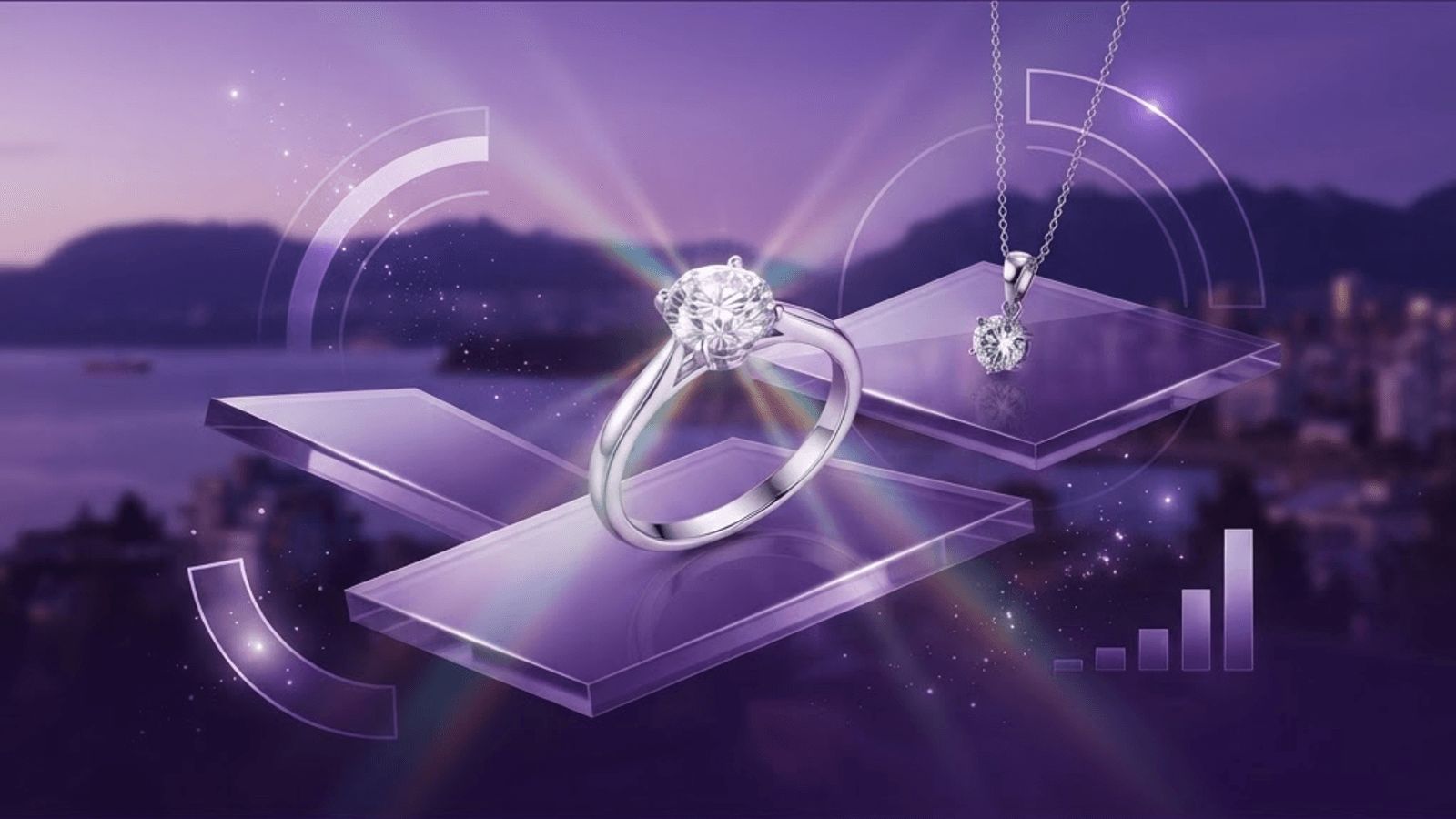
The Character of Vancouver's Jewelry Market
Vancouver's jewelry market reflects the city itself: internationally connected, design-conscious and unusually attentive to provenance. The city's diverse population brings varied traditions of gifting and adornment, from Chinese wedding gold customs to South Asian bridal sets to Western engagement ring conventions, and the retail landscape has adapted to serve all of them.
What most distinguishes the local market is the strength of its independent studio sector. Vancouver supports a genuine community of bench jewellers and designers working in small studios, often visible to customers, producing one-of-a-kind and made-to-order pieces. That coexists with established fine jewellery houses and authorized watch dealers, giving buyers a choice between the reassurance of an institution and the distinctiveness of a maker.
Ethical sourcing has also become a mainstream expectation rather than a specialist concern. Questions about diamond origin, recycled metal content and fair labour practices come up routinely in local showrooms, and the businesses that have thrived are those able to answer them specifically.
Ten Jewelry Brands and Houses Worth Knowing
Birks is the established Canadian fine jewellery house, with a long history and a recognizable design vocabulary rooted in Canadian motifs. Its Vancouver presence offers bridal collections, high jewellery and authorized service for prestige timepieces, and its appeal rests on institutional continuity, which matters to buyers making a purchase intended to outlast them.
Toby Pomeroy-influenced sustainable studios in the city represent a movement rather than a single brand, but the practice is worth naming: jewellers working exclusively in recycled precious metals and traceable stones, with published sourcing information. Vancouver has several such studios, and they have shifted expectations across the wider market.
Coast and Cedar Jewelry illustrates the local contemporary design studio at its best, producing minimal, architectural pieces in recycled gold and silver with an emphasis on wearability. Studios in this mould typically offer made-to-order production, which means less inventory waste and more customization than a stocked retail model allows.
Gastown Goldsmiths operates in the traditional bench-jeweller mode, with visible workshops where customers can see pieces being made, repaired and resized. The value here is technical: stone setting, hand engraving, restoration and the kind of repair work that requires genuine craft skill rather than component replacement.
Pacific Bridal Atelier concentrates on engagement and wedding jewellery, offering both curated collections and full custom design. Bridal specialists tend to be more patient educators than general retailers, because a first-time diamond buyer needs to understand what they are choosing rather than simply be sold to.
Hill and Harbour Fine Jewellery works in the coloured gemstone space, with sapphire, spinel, tourmaline and other stones that offer distinctiveness and often better value per carat than diamonds. Coloured stone selection is genuinely subjective, and the best dealers encourage customers to view stones in different lighting before deciding.
Yaletown Watch Company serves the timepiece market with authorized sales and, importantly, in-house servicing. Mechanical watch ownership is a long-term relationship requiring periodic maintenance, and access to competent local watchmakers matters more than most first-time buyers realize.
Salish Sea Silver represents the accessible design tier, producing sterling silver and gold-filled pieces inspired by coastal and marine forms at prices suited to everyday wear and gifting. This segment sustains much of the city's craft market and independent retail.
Mount Pleasant Jewelry Collective operates as a shared studio and retail space housing multiple independent designers. The collective model gives small makers retail presence they could not afford alone and gives customers unusual variety in one visit.
Northern Light Diamonds focuses on Canadian-origin diamonds with documented mine-to-market traceability, alongside lab-grown alternatives. Canadian diamonds carry a genuine provenance advantage, and for buyers whose primary concern is sourcing ethics rather than price, that documentation is the entire proposition.
Understanding Diamond Quality
Diamond grading rests on four attributes, and they do not contribute equally to appearance. Cut has the largest visual impact by a considerable margin, because it determines how the stone handles light. An excellently cut diamond with modest colour and clarity grades will generally look better than a poorly cut stone with superior grades, and this is where inexperienced buyers most often misallocate their budget.
Clarity refers to internal inclusions, and beyond a certain grade the differences are invisible without magnification. Paying for flawlessness that no one will ever see is a common and expensive mistake. Colour operates similarly, with the near-colourless range appearing white to the eye in most settings, particularly in yellow gold which masks slight warmth. Carat weight drives price steeply and non-linearly, with prices jumping at round numbers, so a stone slightly under a milestone weight often offers noticeably better value.
Insist on independent laboratory documentation for any significant diamond purchase, and understand that grading standards vary between laboratories. Ask which laboratory issued the report and be aware that some grade more strictly than others.
Lab-Grown Diamonds and Metal Choices
Lab-grown diamonds are chemically and optically identical to mined stones and are now a mainstream option in Vancouver showrooms. Their price has fallen substantially and continues to move, which has implications for resale value that buyers should consider honestly. For a customer whose priority is size and appearance for a given budget, they are compelling. For a customer thinking in terms of long-term value retention, natural stones have a longer track record.
Metal choice affects both appearance and durability. Platinum is dense, hypoallergenic and holds stones securely, developing a soft patina rather than losing material. White gold requires rhodium plating that needs periodic renewal. Yellow and rose gold need no plating and hide wear better. Higher gold purity means richer colour but softer metal, which matters for rings worn daily. Recycled gold is now widely available and is metallurgically identical to newly mined material.
Commissioning Custom Work
Custom jewellery is more accessible in Vancouver than in many cities because of the density of working studios. A sound commission process starts with a conversation about how the piece will be worn, not just how it should look, since daily-wear rings need different construction from occasional pieces. Expect to review sketches or computer renderings, and expect to approve a wax or printed model before casting for anything complex.
Ask for a written quotation that separates materials from labour, so you understand what changes if you adjust the stone. Establish a timeline with the understanding that good custom work takes weeks rather than days. Confirm what happens if you are unhappy with the result, since expectations differ between studios. And keep in mind that the jeweller's technical advice about setting security and metal thickness should generally outweigh aesthetic preference, because a beautiful ring that loses a stone is not a success.
Final Thoughts
Vancouver offers a jewellery market with genuine range, from institutional fine jewellery houses to independent benches where you can watch your own ring being made. The city's ethics-conscious culture has pushed sourcing transparency further here than in many markets, which benefits every buyer regardless of their priorities. Prioritize cut over the other diamond attributes, choose metals based on how the piece will actually be worn, ask specific questions about origin, and where possible buy from someone who can also service the piece a decade from now.