
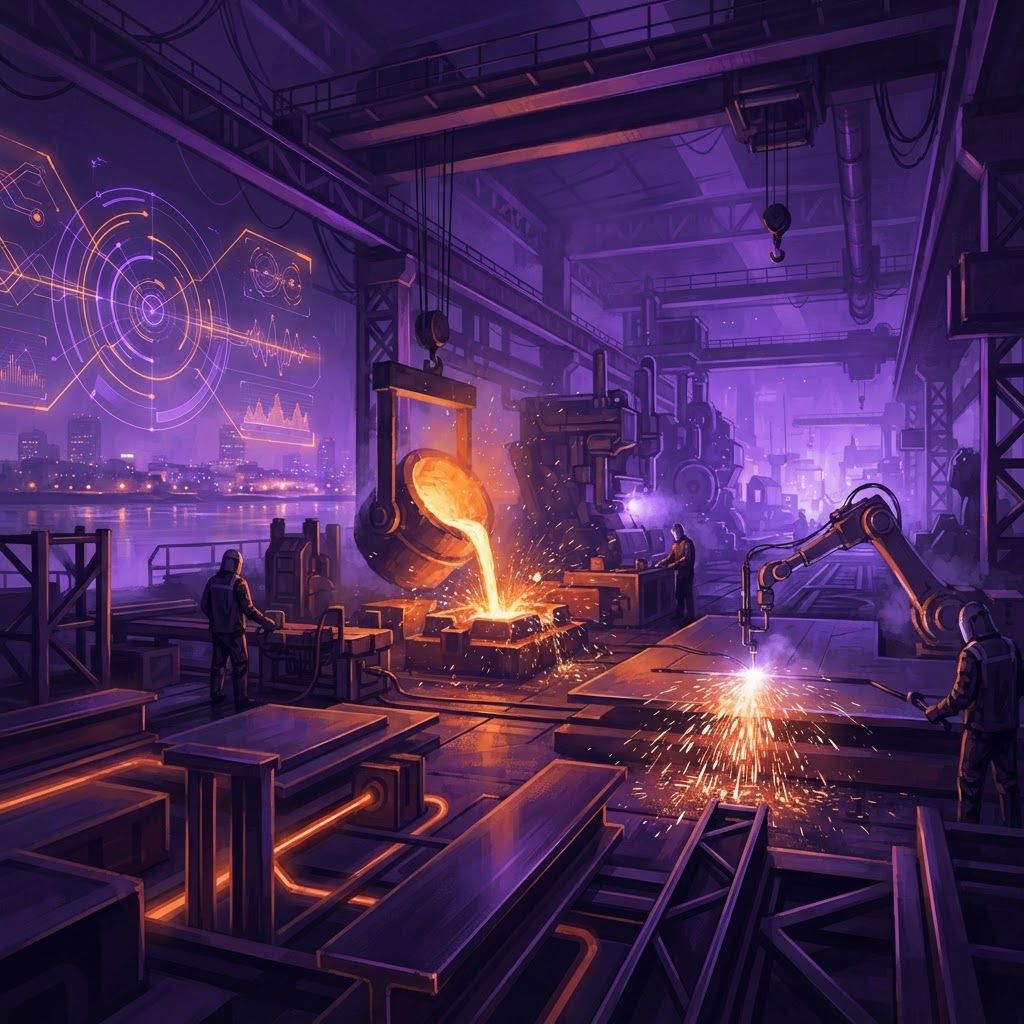
Metalworking in Central Arkansas
Metalworking is foundational to nearly everything else Arkansas manufactures. Machinery builders need weldments and machined components. Food processors need stainless fabrication. Construction needs structural steel and miscellaneous metals. Utilities need custom brackets, enclosures, and repair fabrication. Little Rock has developed a metalworking base broad enough to serve all of it, from single-part repair jobs to multi-ton structural packages.
The regional strength rests on a workforce with genuine welding and machining depth, supported by technical college programs that have trained Arkansas trades for generations. Add low facility and power costs, good freight access for heavy shipments, and a diversified industrial customer base, and you have conditions where both small job shops and larger fabricators can sustain themselves.
Understanding Metalworking Capabilities
The term metalworks covers distinct disciplines that require different equipment and different skills.
Structural steel fabrication produces beams, columns, joists, and connections for buildings and heavy structures, working to engineering drawings under code requirements. Miscellaneous and ornamental metals produce stairs, railings, ladders, platforms, and architectural elements. Sheet metal fabrication cuts, punches, forms, and welds thinner gauge material into enclosures, ductwork, panels, and housings. Precision machining removes material to produce components to tight tolerance on CNC mills, lathes, and machining centers. Plate and heavy fabrication produces tanks, hoppers, frames, and pressure components. Finishing operations include powder coating, painting, galvanizing, plating, and passivation.
A precision machine shop and a structural fabricator are entirely different businesses despite both being metalworkers. Sending a job to the wrong one produces either a very high quote or a poor result.
The Top 10 Metalworks Companies Serving Little Rock
1. Central Arkansas Structural Steel Fabricators. Structural fabricators serving the Little Rock construction market produce and erect steel framing for commercial, institutional, and industrial buildings. Certification to recognized fabrication standards, detailing capability, and coordination with erectors are the qualifying factors.
2. Precision CNC Machining Shops. Machine shops around the metro produce precision components in steel, stainless, aluminum, and engineered alloys to customer drawings. Multi-axis capability, coordinate measuring inspection, and material traceability separate serious shops from basic ones.
3. Stainless Steel and Sanitary Fabricators. Given Arkansas food processing scale, fabricators specializing in stainless sanitary work produce tanks, conveyors, hoppers, and platforms built to cleanable design standards. Weld finishing quality and passivation practice are critical, since poor welds harbor contamination.
4. Sheet Metal Fabrication Companies. Sheet metal shops produce enclosures, panels, brackets, and custom housings using laser or plasma cutting, press brake forming, and welding. Fast turnaround on prototype and low-volume work is their common strength.
5. Heavy Plate and Tank Fabricators. Fabricators working in heavy plate produce tanks, vessels, chutes, and structural weldments for industrial clients. Certified welding procedures and, where applicable, pressure vessel code compliance are mandatory.
6. Ornamental and Architectural Metal Shops. Architectural metal fabricators produce railings, stairs, gates, canopies, and decorative elements for Little Rock commercial and residential projects. This work blends structural compliance with visible finish quality, and the best shops handle both.
7. Industrial Welding and Field Repair Services. Mobile welding and field repair operations serve Arkansas plants, utilities, and contractors with on-site repair, structural modification, and emergency response. When a critical piece of equipment cracks, response speed determines the cost of the failure.
8. Metal Building Component Manufacturers. Producers of metal roofing panels, siding, purlins, and framing components support the substantial metal building market across Arkansas commercial and agricultural construction. Coating systems and panel profile options drive both durability and appearance.
9. Powder Coating and Metal Finishing Companies. Finishers serving the region provide powder coating, wet painting, and surface preparation. Surface preparation quality determines coating life far more than the coating chemistry, and reputable finishers document their pretreatment process.
10. Metal Service Centers and Distributors. Service centers stocking bar, plate, sheet, tube, and structural shapes supply fabricators and manufacturers, often with cut-to-length and processing services. Inventory breadth and processing capability reduce lead times for everyone downstream.
Trends in the Metalworking Sector
Automation has spread well beyond large shops, with fiber laser cutting, robotic welding cells, and automated material handling now appearing in mid-sized operations. The productivity gain is substantial, and shops that invested are winning work on both price and lead time. Digital workflow adoption is accelerating, with fabricators taking three-dimensional models directly into nesting and machine programming, reducing detailing errors.
Welder availability remains the industry structural constraint, driving both automation investment and increased employer involvement in training pipelines. Material price volatility in steel and aluminum continues to compress quote validity periods. And demand for domestic fabrication has strengthened where lead time reliability and quality documentation outweigh unit cost.
How to Qualify a Metalworks Partner
Verify welding certification specifically, including which procedures are qualified and whether individual welders hold current certifications for the processes and positions your job requires. Ask about inspection capability, including whether nondestructive testing is performed in-house or subcontracted. Confirm material traceability practice if your application requires certified material test reports.
Discuss capacity honestly. Ask what the shop largest recent job was and what its current backlog looks like, because a shop already at capacity will quote optimistically and deliver late. Review drawing and detailing capability, since fabricators who produce their own shop drawings catch design conflicts early. For structural work, confirm code compliance and applicable fabrication certification. Ask about finishing, whether it is in-house or outsourced, and how that affects schedule. And visit the shop, watching for organized material staging, fixture use, and evidence of in-process inspection rather than end-of-line sorting.
Final Thoughts
Metalworking in the Little Rock area offers genuine breadth, from precision machined components measured in thousandths to structural packages measured in tons. The companies above span structural fabrication, sanitary stainless work, precision machining, and finishing. Identify the correct discipline for your project, verify welding and inspection credentials directly, and assess realistic capacity before awarding work.