
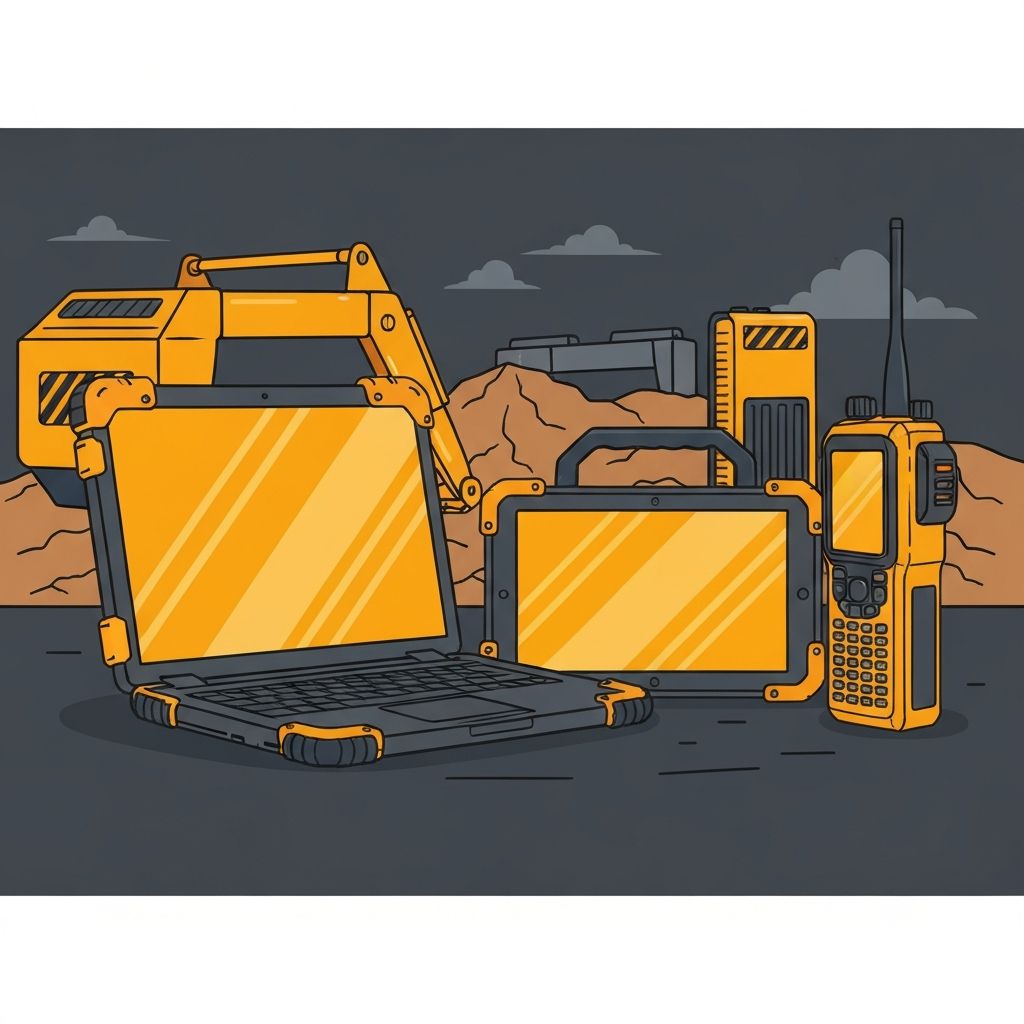
Field operations expose equipment to unpredictable conditions that standard hardware is not designed to withstand. Environmental stress, physical impact, and inconsistent infrastructure create failure points that can disrupt workflows and compromise safety. Rugged hardware is engineered to operate reliably under these constraints, making it a critical component in industries such as logistics, construction, utilities, and defense.
Reliability in these environments is not optional—it is a system requirement.
Environmental Resistance and Durability Standards
Field environments introduce variables such as dust, moisture, vibration, and temperature extremes. Consumer-grade devices are not built to tolerate these conditions, leading to frequent failures.
Rugged hardware is designed to meet specific durability standards, including ingress protection (IP ratings) and military-grade certifications. These standards define resistance to water, dust, and shock.
Devices must maintain functionality across:
- Wide temperature ranges without performance degradation
- High humidity or direct exposure to water
- Continuous vibration or mechanical stress
Environmental resistance ensures uninterrupted operation in conditions where failure is not acceptable.
Reliability in Mission-Critical Systems
Field operations often rely on real-time data and communication. Hardware failure can interrupt workflows, delay decision-making, and increase operational risk.
Systems such as a mission computer are designed for high-reliability environments where consistent performance is required. These systems integrate processing power with ruggedized enclosures, ensuring stable operation under stress.
Reliability is achieved through reinforced components, sealed designs, and redundancy in critical systems. This reduces the likelihood of unexpected downtime.
In mission-critical scenarios, hardware must perform without interruption.
Impact Resistance and Mechanical Protection
Physical impact is a common risk in field environments. Equipment may be dropped, subjected to pressure, or exposed to moving machinery.
Rugged devices use reinforced casings, shock-absorbing materials, and internal component stabilization to prevent damage.
Protection strategies include:
- Reinforced frames to absorb external force
- Internal mounting systems to secure sensitive components
- Durable materials that resist cracking or deformation
Mechanical protection extends the lifespan of hardware and reduces replacement frequency.
Consistent Performance Under Variable Conditions
Standard hardware often experiences performance fluctuations when exposed to environmental stress. Overheating, condensation, or dust accumulation can affect processing speed and reliability.
Rugged systems are designed to maintain consistent performance regardless of external conditions. Cooling systems, sealed enclosures, and optimized internal layouts prevent performance degradation.
Consistency is critical for tasks that require precise timing and accurate data processing.
Connectivity and Integration in Remote Locations
Field operations frequently occur in areas with limited infrastructure. Connectivity must be maintained despite weak signals or lack of stable networks.
Rugged hardware supports multiple communication interfaces, including cellular, satellite, and radio systems. This ensures that data can be transmitted reliably from remote locations.
Integration capabilities allow these devices to connect with broader operational systems, enabling real-time monitoring and coordination.
Reliable connectivity supports operational continuity.
Power Management and Energy Efficiency
Power availability is often limited in field environments. Devices must operate efficiently while maintaining performance.
Rugged hardware incorporates energy-efficient components and power management systems. Extended battery life and support for alternative power sources ensure continuous operation.
Power systems are designed to handle:
- Fluctuating voltage levels
- Limited charging opportunities
- Extended usage without interruption
Efficient power management reduces operational constraints.
Maintenance Reduction and Lifecycle Efficiency
Frequent equipment failure increases maintenance costs and disrupts operations. Rugged hardware reduces these issues by extending service intervals and minimizing breakdowns.
Durable construction and sealed components limit exposure to damaging elements. This reduces the need for repairs and replacements.
Lifecycle efficiency is improved through:
- Lower total cost of ownership
- Reduced downtime for maintenance
- Extended usability in harsh environments
Long-term reliability supports operational efficiency.
Data Integrity and System Security
Field operations often involve sensitive or critical data. Hardware failure or environmental damage can lead to data loss or corruption.
Rugged systems are designed to protect data through stable storage solutions and secure enclosures. Some systems include redundancy features to prevent data loss during failures.
Maintaining data integrity ensures that operations remain accurate and reliable.
Ergonomics and Usability in Field Conditions
Field equipment must be usable under challenging conditions. This includes operation with gloves, visibility in bright sunlight, and ease of handling in confined spaces.
Rugged devices are designed with:
- High-visibility displays for outdoor use
- Physical controls that can be operated with protective gear
- Compact and durable form factors for mobility
Usability ensures that operators can perform tasks efficiently without compromising safety.
Adaptability Across Multiple Industries
Rugged hardware is used across a wide range of industries. Each sector has unique requirements, but the need for durability and reliability remains consistent.
Applications include:
- Construction sites with heavy equipment and debris
- Logistics operations requiring constant movement
- Utility maintenance in outdoor environments
Adaptability allows rugged systems to meet diverse operational needs.
Rugged hardware is essential in field operations because it ensures reliability, durability, and consistent performance under challenging conditions. From environmental resistance to secure data handling, these systems are designed to operate where standard devices fail. By reducing downtime, improving efficiency, and maintaining operational continuity, rugged hardware becomes a critical component of any field-based system.