
When people think of Pittsburgh, images of steel mills, iconic yellow bridges, and passionate sports fans often come to mind. But beyond its industrial heritage and football pride, Pittsburgh has carved out a distinct culinary identity that reflects its immigrant roots, working-class grit, and modern reinvention. The city’s food culture is hearty, inventive, and deeply nostalgic—yet surprisingly diverse and forward-thinking.
So, what food is Pittsburgh known for? The answer goes far beyond a single dish. From legendary sandwiches stacked with fries to comforting pierogies and sweet treats tied to local traditions, Pittsburgh’s cuisine tells the story of the people who built and reshaped the city.
Below is a deep dive into the most iconic foods that define Pittsburgh’s culinary landscape.
The Primanti Bros. Sandwich: Pittsburgh’s Most Famous Bite
No discussion of Pittsburgh food is complete without mentioning Primanti Bros..
What Makes It Unique?
The classic Primanti sandwich isn’t just a sandwich—it’s a stacked monument to working-class ingenuity. What sets it apart?
- Grilled Italian bread
- Your choice of meat (such as pastrami, capicola, or corned beef)
- Melted provolone cheese
- Tangy coleslaw
- Fresh tomato slices
- French fries placed directly inside the sandwich
Yes, the fries go inside.
The Origin Story
The sandwich was born in the 1930s in Pittsburgh’s Strip District, originally created to feed truck drivers and night-shift workers who needed a quick, all-in-one meal. Putting the fries and slaw inside meant fewer dishes and faster service—practicality turned into tradition.
Today, this sandwich symbolizes Pittsburgh’s no-nonsense attitude: filling, bold, and unapologetically over-the-top.
Pierogies: A Taste of Eastern European Heritage
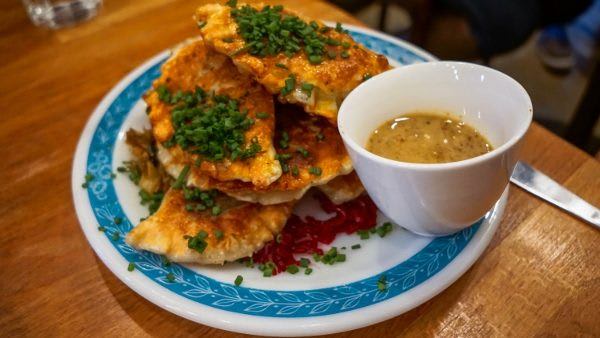
Pittsburgh’s large Eastern European population—especially Polish, Slovak, and Ukrainian immigrants—played a major role in shaping the city’s food culture. That’s why pierogies are a staple.
What Are Pierogies?
Pierogies are dumplings typically filled with:
- Mashed potatoes and cheese
- Sauerkraut
- Ground meat
- Sweet fillings like fruit
They are boiled and often pan-fried in butter, then topped with sautéed onions or sour cream.
Why They Matter in Pittsburgh
In Pittsburgh, pierogies are more than just food—they’re part of the city’s identity. They’re featured at church festivals, family gatherings, and even sporting events.
The city’s baseball team, the Pittsburgh Pirates, famously hosts the “Great Pierogy Race” during home games, where giant pierogy mascots race around the field. That’s how deeply embedded pierogies are in local culture.
Pittsburgh Salad: Fries on Everything
If you thought fries inside a sandwich were bold, wait until you discover the Pittsburgh salad.
What Is a Pittsburgh Salad?
It’s a fresh green salad topped with grilled steak or chicken—and a generous handful of French fries on top.
Like many local dishes, this combination is rooted in practicality and indulgence. Fries are not just a side in Pittsburgh; they are an essential component of many meals.
This fry-forward philosophy reflects the city’s hearty, blue-collar appetite. Meals here are meant to satisfy.
Chipped Chopped Ham: A Local Lunch Staple
Another uniquely Pittsburgh creation is chipped chopped ham.
What Is It?
Unlike regular sliced ham, chipped chopped ham is shaved extremely thin, almost into tiny ribbons. It’s usually served warm on a bun with barbecue sauce.
The product became popular thanks to Isaly's, a regional dairy chain that popularized the style.
Why It’s Special
For many Pittsburghers, chipped chopped ham sandwiches are a nostalgic comfort food, often served at birthday parties, school lunches, and family gatherings.
Pittsburgh-Style Steak: Black and Blue
When ordering steak in Pittsburgh, you might hear the term “Pittsburgh rare” or “black and blue.”
What Does It Mean?
A Pittsburgh-style steak is:
- Charred heavily on the outside
- Rare and cool on the inside
Legend says the style originated in steel mills, where workers would slap steaks onto hot metal surfaces for a quick sear.
Whether myth or fact, the cooking method aligns perfectly with Pittsburgh’s industrial heritage.
Klondike Bars: A Sweet Legacy
Pittsburgh isn’t only known for savory foods. The iconic ice cream treat known as the Klondike Bar has roots in the city.
The Klondike Bar was originally produced by Isaly’s in Pittsburgh in the early 20th century. While production eventually moved elsewhere, the dessert’s connection to the city remains part of local pride.
For many residents, it represents a nostalgic piece of Pittsburgh’s food history.
Burnt Almond Torte: A Beloved Bakery Classic
If there is one dessert Pittsburghers fiercely defend, it’s the Burnt Almond Torte.
Where It Became Famous
This cake became legendary thanks to Prantl's Bakery.
What’s Inside?
- Light sponge cake
- Rich custard filling
- Buttercream frosting
- Toasted sugared almonds coating the outside
The combination of creamy and crunchy textures makes it unforgettable. Locals often serve it at weddings, holidays, and milestone celebrations.
Heinz Ketchup: The Global Brand with Local Roots
Perhaps the most globally recognized food product associated with Pittsburgh is Heinz.
Founded in 1869 by Henry John Heinz, the company became synonymous with ketchup worldwide. Even today, the iconic Heinz factory building remains a defining feature of the city skyline.
Pittsburgh’s deep loyalty to Heinz ketchup is no joke. Some restaurants have reportedly faced backlash for serving other brands.
The Strip District Food Culture
The Strip District is Pittsburgh’s culinary heartbeat.
Originally an industrial and warehouse area, it has evolved into a vibrant market neighborhood filled with:
- Italian grocers
- Polish delis
- Seafood markets
- Coffee roasters
- Street food vendors
Walking through the Strip District offers a living history lesson in the city’s immigrant influences. The food here represents generations of traditions passed down through families.
Fish Sandwiches: A Lenten Tradition
Due to Pittsburgh’s strong Catholic population, fish sandwiches became popular, especially during Lent.
What Makes Them Different?
Pittsburgh fish sandwiches are often:
- Enormous in size
- Served on thick Italian bread
- Overflowing beyond the bun
They’re typically topped with lettuce, tomato, and tartar sauce. Many local bars and churches serve them on Fridays during Lent, making them a seasonal staple.
Italian Influence: Bread and Sausage
Italian immigrants also left a major mark on Pittsburgh cuisine.
You’ll find:
- Fresh Italian bread baked daily
- Sausage and peppers at festivals
- Homemade pasta dishes in family-owned restaurants
Neighborhoods like Bloomfield (often called Pittsburgh’s Little Italy) showcase this enduring culinary legacy.
Modern Pittsburgh: A Culinary Renaissance
While traditional comfort food defines much of Pittsburgh’s reputation, the city’s food scene has evolved dramatically in recent decades.
Young chefs have transformed former warehouses and industrial spaces into innovative restaurants that blend:
- Farm-to-table cooking
- International flavors
- Craft breweries
- Artisanal bakeries
The city now balances tradition with experimentation, honoring its past while embracing global trends.
Craft Beer and Local Brews
Pittsburgh’s beer culture has deep roots. While national brands once dominated, today the city boasts a thriving craft brewery scene.
Local breweries experiment with:
- IPAs
- Stouts
- Seasonal ales
- Barrel-aged creations
These breweries often serve as community gathering spaces, reinforcing Pittsburgh’s strong neighborhood identity.
Why Fries Are Everywhere in Pittsburgh
One of the most curious traits of Pittsburgh cuisine is its obsession with fries.
You’ll find fries:
- Inside sandwiches
- On top of salads
- Alongside nearly every meal
This fry-forward approach reflects both practicality and indulgence. Historically, heavy meals were necessary for steelworkers and laborers burning thousands of calories daily.
Though the steel industry has declined, the food traditions remain.
Comfort Food as Cultural Identity
Pittsburgh food isn’t delicate or minimalist. It’s:
- Filling
- Generous
- Unpretentious
These qualities mirror the character of the city itself.
The food culture grew out of working-class communities where meals were meant to fuel long shifts and bring families together. Recipes were passed down through generations, shaped by Eastern European, Italian, and German influences.
Sporting Events and Food Traditions
Food and sports go hand in hand in Pittsburgh.
At games for teams like the Pittsburgh Steelers and the Pittsburgh Pirates, you’ll find:
- Pierogies
- Sausage sandwiches
- Loaded fries
- Giant soft pretzels
These stadium foods reinforce the city’s signature flavors and traditions.
The Spirit of Pittsburgh on a Plate
Ultimately, what food is Pittsburgh known for? It’s known for bold combinations, immigrant traditions, and hearty comfort dishes that reflect its industrial past.
From the stacked sandwiches at Primanti Bros. to buttery pierogies and iconic Heinz ketchup, Pittsburgh cuisine is deeply rooted in history while still evolving.
The city’s culinary story is one of adaptation. Immigrants brought recipes from across Europe. Steelworkers demanded filling meals. Entrepreneurs turned simple ideas into iconic brands. Modern chefs reimagined old classics.
Together, these influences created a food culture unlike any other.
Final Thoughts
Pittsburgh may not always be the first city that comes to mind when discussing America’s great food destinations—but it absolutely deserves recognition.
The next time you visit, don’t just admire the skyline or cheer at a football game. Order a sandwich stuffed with fries. Try a pierogy. Taste a slice of Burnt Almond Torte.
Because in Pittsburgh, food isn’t just nourishment—it’s history, identity, and pride served on a plate.