
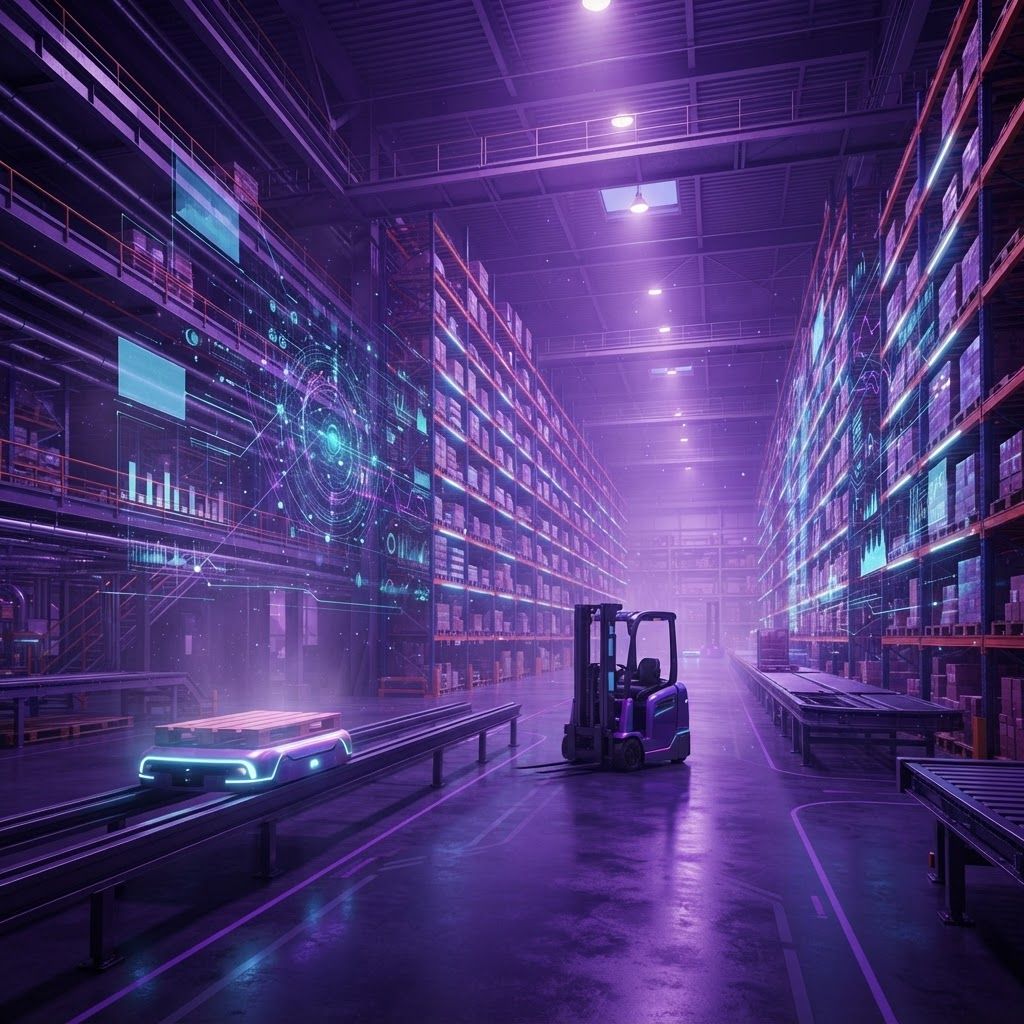
Why Warehousing Concentrates Around Norfolk
The warehousing market spanning Norfolk, Chesapeake and Suffolk exists because of a specific combination of advantages. The Port of Virginia handles very large container volumes through deep-water terminals, and imported cargo needs somewhere to go within a short drayage radius. Two Class I railroads provide inland distribution capability. The interstate network reaches a substantial share of the eastern United States population within a day's truck drive. Land in the corridor west and south of the city has been available at costs well below the major northeastern markets. And the region's labour market, supported by a steady flow of transitioning military personnel, has the skills that distribution operations require.
The result is a deep and competitive market spanning basic bulk storage through to highly automated fulfilment operations, bonded and foreign trade zone facilities, and specialised temperature-controlled and hazardous materials capability.
Understanding Warehousing Models
Public warehousing offers shared space priced per pallet or per square foot with handling charges, suiting variable volumes and shorter commitments. Contract warehousing dedicates space, equipment and labour to a single client under a multi-year agreement, offering customisation and cost predictability at the price of commitment. Third party logistics warehousing bundles storage with transport management and value-added services. Fulfilment operations focus specifically on e-commerce order processing. Bonded and foreign trade zone facilities provide duty deferral advantages. And self-storage and flexible small-scale space serves small businesses and overflow needs.
1. Port-Adjacent Distribution Warehouse Operators
Facilities located within short drayage distance of the terminals command a premium for good reason: every mile of drayage adds cost, and proximity reduces exposure to container detention charges when appointments slip. Operators in this zone specialise in container devanning, palletisation, cross-docking and rapid transloading between ocean containers and domestic trailers. For importers whose primary concern is moving cargo out of the port efficiently, this proximity advantage often outweighs the higher rent.
2. Large-Scale Contract Logistics Providers
The major global logistics companies operate substantial contract warehouse facilities in the corridor, serving retailers, manufacturers and consumer goods companies under dedicated agreements. Their strengths are mature warehouse management technology, established operating procedures, capacity to scale labour during peak seasons, and the financial ability to invest in automation and build-to-suit facilities. For clients with sufficient volume, this model delivers cost predictability and operational discipline that smaller operators struggle to match.
3. Regional Public Warehousing Companies
Independent regional operators provide public warehouse space across the Norfolk, Chesapeake and Suffolk area and typically serve mid-sized shippers better than national providers do. Their advantages are flexibility on non-standard handling requirements, shorter commitment terms, direct access to decision-makers, and competitive per-pallet pricing. For a company entering the East Coast market or testing a distribution strategy before committing to dedicated space, public warehousing is usually the right starting point.
4. Foreign Trade Zone and Bonded Warehouse Operators
Duty treatment can dominate the economics of an import operation. Foreign trade zone facilities allow goods to be admitted without immediate duty payment, stored, manipulated, assembled, inspected and either entered for consumption when needed or re-exported without duty. Bonded warehouses provide similar deferral within a different regulatory framework. For importers with duty-heavy product lines, significant re-export volumes or uncertain demand timing, these facilities generate cash flow benefits that can exceed the entire warehousing cost.
5. Cold Storage and Temperature-Controlled Facilities
Refrigerated and frozen warehouse capacity serves the region's food distribution networks, agricultural exports moving through the port, and pharmaceutical and medical device distribution. These facilities involve substantially higher capital and energy costs than ambient warehousing, and pricing reflects that. Selection criteria include temperature zone availability and stability, monitoring and alarm systems with data logging, backup power capability, food safety certification, and for pharmaceutical clients, quality management systems meeting good distribution practice standards.
6. E-commerce Fulfilment Centres
Fulfilment operations differ from traditional warehousing in almost every respect: inventory is stored for picking individual units rather than moving pallets, labour intensity is far higher, and technology integration with sales channels is essential. Providers in the region offer receiving, storage, pick and pack, carrier rate shopping, branded packaging and returns processing, with integration into the major e-commerce platforms and marketplaces. Evaluate on order accuracy, same-day cut-off time, returns turnaround, and the transparency of the fee structure, which combines storage, receiving, pick and pack charges in ways that make comparison genuinely difficult.
7. Automated and Robotic Warehouse Operators
Automation is advancing in the corridor, driven by labour availability constraints and the accuracy demands of e-commerce. Implementations range from conveyor and sortation systems and automated storage and retrieval, through goods-to-person robotics, to autonomous mobile robots supporting picking operations. For clients, automation typically delivers higher accuracy, better space utilisation and more consistent throughput, though the fixed cost base means it suits stable, predictable volumes better than highly variable ones.
8. Hazardous Materials and Specialised Storage Providers
Chemicals, flammables, aerosols, batteries and other regulated materials require facilities with appropriate permitting, fire suppression engineering, containment and segregation, and trained personnel. Providers with this capability serve the region's industrial, marine coatings, shipyard supply and chemical distribution sectors. Related specialised capability includes high-value secure storage with enhanced access control, and bulk liquid tank storage. Verifying permits and inspection history is essential in this segment.
9. Transloading and Rail-Served Warehouse Facilities
Facilities with direct rail access allow commodities and containers to move inland by rail for the long haul and transfer to truck for regional delivery, extending rail economics to shippers without their own sidings. Rail-served warehousing in the corridor handles bulk commodities, forest products, metals, agricultural goods and containerised freight. For high-volume shippers moving freight over long distances, a rail-served facility can reduce total transport cost substantially compared with truck-only distribution.
10. Flexible, Small-Scale and Overflow Storage Providers
Not every requirement justifies a distribution centre. Small businesses, contractors, e-commerce sellers in early growth and companies with seasonal overflow need modest amounts of space on short terms. Providers serving this segment offer small warehouse units, flexible pallet storage with month-to-month terms, and commercial self-storage with loading dock access. Costs per unit of space are higher than bulk warehousing, but the absence of commitment and minimum volume requirements makes this the practical choice for smaller operations.
How to Evaluate a Warehouse Provider
Visit the facility. Photographs and specifications do not reveal housekeeping standards, racking condition, dock congestion, staff engagement or how organised the operation actually is, and these predict service quality better than any document. Beyond the visit, examine specifications carefully: clear height, column spacing, dock door count and configuration, floor loading capacity, sprinkler classification and rail access if relevant. Assess the warehouse management system and how it will integrate with your systems, and clarify exactly what visibility and reporting you will receive. Scrutinise the fee structure line by line, including storage, receiving, handling, order processing, pallet charges, minimum monthly commitments and accessorials, since headline rates rarely reflect total cost. Confirm insurance, certifications and security arrangements. And ask directly how peak season labour is sourced and what happened during the last peak.
Trends in the Warehousing Market
Automation adoption continues accelerating, particularly in fulfilment operations facing labour constraints. Building specifications keep rising, with modern facilities offering greater clear height, more dock doors per square foot and larger trailer courts than the previous generation. Sustainability features including rooftop solar, efficient lighting, electric vehicle charging and improved building envelopes are becoming standard in new construction. Port capacity growth continues to drive demand in the corridor. And flexible, on-demand warehousing platforms that let shippers buy space and handling by the pallet on short terms have made the market considerably more accessible to smaller operations.
Final Thoughts
The Norfolk warehousing corridor offers a rare combination of deep-water port access, dual rail service, strong highway connectivity and land costs well below the northeastern markets. Match the warehousing model to your actual volume and commitment appetite, prioritise port proximity if drayage cost dominates your economics, investigate trade zone treatment if your products carry meaningful duty, and always visit the building before signing.