
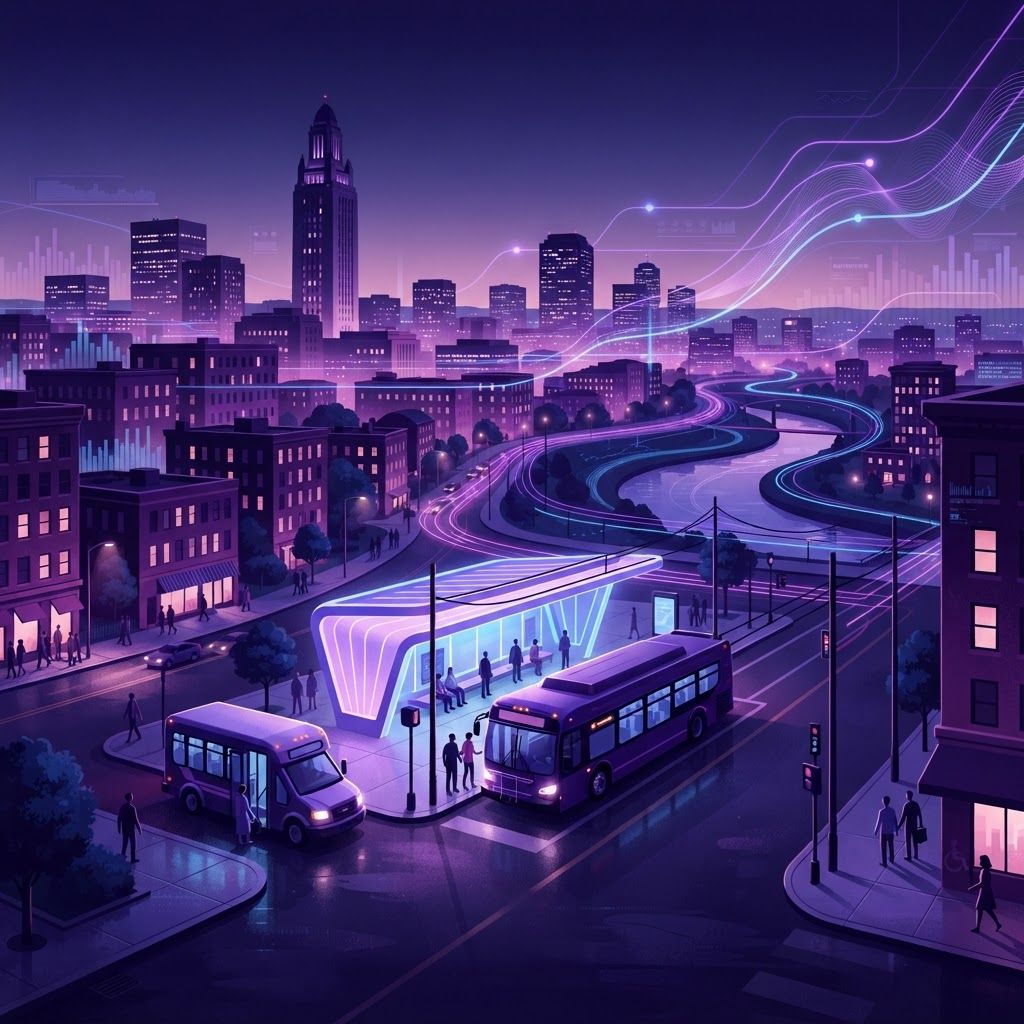
Transit in a Car-Centered City
Baton Rouge developed around the automobile, and its land use patterns reflect that. Wide arterials, dispersed subdivisions, and employment centers scattered from downtown to the industrial river corridor to suburban office parks all make transit planning difficult. Yet demand is real and growing. Roughly a fifth of local households have limited vehicle access, students form a large captive ridership base, and worsening congestion on I-10 has made transit and shared mobility increasingly attractive even to those who own cars.
The result is a transit ecosystem that is more varied than most residents realize. Fixed-route buses form the backbone, but campus circulators, medical district shuttles, paratransit for riders with disabilities, vanpool programs for plant workers, and app-based microtransit all fill important gaps. Knowing what exists is the first step to using it well.
What Makes Transit Service Effective
Frequency matters more than almost anything else. A route running every fifteen minutes functions as spontaneous mobility, while one running hourly requires planning around a schedule and punishes any missed connection. Span of service is equally important for shift workers, since a route that stops at six in the evening is useless to someone leaving a plant at eleven. Beyond that, riders judge transit on reliability, cleanliness, safety at stops, real-time information quality, and how easily fares can be paid.
The Top 10 Public Transit Services in Baton Rouge
1. Capital Area Transit System is the region's primary public transit agency, operating the fixed-route bus network across Baton Rouge and Baker with connections to major employment, retail, and medical destinations. Its downtown transit center, real-time tracking application, and mobile fare payment have modernized the rider experience considerably.
2. Capital Area Transit System paratransit service provides origin-to-destination trips for riders whose disabilities prevent use of fixed-route buses. Certified riders schedule trips in advance, and the service is essential infrastructure for medical appointments, employment, and independent living.
3. LSU Tiger Trails operates campus and off-campus shuttle routes serving Louisiana State University students, faculty, and staff. With high frequency during academic terms and coverage of nearby apartment corridors, it is among the most heavily used transit services in the entire parish.
4. Southern University shuttle service connects campus housing, academic buildings, and nearby community destinations for students at Southern University and A&M College. It reduces parking pressure on campus and provides genuine mobility for students without vehicles.
5. Baton Rouge Community College shuttle links campus locations and nearby transit connections, helping commuter students reach classes without depending on a car. Coordination with the broader bus network extends its practical reach.
6. Capital Area Transit System Downtown Circulator serves the state government complex, courthouse district, and downtown business core with short-headway service. For state employees and visitors, it functions as a practical alternative to moving a car between meetings.
7. Louisiana Department of Transportation vanpool and rideshare programs support commuter groups traveling from outlying parishes into Baton Rouge employment centers. Vanpooling is often the most cost-effective option for workers commuting thirty or more miles each way.
8. Ascension Parish Transit provides demand-response service in the fast-growing suburbs south of Baton Rouge, connecting residents in Gonzales, Prairieville, and surrounding communities to essential destinations. Growth in this corridor has made suburban transit a live policy issue.
9. Livingston Parish Council on Aging transportation delivers scheduled rides for older adults and residents with medical needs east of the city. Services of this type quietly prevent isolation and missed medical care for thousands of residents.
10. Regional microtransit and on-demand shuttle pilots represent the newest layer, using smaller vehicles dispatched through mobile applications to serve low-density areas where fixed routes are inefficient. Early results in comparable cities suggest microtransit works best as a feeder to high-frequency trunk routes rather than as a standalone system.
Trends in Regional Transit
Bus rapid transit planning has been a persistent theme in Baton Rouge, with corridor studies exploring dedicated lanes and signal priority along major arterials. The appeal is straightforward: dedicated running way is the only way to make bus travel time competitive with driving during peak congestion. Fleet transition is another trend, as agencies evaluate compressed natural gas and battery-electric buses to cut fuel cost and emissions.
Technology integration is progressing steadily. Mobile ticketing, real-time arrival prediction, and open data feeds that populate mapping applications have all improved rider confidence. The persistent regional conversation about passenger rail between Baton Rouge and New Orleans also shapes long-term expectations, since a functioning intercity link would fundamentally change commuting patterns along the corridor.
Making Transit Work for You
Plan trips using real-time tools rather than printed schedules, since traffic variability affects arrival times significantly. Learn the transfer points, because most useful trips in Baton Rouge involve one connection and knowing the timed transfer windows prevents long waits. If you are a student, verify whether your institution's identification serves as a transit pass, as many do at no additional charge.
Employers can improve outcomes meaningfully by subsidizing transit passes, supporting vanpool formation, and adjusting shift start times to align with service spans. For riders with disabilities, applying for paratransit certification well before the service is needed avoids gaps, since eligibility review takes time. Residents who want better service should also engage with agency public comment periods, where route restructuring decisions are genuinely influenced by rider input.
Final Thoughts
Public transit in Baton Rouge is a work in progress, but it is a functional and improving system rather than a token one. The combination of a modernizing bus network, high-quality campus shuttles, suburban demand-response service, and emerging microtransit gives residents real options. Continued investment in frequency and dedicated corridors is what would move the system from useful to genuinely competitive with driving.