
Why Warehousing Clusters Around Mobile
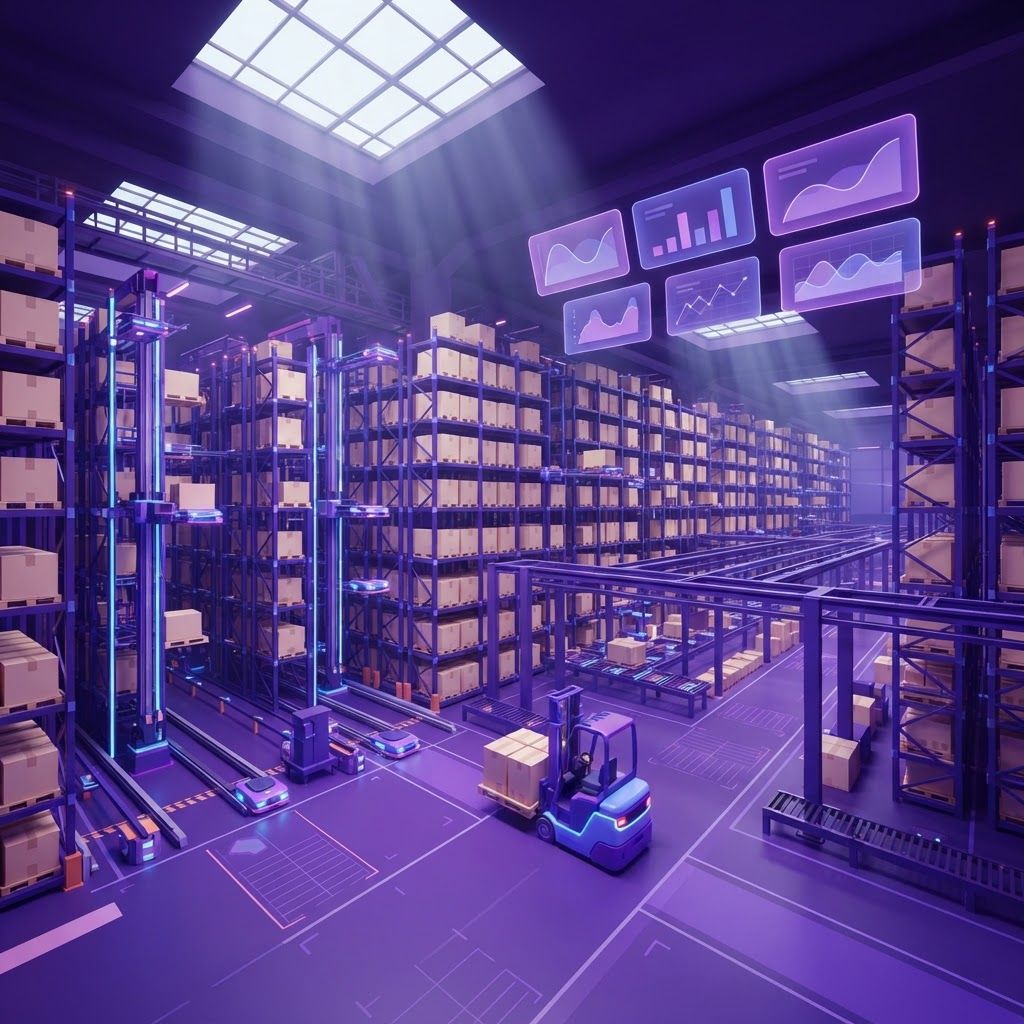
Warehousing follows freight, and Mobile sits at an unusually strong freight intersection. Containers arriving at the port need somewhere to be unloaded, sorted and staged before onward movement. Manufacturers require component storage close to production. Distributors serving the Gulf South need regional inventory positions to meet delivery commitments. E-commerce fulfilment demands proximity to both inbound transport and outbound parcel networks. The result is a warehousing sector spanning basic bulk storage through to sophisticated automated fulfilment, with a particularly strong transload and cross-dock segment driven by port activity.
Understanding Warehouse Service Types
The category covers several distinct offerings. Public warehousing rents space and handling on a shared basis, charged per pallet or square foot. Contract warehousing dedicates space and labour to a single client under a longer agreement. Bonded warehousing stores imported goods before duty payment, valuable for importers managing cash flow. Foreign trade zone facilities offer duty deferral and other customs advantages. Cross-dock operations transfer freight between vehicles with minimal storage. Transloading shifts cargo between marine containers and domestic trailers or railcars. Fulfilment centres pick, pack and ship individual customer orders. Cold storage maintains temperature-controlled environments for food, pharmaceuticals and chemicals.
The Top 10 Warehousing Companies Serving Mobile
Averitt Distribution and Fulfilment combines warehousing with its transport network, allowing clients to manage storage and outbound freight through a single provider, which simplifies accountability when service issues arise.
Cooper Marine and Timberlands operates terminal and warehousing facilities connected to marine and inland waterway operations, particularly suited to forest products, steel and bulk commodities moving through the port complex.
Gulf Coast Distribution Centers represents the regional public warehousing tier, offering flexible pallet storage, cross-docking and value-added services for businesses whose volumes fluctuate seasonally.
Port City Warehousing and Transload focuses on the container transload function, unloading marine boxes into domestic equipment to avoid detention charges and improve inland transport economics for importers.
Ryder Supply Chain Solutions delivers dedicated contract warehousing alongside transport management, appealing to manufacturers who want a managed operation without capital investment in facilities and equipment.
UPS Supply Chain Solutions provides distribution and fulfilment capability integrated with parcel and freight networks, a strong fit for e-commerce businesses needing rapid outbound shipping.
Kuehne and Nagel Contract Logistics supports industrial and aerospace clients with specialised warehousing including component kitting, sequencing and quality inspection, services that go well beyond simple storage.
Delta Cold Storage Services addresses the temperature-controlled segment, handling seafood, poultry, produce and pharmaceutical products that require validated refrigerated environments and continuous monitoring.
Azalea City Fulfilment serves smaller e-commerce and direct-to-consumer brands with pick and pack services, inventory management and returns processing, filling a gap that larger providers often overlook.
Alabama Foreign Trade Zone Operations rounds out the list, offering duty deferral and customs advantages for importers and manufacturers whose products enter and leave the country, a meaningful cash flow benefit for high-value goods.
How to Select a Warehouse Partner
Location is the first filter, and it should be assessed against your actual freight flows rather than a map. Proximity to the port matters for import-heavy operations, while proximity to interstate access matters more for outbound distribution. Examine the facility physically, checking ceiling height, dock door count, floor condition, racking configuration, fire suppression and security. Ask about the warehouse management system and whether it integrates with your order platform, since manual data exchange creates errors and delays. Clarify the full cost structure including storage, receiving, handling, pick fees, pallet charges and minimum monthly commitments, because warehousing quotations are difficult to compare without normalising these elements. Verify insurance coverage and understand liability limits for stored goods.
Trends in Regional Warehousing
Several forces are reshaping the sector. Port growth continues to drive demand for space near the terminal complex, tightening availability and increasing rates. Inventory strategy has shifted toward holding more buffer stock regionally after supply chain disruptions demonstrated the risk of extreme lean operation. Automation is spreading beyond large operators, with barcode scanning, pick-to-light systems and inventory drones becoming affordable at mid-scale. Labour availability remains a constraint across the industry, making operators with strong retention practices more reliable partners. Sustainability considerations are influencing facility design, with improved insulation, LED lighting and solar installations reducing operating costs alongside emissions.
Practical Guidance for Shippers
Forecast honestly and share those forecasts, because warehouses plan labour and space around expected volume and surprises degrade service for everyone. Standardise pallet configurations where possible, as consistent unit loads dramatically improve handling efficiency and reduce cost. Implement cycle counting rather than relying solely on annual physical inventory, since accuracy problems compound quietly. Review accessorial charges monthly, as these frequently exceed base storage cost and often reveal process inefficiencies worth correcting. Establish clear service level agreements covering receiving turnaround, order accuracy and shipping cut-off times, then measure against them consistently.
Final Thoughts
Warehousing is the least glamorous and most consequential part of most supply chains. In Mobile, the combination of port access, rail interchange and interstate connectivity creates genuine advantages for businesses willing to position inventory here. Choose a provider whose specialism matches your product and flow, evaluate the facility in person, understand the complete cost structure, and treat inventory accuracy as the foundation on which everything else rests.