
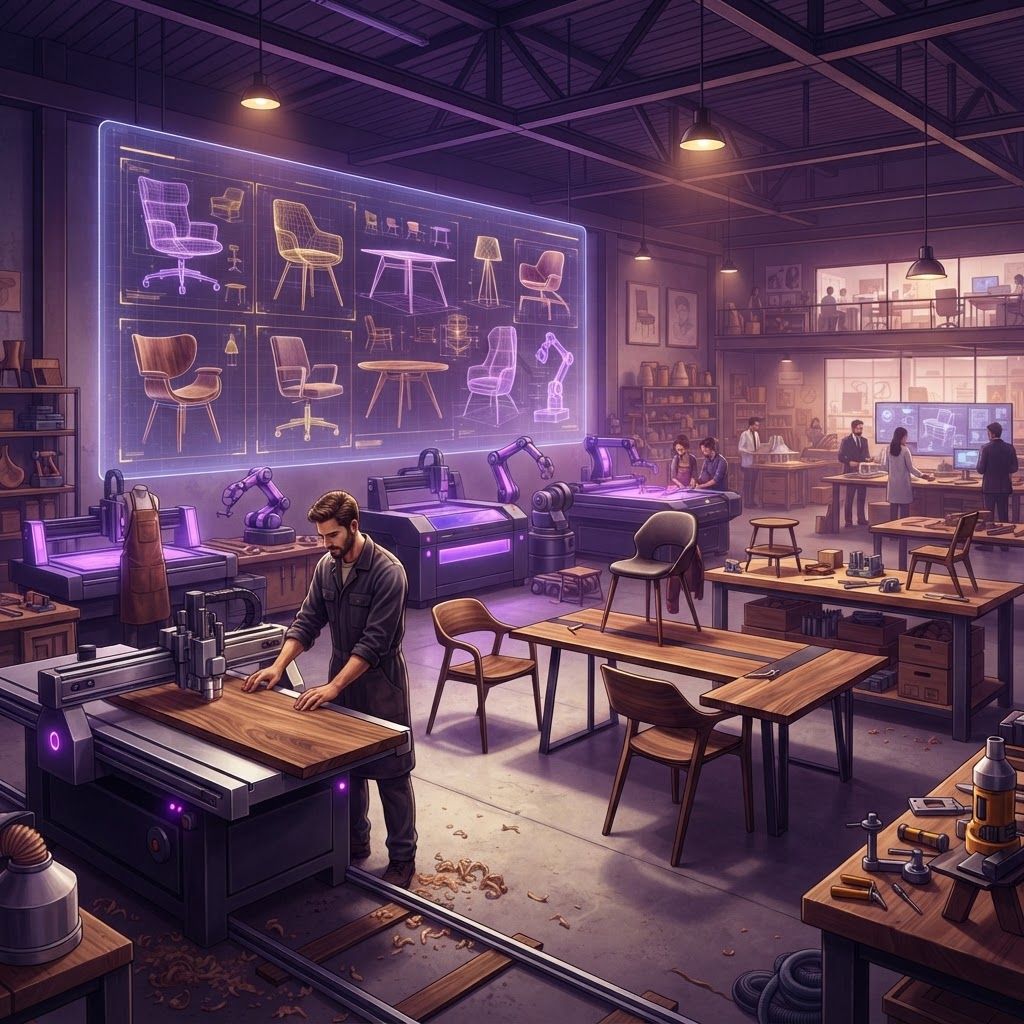
An Industry Powered by Constant Renovation
Furniture manufacturing in Sunrise Manor benefits from a pattern unique to the Las Vegas valley: hospitality properties refresh their interiors on relatively short cycles. Hotels, restaurants, lounges, and gaming floors replace seating, casegoods, and fixtures far more frequently than typical commercial buildings, and each renovation generates substantial custom furniture demand. Layer on office fit-outs, medical and dental practices, retail buildouts, and a residential market that increasingly wants pieces suited to specific spaces, and the result is a healthy cluster of manufacturers ranging from small woodworking shops to mid-sized production facilities.
What Local Manufacturers Produce
The output divides into recognizable segments. Commercial seating manufacturers build banquettes, booths, dining chairs, and lounge furniture engineered for heavy daily use. Casegood producers make cabinetry, credenzas, reception desks, and hotel room furniture. Millwork shops fabricate architectural woodwork, wall panels, and built-in installations. Outdoor furniture specialists build for pool decks and patios where sun exposure destroys ordinary materials. Metal fabricators produce table bases, frames, and industrial-style pieces. Residential custom shops handle one-off projects where a specific dimension, wood species, or finish is required.
Top 10 Best Furniture Manufacturers in Sunrise Manor
1. Sunrise Manor Furniture Company. A versatile manufacturer producing commercial seating and casegoods, with in-house upholstery, finishing, and delivery for hospitality and office projects.
2. Desert Valley Hospitality Furnishings. Specializes in hotel guest room and public space furniture, working to designer specifications with attention to durability standards and fire code requirements.
3. Mojave Woodworks and Millwork. Builds architectural millwork, built-in cabinetry, and wall systems, frequently collaborating with general contractors on commercial buildouts.
4. Silver State Commercial Seating. Focuses on booths, banquettes, and bar seating engineered for restaurants and lounges, with frames and foam selected for continuous use.
5. Boulder Highway Metal Furniture. Fabricates steel and aluminum table bases, frames, shelving, and industrial-style furniture with powder coating done on site.
6. Horizon Outdoor Furniture Manufacturing. Produces patio and poolside furniture using ultraviolet-stable materials and solution-dyed fabrics built to survive desert exposure.
7. Valley Custom Cabinetry. Manufactures kitchen and bath cabinetry for residential remodels and multifamily developments, offering both frameless and traditional construction.
8. Nellis Office Furniture Systems. Builds and configures workstations, conference tables, and storage systems, with reconfiguration services as offices change layout.
9. Sunrise Upholstery and Restoration. Reupholsters and rebuilds existing furniture, an economical path for properties refreshing interiors without full replacement.
10. Pinnacle Studio Furniture. A small-batch maker producing designer residential pieces in solid hardwood, serving interior designers and homeowners seeking distinctive work.
Materials That Survive the Climate
Desert conditions influence furniture construction in ways buyers often discover too late. Extremely low humidity causes solid wood to shrink, which can open joints and split panels on pieces built in humid regions. Local manufacturers address this by acclimating lumber before machining, controlling moisture content carefully, and using joinery and panel construction that accommodates movement. Outdoor furniture faces even harsher demands, where ultraviolet radiation breaks down untreated plastics and conventional dyes within a single season. Powder-coated aluminum, marine-grade fasteners, solution-dyed acrylic fabrics, and quick-drying foams are standard for anything used outside.
Commercial Durability Standards
Hospitality furniture is engineered rather than merely styled. Frames must withstand repeated loading, which favors hardwood or steel construction over composite panels in stress-bearing areas. Foam density determines whether seating still feels supportive after a year of continuous occupancy. Fabrics are selected by abrasion resistance ratings, cleanability, and flame performance to satisfy code. Edges and corners receive reinforcement because commercial furniture gets moved, bumped, and cleaned aggressively. Manufacturers who work regularly in this market understand these specifications instinctively, which is why designers prefer them for projects with tight opening dates.
Lead Times and Local Advantage
The strongest argument for local furniture manufacturing is schedule control. Imported furniture requires long production and shipping windows, and a delay at any point can push a property's reopening date. Local manufacturers can produce in weeks rather than months, handle mid-project revisions, and deliver in phases matched to construction progress. They also make service practical. When a banquette arrives with a damaged panel or a table base needs modification, a local shop resolves it in days. For projects with firm deadlines and significant revenue tied to opening on time, that responsiveness carries real financial value.
Sustainability in Furniture Production
Environmental considerations have become part of commercial furniture procurement. Buyers increasingly ask about certified wood sourcing, low-emission adhesives and finishes, and recycled content in metal and fabric components. Reupholstery and refurbishment deserve mention here as well, since keeping a sound frame in service avoids both manufacturing impact and disposal volume. Several local shops now offer refinishing and rebuilding programs specifically aimed at properties that want an updated look without replacing everything. Waste reduction through efficient cutting and remnant reuse has also become standard practice in better-run shops.
How to Choose a Manufacturer
Match capability to project type. A fine woodworking studio is the wrong choice for two hundred restaurant chairs, and a high-volume commercial plant will not produce a single sculptural dining table well. Ask to see completed installations in service rather than showroom samples, since wear reveals construction quality. Request details on frame material, foam density, fabric rating, and finish system rather than accepting general descriptions. Clarify lead times, delivery and installation responsibility, and how warranty claims are handled. For phased projects, confirm the shop can maintain consistent finish and fabric matching across production runs separated by months.
Conclusion
Sunrise Manor's furniture manufacturers combine craftsmanship with an understanding of what commercial use and desert climate actually demand. From hospitality seating and architectural millwork to outdoor furniture and custom residential pieces, the companies above cover the practical range of local needs. Buyers who specify construction details explicitly, verify performance in existing installations, and take advantage of local lead times and service capability consistently get furniture that looks right and lasts.