
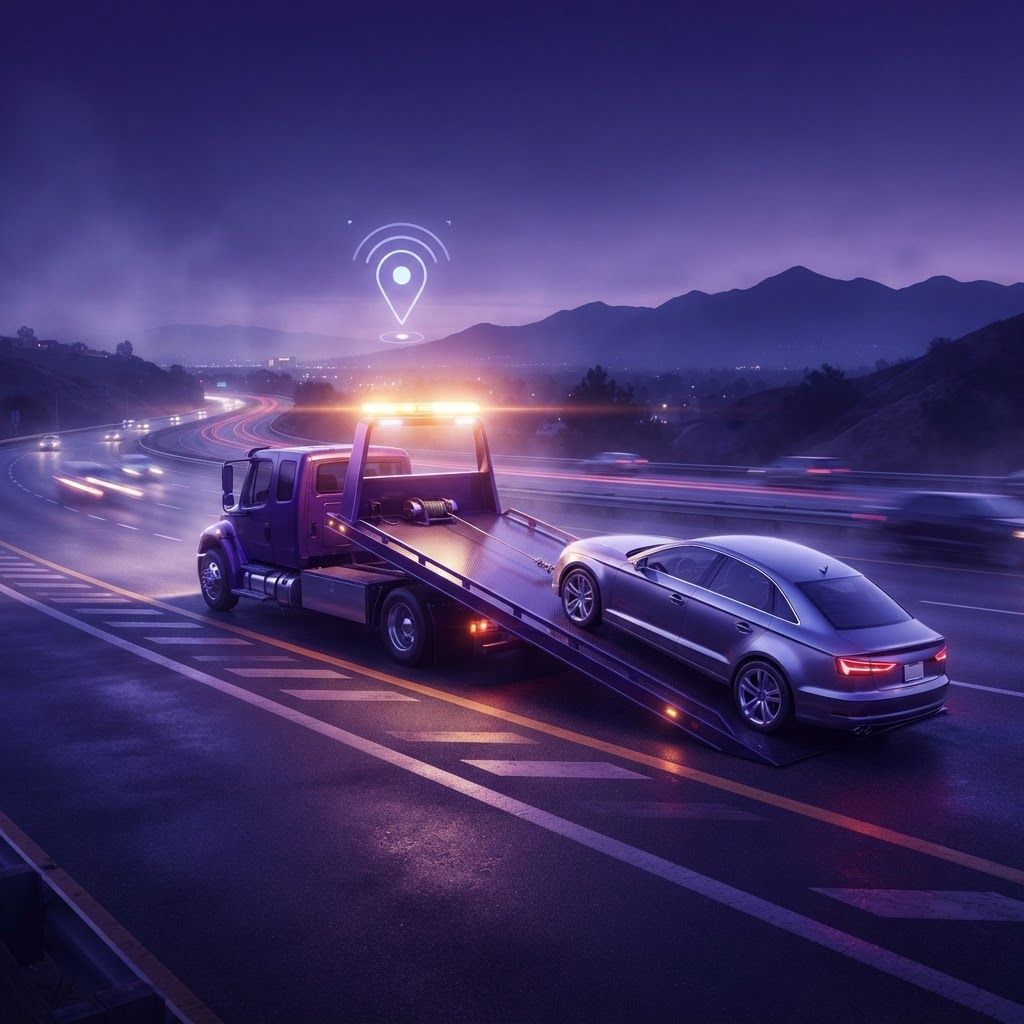
Towing Realities in the Inland Empire
Moreno Valley's location makes towing a frequently needed service. State Route 60 and Interstate 215 carry heavy commuter and freight traffic, and breakdowns in those corridors need fast clearance for safety reasons. Summer heat pushes cooling systems, batteries, and tires past their limits, producing predictable spikes in roadside failures. Grade changes on routes toward Beaumont and Idyllwild add transmission and brake stress. And the region's large commercial vehicle population means heavy-duty towing demand alongside consumer needs.
Being stranded is also a situation where consumers are unusually vulnerable. You are often on a shoulder, possibly in dangerous heat, with limited ability to compare providers. Knowing your options before you need them is the single best protection.
What to Verify Before Accepting a Tow
Ask for the total price before hooking up, including the hook-up fee, per-mile charge, any after-hours surcharge, and storage fees if the vehicle is going to a yard. In California, tow operators must be properly licensed and insured, and non-consensual tow rates are regulated in many circumstances. Confirm the company name matches what you called, since fraudulent operators sometimes intercept calls near breakdown locations.
Equipment type matters too. All-wheel-drive vehicles, low-clearance cars, electric vehicles, and vehicles with drivetrain damage generally require a flatbed rather than a wheel-lift tow. Requesting the wrong equipment can cause thousands of dollars in damage. Always ask for a written invoice, and photograph the vehicle before it is loaded.
1. AAA Roadside Assistance
AAA remains the most widely used option and for good reason. Membership covers towing within a set mileage, battery service, tire changes, lockout assistance, and fuel delivery, with dispatch through a network of vetted contractors. The value is predictability: you know the cost in advance because it is included, and AAA holds its contractors to service standards. For commuters covering high mileage on Inland Empire freeways, membership typically pays for itself with a single significant tow.
2. Manufacturer Roadside Assistance Programs
Most new vehicles include roadside assistance for the duration of the basic warranty, and many owners forget they have it. Coverage typically includes towing to the nearest dealership, jump starts, flat tire service, and lockout help. Because the program routes your vehicle to a franchise service department, it also keeps warranty repairs properly documented. Check your owner's manual or vehicle app before paying out of pocket.
3. Insurance-Based Roadside Coverage
Many auto insurance policies offer roadside assistance as an inexpensive add-on, often only a few dollars per month. Coverage generally includes towing, jump starts, tire changes, and lockout service. Filing a roadside claim usually does not affect premiums the way an accident claim would, though frequent use can matter with some carriers. Reviewing your policy declarations page is worth doing before you need it.
4. Local Independent Towing Companies
Moreno Valley is served by a number of independent towing operators, and the best of them are fast, fairly priced, and available around the clock. Local companies often have shorter response times than national dispatch networks because their trucks are already nearby. Look for operators with long-standing local reputations, clearly disclosed pricing, and proper commercial insurance. Saving the number of a trusted local towing company in your phone before an emergency is genuinely useful.
5. Flatbed and Specialty Towing Providers
Flatbed towing is the safest method for all-wheel-drive vehicles, low-clearance sports cars, electric vehicles, classic cars, and any vehicle with suspension or drivetrain damage. Providers specializing in flatbed work carry proper strapping equipment and understand tie-down points that avoid damaging body panels or battery enclosures. Owners of newer electric vehicles in particular should insist on a flatbed, since towing with drive wheels on the ground can damage motors.
6. Heavy-Duty and Commercial Towing
Given the concentration of trucking and distribution operations around Moreno Valley, heavy-duty towing is an important local capability. These providers handle tractor-trailers, box trucks, buses, and equipment, and offer recovery services for jackknifed or overturned vehicles. Fleet operators should establish an account with a heavy-duty provider in advance, because negotiated rates and priority dispatch are far better than emergency pricing.
7. Motorcycle Towing Specialists
Motorcycles require specific equipment, including trailers with wheel chocks and proper soft straps, to avoid damaging forks, fairings, and controls. General towing companies sometimes lack this equipment and improvise, which risks expensive damage. Riders in the Inland Empire should identify a motorcycle-capable provider ahead of time, and motorcycle-specific roadside memberships are available and inexpensive.
8. On-Demand App-Based Roadside Services
App-based roadside platforms provide pay-per-use towing and assistance with upfront pricing and live tracking of the arriving truck. For drivers without a membership, transparency and the absence of an annual fee are appealing. Response times depend on local contractor availability, which is generally good in the Inland Empire. These services also work well for people who rarely need towing and do not want a subscription.
9. Credit Card and Employer Roadside Benefits
Some credit cards and employee benefit programs include roadside assistance that cardholders never activate. Coverage varies and may be capped at a modest amount per incident, but it can substantially reduce out-of-pocket cost. Checking your card benefits guide and employee benefits portal takes minutes and occasionally reveals coverage equivalent to a paid membership.
10. Police-Ordered and Rotation Tow Operators
When a vehicle is disabled on a freeway, involved in a collision, or impounded, law enforcement dispatches a company from an official rotation list. These operators meet specific equipment and insurance requirements and follow regulated rate schedules. Drivers should understand that in these situations they generally cannot choose the company, and that storage fees accrue daily. Retrieving a vehicle promptly and knowing your rights regarding release of personal property and lien procedures can prevent costs from escalating quickly.
Trends in Roadside Services
Digital dispatch with GPS tracking has become standard, letting drivers see exactly when help will arrive. Electric vehicle roadside support is expanding, including mobile charging units that provide enough range to reach a charger. Mobile repair capability has grown, so some providers now fix batteries, tires, and simple failures on site rather than towing at all. And integrated telematics in newer vehicles can automatically summon assistance after a crash or detected failure.
Being Prepared
Enroll in a roadside program before you need it, whether through AAA, your insurer, or your vehicle manufacturer. Keep water, a phone charger, a reflective triangle or flares, and basic tools in your vehicle, and in summer keep extra water specifically, since waiting on a hot shoulder is dangerous. If you break down on a freeway, move as far right as safely possible, turn on hazard lights, and stay in the vehicle with your seatbelt fastened unless there is a fire risk. Get pricing in writing, photograph your vehicle before loading, and never accept an unsolicited tow from a truck that simply appears. Preparation turns an emergency into an inconvenience.