
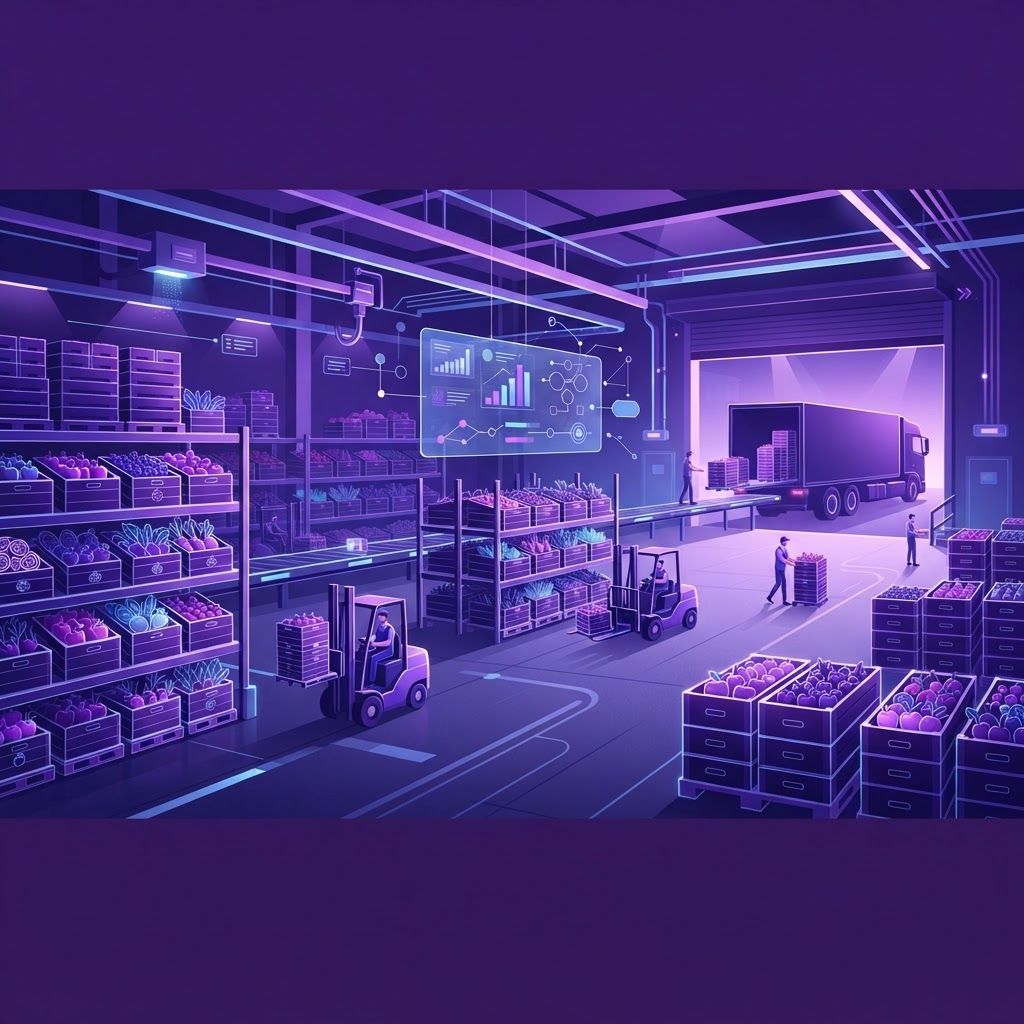
Food Distribution in Moreno Valley
Food wholesale is one of the most operationally demanding industries in any city. Products are perishable, temperature control is non-negotiable, delivery windows are narrow, and customers depend on reliability to open their doors each day. Moreno Valley's food distributors serve a diverse customer base including independent restaurants, ethnic grocery markets, school nutrition programs, senior care facilities, caterers, and food trucks across Riverside County.
The city's location supports this work well. Cold storage facilities and distribution warehouses sit within reach of both agricultural growing regions and dense population centers, letting distributors run efficient routes while maintaining cold chain integrity. For operators, a nearby wholesaler often means earlier deliveries, easier emergency orders, and fresher produce.
Types of Food Wholesalers
Understanding the distinctions helps operators build the right supplier mix, which usually involves two or three complementary partners rather than one.
- Broadline distributors: Carry everything from produce to paper goods in one delivery.
- Produce specialists: Focus on fresh fruits and vegetables with daily market pricing.
- Protein and seafood suppliers: Handle custom cutting, portioning, and cold chain requirements.
- Specialty and ethnic importers: Provide authentic regional ingredients unavailable from broadliners.
- Cash and carry wholesalers: Allow same-day pickup without minimums, valuable for small operators.
Top 10 Food Wholesalers Serving Moreno Valley
1. Inland Broadline Foodservice
A full-line distributor covering frozen, refrigerated, dry, and disposable categories with scheduled route delivery. Its online ordering platform and order guides simplify weekly purchasing for multi-item kitchens.
2. Valley Fresh Produce Company
Sources fruits and vegetables with an emphasis on California growers, offering daily availability updates and pre-cut options that reduce prep labor for busy kitchens.
3. Sunstate Meat and Protein Supply
Provides beef, pork, and poultry with custom cutting and portion control, valued by steakhouses and caterers that need consistent plate costs.
4. Pacific Coast Seafood Wholesale
Handles fresh and frozen seafood with strict cold chain management and traceability documentation, serving restaurants and retail fish counters.
5. Moreno Latin Foods Distribution
Specializes in Latin American staples including masa, chiles, spices, cheeses, and beverages, supporting the region's many taquerias and family markets.
6. Ridgeline Asian Food Importers
Imports and distributes rice, noodles, sauces, and specialty produce for Asian restaurants and grocers, with strong depth in authentic branded goods.
7. Summit Bakery and Pastry Supply
Supplies flours, chocolate, fillings, and frozen dough alongside packaging for bakeries, cafes, and dessert shops, including small-quantity options.
8. Copperline Beverage Distribution
Carries coffee, tea, juices, syrups, and non-alcoholic beverages plus dispensing equipment support for cafes and quick service operators.
9. Horizon Institutional Food Services
Focuses on schools, senior living, and healthcare with nutrition-compliant products, standardized portioning, and documentation for program requirements.
10. GreenHarvest Organic Wholesale
Distributes certified organic produce, grains, and pantry goods for health-focused restaurants, juice bars, and natural food retailers.
Trends in Food Wholesale
Cost pressure dominates current conversations. With ingredient and labor costs elevated, operators lean on distributors for menu engineering help, substitution suggestions, and value-added products such as pre-cut vegetables that shift labor from the kitchen to the supplier. Distributors that offer this consultative support retain customers far better than those competing on price alone.
Technology adoption has accelerated too. Online ordering, real-time inventory visibility, and delivery tracking are now expected rather than exceptional, and integration with restaurant inventory systems reduces ordering errors and waste.
Sustainability and food safety also continue to rise in importance. Buyers increasingly ask about sourcing regions, traceability, food safety certification, and packaging waste reduction, while California organics recycling requirements have made waste diversion a shared concern between operators and their suppliers.
How to Choose a Food Wholesaler
Reliability outranks price. A distributor that misses a Friday delivery costs a restaurant far more than a small percentage difference in case pricing. Ask about fill rates, substitution policies, delivery windows, and how credits for damaged or short product are handled.
Verify food safety practices directly, including cold chain monitoring, warehouse certification, and recall procedures. Review pricing structure as well, because some distributors use cost-plus models while others quote fixed prices with periodic adjustment. Finally, confirm minimum order requirements and whether they fit your volume, since small operators are often better served by combining a broadliner with a cash and carry option.
Managing Food Cost and Inventory Discipline
Food cost control depends less on negotiating case prices than on managing what happens after delivery. Receiving procedures that verify weights, temperatures, and counts against the invoice catch errors that quietly erode margin, and operators who skip this step routinely pay for product they never received. A simple receiving log with temperature checks pays for itself many times over across a year.
Inventory rotation is equally important. First-in, first-out handling, clear date labeling, and weekly counts of high-value items such as proteins and seafood prevent the spoilage that turns a favorable purchase price into waste. Many operators find that tightening ordering frequency, buying smaller quantities more often, lowers total food cost even when unit prices rise slightly, because waste and freezer burn decline sharply.
Menu flexibility provides the final layer of protection. Building dishes that can accommodate substitutions when a distributor is short on an item keeps kitchens running without emergency retail purchases at full price. Working with a distributor who calls ahead about shortages and suggests comparable alternatives makes this practical. Over time, that consultative relationship, combined with disciplined receiving and rotation, produces more stable food costs than any pricing negotiation could deliver on its own.
Final Thoughts
Moreno Valley's food wholesalers span broadline, produce, protein, seafood, specialty, and organic categories, giving local operators genuine flexibility in building a supply strategy. Prioritizing fill rate, food safety, and consultative support produces more stable kitchens and healthier margins than chasing the lowest case price.