
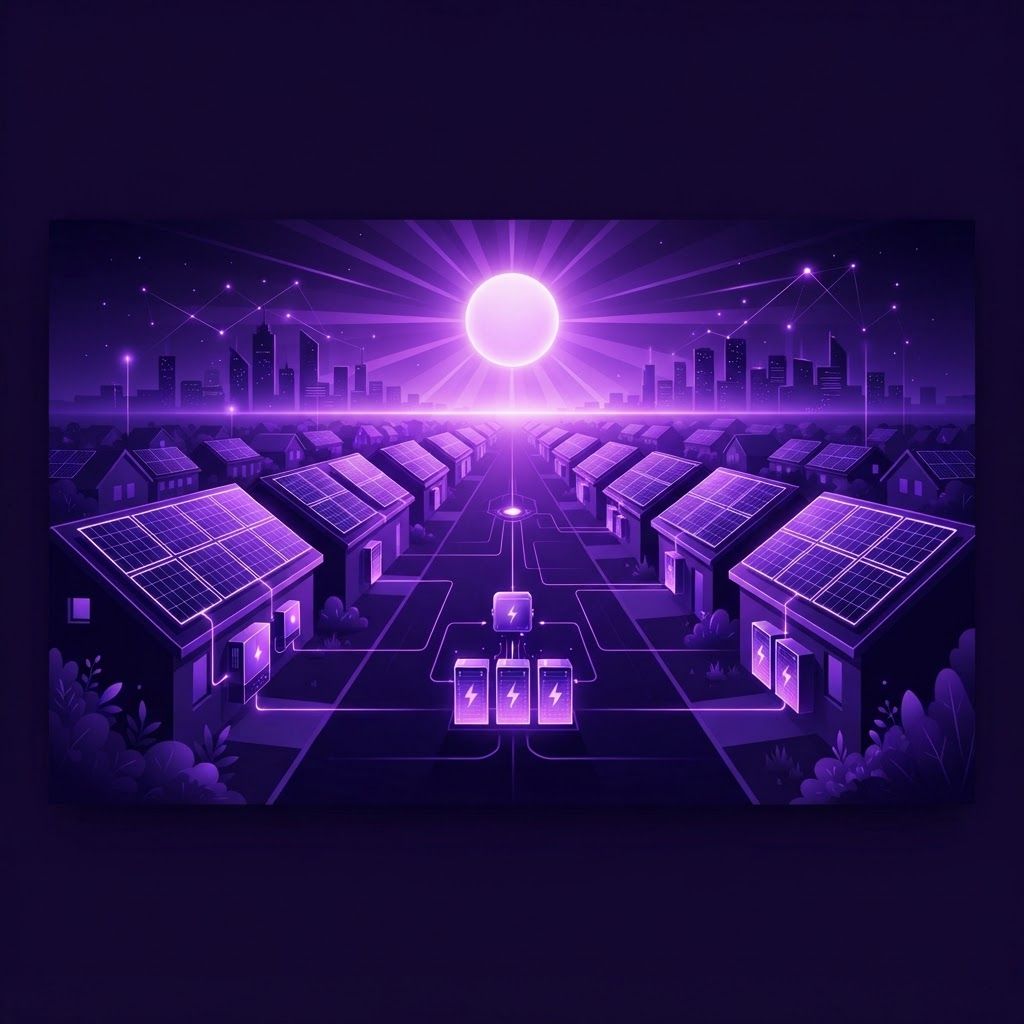
The Case for Solar in North Hempstead
Solar adoption in North Hempstead is driven by arithmetic more than ideology. Electricity in Nassau County is among the most expensive in the country, and the town's housing stock consists largely of detached single family homes with usable roof planes and unobstructed southern exposure. When a high utility rate meets a suitable roof, the return on a properly sized array is compelling even before incentives are applied.
Long Island also receives more usable sunlight than many homeowners assume. Annual production per installed kilowatt in Nassau County compares favorably with parts of the country that market themselves as sun drenched, because module efficiency declines at high temperatures and the region's moderate summers partially offset its shorter winter days.
Add the federal investment tax credit, New York State credits and utility incentives, and the effective cost of a residential system falls substantially below its sticker price. That combination supports a dense local installer market, which is good for pricing and competition but demands more careful vetting from buyers.
Understanding the Components of a Solar Proposal
Most disappointing solar outcomes trace back to a proposal that was not read closely. A few elements deserve particular attention.
System size and production estimate. Capacity in kilowatts is only half the picture. The production estimate in kilowatt hours per year reflects roof orientation, pitch, shading and module choice. Ask which modeling tool produced the number and whether a shade analysis was performed on site rather than from aerial imagery alone.
Equipment specification. Module efficiency, degradation rate and warranty length vary meaningfully across manufacturers. Inverter architecture matters too: string inverters with optimizers and microinverters behave differently under partial shading and carry different failure characteristics and replacement costs.
Roof condition. A solar array should not be installed over roofing with fewer than roughly ten years of service life remaining. Removing and reinstalling an array to replace shingles is expensive, and a reputable installer will raise the issue unprompted.
Financing structure. Cash purchase, loan, lease and power purchase agreement produce very different lifetime economics. Leases and power purchase agreements often include annual escalators, and a rate that begins below the utility price can exceed it later in the term.
Interconnection and compensation. The rules governing what exported energy is worth determine whether it makes sense to oversize the array or to add storage and consume more production on site.
Ten Solar Companies Serving North Hempstead
1. Great Neck Solar and Storage
A long established North Shore installer working across the town's villages, this firm has built its reputation on installation craft and post installation support. It performs its own electrical work, uses tier one modules and provides monitoring with proactive outreach when production drifts from expectation. Clients particularly value its candor about when a roof is not a good candidate.
2. Manhasset Photovoltaic Systems
Manhasset Photovoltaic Systems focuses on architecturally sensitive installations, which matters in a town with many historic and design conscious properties. The firm specializes in low profile mounting, concealed conduit runs and layouts that respect roof geometry, and it is experienced in working through village level architectural review.
3. Roslyn Solar Works
Serving primarily residential clients, Roslyn Solar Works is known for transparent proposals that disclose modeling assumptions rather than presenting a single headline savings number. The company offers both purchase and financed structures and explains the tradeoffs without steering, an approach that has earned it steady referral business.
4. Port Washington Sun Power
This installer has developed particular expertise in coastal conditions, including wind uplift engineering and corrosion resistant hardware appropriate for properties near Manhasset Bay and Hempstead Harbor. Attention to mounting detail and flashing quality distinguishes its work in an environment where roof penetrations face salt air and high wind exposure.
5. New Hyde Park Energy Systems
New Hyde Park Energy Systems serves both residential and small commercial clients and is frequently engaged for projects requiring electrical service upgrades alongside solar installation. Its integrated electrical capability avoids the coordination problems that arise when solar and panel work are split between contractors.
6. Westbury Commercial Solar
Concentrating on flat roof commercial installations for warehouses, retail centers and light industrial buildings, Westbury Commercial Solar handles ballasted racking, structural assessment and the more involved diligence commercial projects require. The firm also structures power purchase agreements for owners who prefer to avoid capital expenditure.
7. Albertson Solar Cooperative
Operating on a group purchasing model, Albertson Solar Cooperative aggregates residential demand to negotiate pricing and pre screens installers on behalf of members. The approach lowers per household cost and reduces the vetting burden, and it works well when several neighboring homes proceed together.
8. Searingtown Rooftop Energy
A smaller owner operated installer, Searingtown Rooftop Energy competes on service continuity rather than volume, with the same personnel handling site assessment, installation oversight and follow up. Clients who prefer a single accountable contact throughout the project tend to gravitate here.
9. North Hempstead Solar Consultants
This advisory firm installs nothing. It reviews competing proposals, validates production modeling, evaluates financing terms and represents homeowners and boards through contractor selection. For larger residential and multifamily projects, an independent technical review often pays for itself by catching optimistic assumptions early.
10. Hempstead Harbor Community Solar
For renters, shaded properties and apartment residents, this provider arranges community solar subscriptions that deliver bill credits from offsite arrays. There is no installation, no equipment and no roof requirement, which makes it the practical route to solar participation for a large share of town residents.
Trends Reshaping Residential Solar
Battery storage has moved from optional to nearly default on new residential installations. Two forces drive this: the resilience value of riding through storm outages that periodically hit the North Shore, and compensation structures that increasingly reward consuming your own production rather than exporting it.
Electric vehicle charging has become integral to system sizing conversations. A household adding a vehicle charger may increase annual consumption by several thousand kilowatt hours, which changes the optimal array size considerably. Good installers now ask about vehicle plans during the design phase rather than after commissioning.
Panel efficiency has improved to the point that roof area is less often the binding constraint, allowing smaller roof planes to support meaningful capacity. At the same time, the industry has consolidated and several national installers have exited or restructured, making the financial stability of the warranty provider a legitimate evaluation criterion.
Practical Guidance Before You Sign
Collect at least three proposals and normalize them to cost per watt and cost per estimated kilowatt hour of annual production, since headline system prices are not comparable across different array sizes. Confirm licensing and insurance, and verify that the company performing the work holds the license rather than borrowing one.
Insist on an on site shade analysis. Ask specifically who will be on your roof, employees or subcontractors, and who honors the workmanship warranty if that subcontractor relationship ends. Review the monitoring arrangement, because an unmonitored system can underperform for years without anyone noticing.
Finally, be skeptical of urgency. Incentive deadlines are real but rarely as imminent as high pressure sales scripts suggest. A well designed solar array will operate for decades, and a few additional weeks of diligence is a trivial cost against that horizon. North Hempstead's rate environment means the economics will still be there when you are ready.