
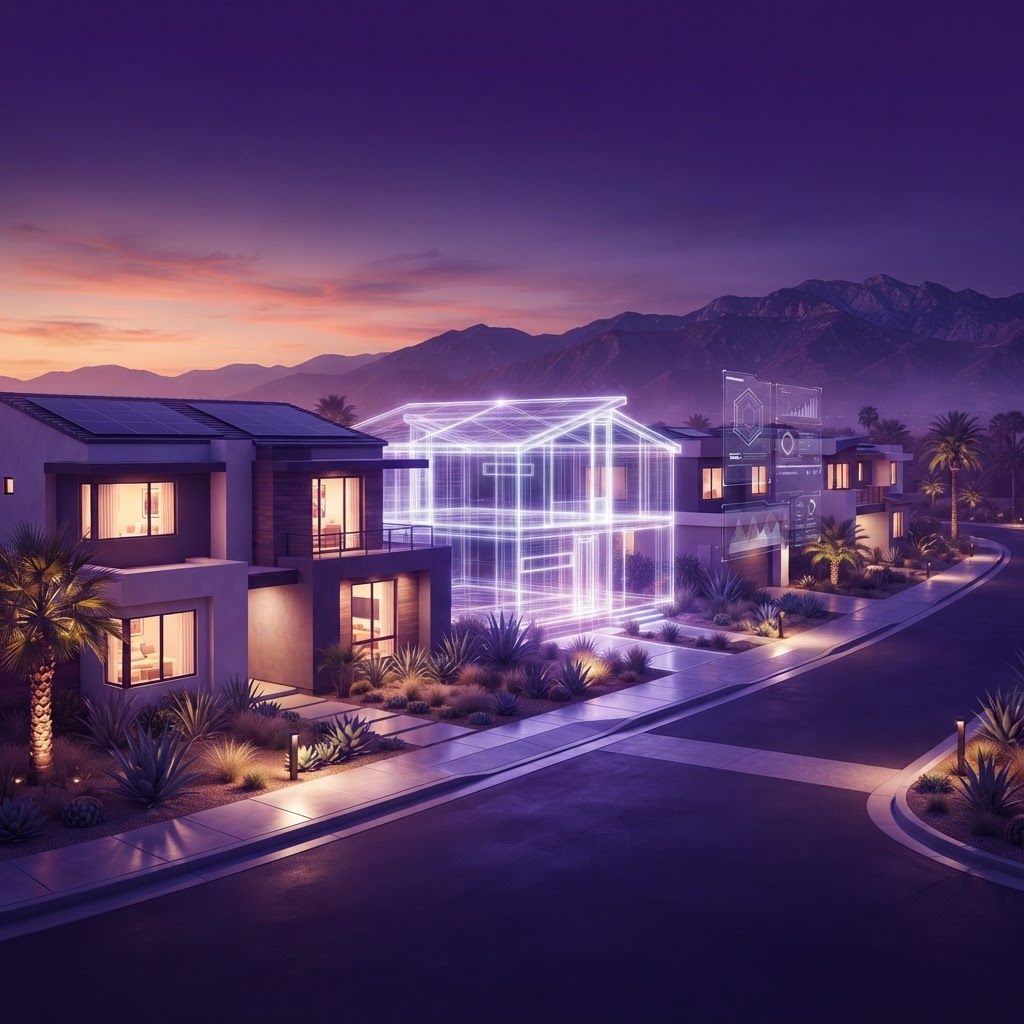
Residential Building in Moreno Valley
Moreno Valley has grown from a modest community into one of Riverside County's largest cities, and residential construction has been central to that transformation. The city's relative land availability and comparatively attainable prices continue to attract buyers priced out of Orange County, San Diego, and coastal Los Angeles. That demand supports ongoing production homebuilding, a healthy custom and semi-custom market, and rapidly expanding accessory dwelling unit construction.
Building here has specific technical demands. Cooling loads are high, so envelope performance, duct design, insulation, and shading strategy materially affect utility bills. Seismic design requirements govern structural detailing. Water efficiency rules shape plumbing fixtures and landscaping. Soil conditions in parts of the region require engineered foundations. A builder who understands these local realities produces a meaningfully better house than one applying a generic national specification.
Evaluating a Residential Builder
Start with license verification through the Contractors State License Board, confirming classification, bond, and workers' compensation status along with any complaint history. Then examine completed work: visit homes the builder finished three to five years ago rather than only new models, because problems reveal themselves over time. Talk to those homeowners about warranty responsiveness, which is where builders differ most.
Scrutinize the specification sheet, not the sales presentation. Ask what is standard versus an upgrade, what the allowances cover, how change orders are priced, and what the energy performance targets are. Confirm that the contract includes a clear schedule, defined payment milestones tied to completed work, and an explicit warranty. For custom builds, understand whether the price is fixed, cost-plus, or a guaranteed maximum, since that single decision determines who absorbs cost overruns.
1. KB Home
KB Home has a long-established presence in the Inland Empire and builds production homes with a build-to-order model that lets buyers select floor plans, structural options, and finishes rather than buying finished inventory. Its emphasis on energy efficiency, including solar readiness and ENERGY STAR performance across communities, is well suited to Moreno Valley's cooling demands. For first-time buyers, the combination of guided personalization and predictable pricing is a practical fit.
2. Lennar
Lennar is one of the largest homebuilders in the country and a significant developer across Riverside County. Its Everything's Included approach bundles features that competitors sell as upgrades, which simplifies budgeting and comparison. Lennar also builds multigenerational floor plans with separate suites, an offering that resonates strongly in the Inland Empire where extended families frequently share housing.
3. D.R. Horton
D.R. Horton builds across multiple price tiers, from entry-level communities through move-up product, which gives buyers a range of options within a single builder relationship. Its scale supports efficient supply chains and generally competitive pricing. Buyers should compare standard specifications carefully across its brands, since feature levels differ significantly between tiers.
4. Richmond American Homes
Richmond American emphasizes personalization through design centers where buyers select finishes, cabinetry, flooring, and fixtures. For buyers who want more input than a typical production build allows but do not want the complexity and cost of a fully custom home, this middle path works well. Its floor plans generally accommodate flexible use of space, including home office configurations.
5. Century Communities
Century Communities focuses substantially on attainable housing and has been active in Inland Empire markets. Its appeal is delivering functional, efficient homes at accessible price points, often with included features that reduce move-in costs. Buyers should review energy features and HVAC specifications carefully given local climate demands.
6. Pardee Homes and Move-Up Builders
Builders positioned above the entry level, including long-established Southern California names, offer larger homes with higher-grade finishes and more architectural variety. Their communities frequently include more amenities and greater lot size options. For buyers relocating from coastal counties with equity to deploy, these homes offer space that would be unattainable closer to the ocean.
7. Custom Home Builders
Custom builders working in and around Moreno Valley construct one-off homes on private lots, often in the hillside and semi-rural areas surrounding the city. Custom building offers complete control over design, materials, and energy systems, and allows optimization for the site's orientation and views. It requires more owner involvement, a longer timeline, and careful contract structure. The right builder for a custom project is one whose completed work matches the style and quality level you want, with references who confirm the process was well managed.
8. ADU and Small-Scale Residential Builders
Accessory dwelling unit construction has become one of the most active residential categories in California, supported by legislation that streamlined approvals and limited local restrictions. In Moreno Valley, generous lot sizes make ADUs practical for rental income, aging parents, or adult children. Specialized ADU builders understand setback and utility rules, offer standardized plans that shorten permitting, and increasingly provide prefabricated or panelized construction that compresses build schedules substantially.
9. Multifamily and Infill Developers
Developers building apartments, townhomes, and infill projects serve the rental demand generated by the city's growing workforce. These projects require different expertise than single-family construction, including fire separation requirements, shared systems, parking design, and accessibility compliance. For investors and property owners, working with builders experienced in multifamily construction and local entitlement processes is essential.
10. Remodeling and Whole-House Renovation Firms
Much of Moreno Valley's housing stock dates from earlier growth periods, which creates substantial demand for renovation. Firms specializing in whole-house remodels update kitchens and bathrooms, reconfigure floor plans for open living, replace aging HVAC and electrical systems, upgrade insulation and windows, and add square footage. For homeowners who like their location and lot, renovation frequently delivers better value than moving, particularly when factoring in current interest rates and transaction costs.
Trends Shaping Residential Construction
California energy standards continue to push toward high-performance building, with solar, heat pumps, and improved envelope requirements now standard rather than premium. Home office space has become a permanent design priority. Multigenerational floor plans with separate entrances and suites are in strong demand locally. Electrification is reshaping design, with panel capacity, EV charging, and induction cooking planned from the outset. Water-wise landscaping is standard, and drought-tolerant design has largely replaced turf in new communities. Labor and material availability continue to influence schedules, so realistic timelines have lengthened relative to a decade ago.
Making a Confident Decision
Verify licensing and insurance, and check complaint history. Visit older completed communities, not just model homes, and speak with residents about warranty service. Compare standard specifications line by line rather than comparing price alone, paying particular attention to HVAC sizing, insulation values, window performance, and solar provisions given local heat. Read the warranty document and understand what is covered for one year, two years, and ten years. For custom or ADU projects, structure payments against verified milestones and keep the initial deposit within California's legal limits. A builder who welcomes this level of diligence is usually the right one.