
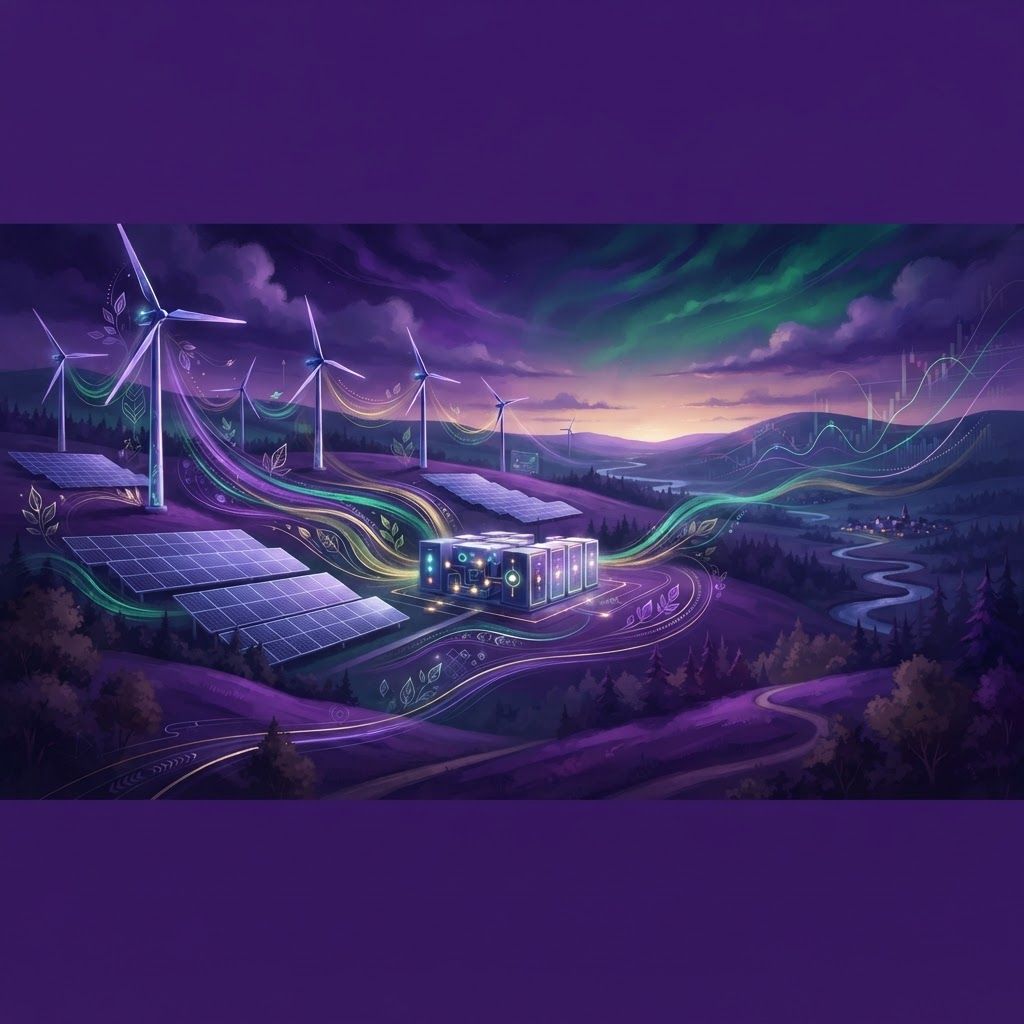
The Renewable Energy Picture in Central Alabama
Alabama's energy mix has historically centered on natural gas, coal, nuclear and a substantial hydroelectric base built along the state's river systems. Renewables beyond hydro were slow to develop compared to neighboring states, largely for structural rather than physical reasons. Alabama receives solar resource comparable to much of the Southeast, and the technical potential has never been the limiting factor.
What has changed is economics and demand. Solar equipment costs have fallen dramatically over the past decade, making utility-scale and commercial installations financially viable without depending on unusual incentive structures. Simultaneously, large corporate energy buyers, including manufacturers with facilities in Alabama, have adopted procurement commitments that create demand for clean generation. Data centers and industrial operations evaluating Alabama sites increasingly ask about renewable supply options during site selection, which turns clean energy availability into an economic development consideration.
For Montgomery specifically, the opportunity is concentrated in commercial and industrial rooftop and ground-mount solar, agricultural land leasing for utility-scale projects in surrounding counties, energy efficiency retrofits that reduce load before generation is even considered, and battery storage paired with solar for resilience.
Technologies That Make Sense in the Region
Solar photovoltaic is the dominant renewable technology in central Alabama, suitable for rooftops, parking canopies, ground-mount arrays and utility-scale farms. Battery energy storage is increasingly paired with solar to manage demand charges and provide backup power, which is particularly valuable given regional storm exposure. Biomass and landfill gas recovery have applications given Alabama's forestry sector and waste infrastructure. Geothermal heat pumps offer efficient heating and cooling for institutional buildings with suitable land. Wind resource in central Alabama is limited compared to the plains states, making utility-scale wind less common here than elsewhere, though procurement from out-of-state wind is possible through power purchase arrangements.
Leading Renewable Energy Companies and Resources Serving Montgomery
1. Alabama Power and Southern Company Renewable Programs
The regional utility structure shapes every renewable decision in Alabama. Alabama Power, part of Southern Company, operates renewable generation and offers programs through which commercial customers can procure renewable energy. Understanding utility interconnection requirements, rate structures and available programs is the necessary first step for any project in the service territory.
2. Regional Commercial Solar Developers
Developers serving Alabama design, finance and construct commercial and industrial solar installations for manufacturers, warehouses, institutions and municipalities. Their value extends beyond installation to energy modeling, incentive capture, interconnection management and long-term performance monitoring.
3. Eagle Solar and Light
Eagle Solar and Light is an Alabama-based solar company serving commercial, industrial and residential customers across the state with design, installation and energy storage solutions. Its in-state presence means familiarity with local utility processes and permitting, which materially affects project timelines.
4. Alabama Solar Installers and EPC Contractors
Engineering, procurement and construction contractors operating in the region handle ground-mount and rooftop projects from structural assessment through commissioning. For larger installations, EPC capability, bonding capacity and safety record matter more than equipment brand selection.
5. Energy Efficiency and Retrofit Specialists
Companies providing lighting retrofits, HVAC optimization, building envelope improvement, controls upgrades and energy audits deliver the highest return per dollar in most buildings. Reducing consumption before adding generation lowers the size and cost of any renewable system that follows, and these firms often deliver payback in a few years.
6. Battery Storage and Microgrid Providers
Storage providers design systems for demand charge management, backup power and resilience. For healthcare facilities, data operations, water systems and manufacturers where outage cost is high, storage paired with generation is increasingly justified on reliability grounds alone.
7. Rural Electric Cooperatives and Community Programs
Cooperatives serving areas around Montgomery participate in renewable programs and offer efficiency support to members. For agricultural operations and rural businesses, cooperative programs are often the most practical access point to renewable options.
8. Biomass and Bioenergy Operators
Alabama's substantial forestry and agricultural sectors support biomass energy operations converting wood residues, agricultural byproducts and landfill gas into energy. These projects turn waste streams into generation while addressing disposal costs.
9. Engineering and Environmental Consultants
Firms providing feasibility analysis, environmental assessment, permitting support, interconnection studies and site evaluation are essential for utility-scale projects. Their work determines whether a site is viable long before construction is contemplated.
10. Clean Energy Finance and Incentive Advisers
Specialists in renewable project finance structure power purchase agreements, equipment leases, tax equity arrangements and incentive capture. Because much of renewable project economics depends on financing structure and available credits, this expertise frequently determines whether a project proceeds.
How Renewable Projects Actually Get Developed
A typical commercial project begins with an energy assessment establishing current consumption, demand patterns and rate structure. Efficiency opportunities are identified first. A site assessment then evaluates roof condition and structural capacity or available land, shading, orientation and interconnection proximity. Financial modeling follows, comparing ownership, lease and power purchase structures against projected utility costs. Utility interconnection application and permitting proceed in parallel with design. Construction for a commercial rooftop system typically spans weeks rather than months, followed by commissioning, utility approval and ongoing monitoring.
The most common failure point is interconnection. Projects that assume utility approval will be routine sometimes encounter capacity limitations or requirements that alter economics substantially. Engaging the utility early is not optional.
Economic and Workforce Implications
Renewable development in Alabama creates construction employment, ongoing operations and maintenance roles, and manufacturing opportunities in the supply chain. Land lease income from utility-scale solar provides a stable revenue stream for agricultural landowners, which has made siting easier in rural counties surrounding Montgomery. Workforce training programs at Alabama community colleges have begun producing technicians for solar installation and maintenance, addressing a skills gap that previously required importing labor.
Final Thoughts
Renewable energy in the Montgomery region has moved from aspiration to a straightforward business calculation for many commercial property owners and industrial operators. The technology is proven, the economics work in an increasing number of cases, and the supporting ecosystem of developers, engineers, financiers and installers now exists in state. Organizations considering a project should begin with an efficiency audit, engage the utility early on interconnection, evaluate ownership versus power purchase structures carefully, and select partners with demonstrated Alabama project experience rather than out-of-state firms unfamiliar with local processes.