
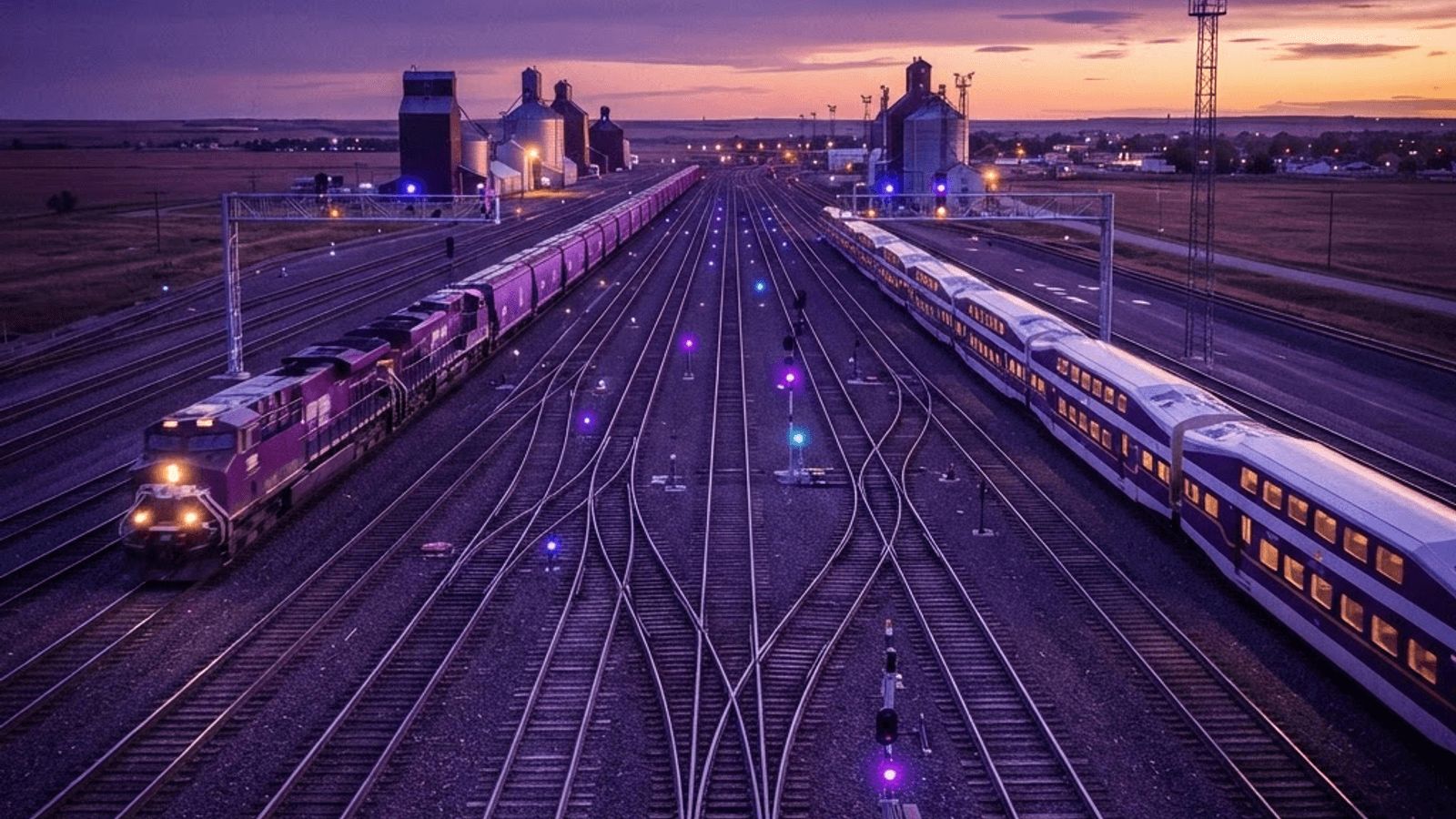
The Rail Capital of America
Kansas City's rail significance is not marketing language. The metro handles more rail tonnage than any other city in the United States and is served by multiple Class I railroads, giving it more mainline carrier options than almost anywhere else in North America. That density is a historical legacy of the city's position at the confluence of major rivers and westward rail expansion, and it remains a decisive economic advantage today.
For Overland Park businesses, the practical consequence is competitive rail access. Manufacturers, agricultural processors, building materials distributors, and importers can move volume by rail and intermodal at costs well below over-the-road trucking on long lanes, and they can play carriers against one another in a way shippers in single-railroad markets cannot.
The Top 10 Railway Operators and Rail Service Providers
1. BNSF Railway
One of the two largest freight railroads in North America, with an extensive network across the western two-thirds of the country and major intermodal facilities serving the Kansas City region. Particularly strong for transpacific import traffic moving inland from West Coast ports and for agricultural and unit-train commodities.
2. Union Pacific Railroad
The other western giant, with dense coverage of the western states, strong Gulf Coast connectivity, and significant Mexico gateway access. Its Kansas City operations include major classification and intermodal capacity, making it a direct competitor to BNSF on most western lanes.
3. Canadian Pacific Kansas City
The only single-line railroad connecting Canada, the United States, and Mexico, with Kansas City as a central hub. This network is strategically important for nearshoring supply chains, providing seamless cross-border movement without interchange delays.
4. Norfolk Southern Railway
A major eastern carrier reaching Kansas City, providing access to eastern industrial markets, Atlantic ports, and the Southeast. Important for shippers distributing to the eastern half of the country or importing through East Coast gateways.
5. CSX Transportation
The other principal eastern railroad serving the market, offering complementary routings to the Southeast and Mid-Atlantic. Between the two eastern carriers, Kansas City shippers have genuine choice on eastbound traffic.
6. Kansas City Terminal Railway
A switching and terminal railroad that handles interchange between the Class I carriers within the metropolitan area. Though invisible to most shippers, terminal railroads determine how quickly cars move between mainline carriers, which materially affects transit times.
7. Amtrak
The national passenger rail operator, serving Kansas City with long-distance and regional service connecting to Chicago, St. Louis, and points beyond. A comfortable alternative to driving or flying for certain corridors, particularly for travelers who value working time en route.
8. Regional Short Line Railroads
Kansas is served by numerous short line and regional railroads that provide first-mile and last-mile access to grain elevators, industrial parks, and rural shippers, connecting them to Class I mainlines. These carriers make rail viable for businesses without mainline frontage.
9. Intermodal Drayage and Transload Operators
Companies providing truck drayage between rail ramps and shipper facilities, plus transload services that shift freight between rail cars and trucks. These providers are what make rail accessible to Overland Park businesses that have no track of their own.
10. Rail Logistics and Car Management Firms
Specialists in private railcar leasing, fleet management, rate negotiation, and rail service consulting. For companies shipping enough volume to consider dedicated equipment, these firms handle the commercial and operational complexity.
When Rail Makes Sense
Rail and intermodal economics favor specific profiles. Distance is the primary variable: intermodal typically becomes competitive beyond roughly seven hundred miles and increasingly compelling past a thousand. Volume matters too, since carload service suits bulk commodities and unit trains, while intermodal containers suit palletized consumer goods.
Time flexibility is the trade-off. Intermodal transit generally runs one to two days longer than over-the-road truckload, and rail service is less tolerant of tight appointment windows. Shippers with buffer inventory capture the savings; those running hand-to-mouth often cannot.
Fuel efficiency is the structural advantage. Moving freight by rail consumes substantially less fuel per ton-mile than trucking, which delivers both cost stability and a meaningful emissions reduction, increasingly relevant for corporate sustainability reporting.
Working With Railroads Effectively
Rail commercial practice differs from trucking. Rates are frequently governed by contracts with volume commitments, and service performance is measured in transit reliability rather than same-day flexibility. Understanding demurrage and detention rules is essential, because charges accrue quickly when cars sit loaded or unloaded beyond free time.
Facilities matter as well. Companies with rail-served buildings gain the most leverage; those without should evaluate transload options carefully, since a well-run transload facility can capture most of the line-haul savings while keeping local flexibility.
Regional Outlook
Investment in the Kansas City rail network continues, including intermodal terminal capacity expansion, industrial park development with rail service, and improved cross-border corridors following the creation of a single-line North American railroad. Nearshoring trends are increasing north-south volume, which plays directly to this market's strengths.
Passenger rail advocacy is also active in the corridor, with ongoing interest in expanded service between Kansas City, St. Louis, and Chicago, though timelines remain uncertain.
Final Thoughts
Overland Park businesses enjoy access to the most competitive rail market in the United States, with two western Class I carriers, two eastern carriers, a cross-border single-line railroad, and a dense supporting ecosystem of short lines, drayage firms, and transload operators. Evaluate rail seriously on any lane beyond several hundred miles, plan for slightly longer transit, understand demurrage rules, and use the market's carrier competition to your advantage.