
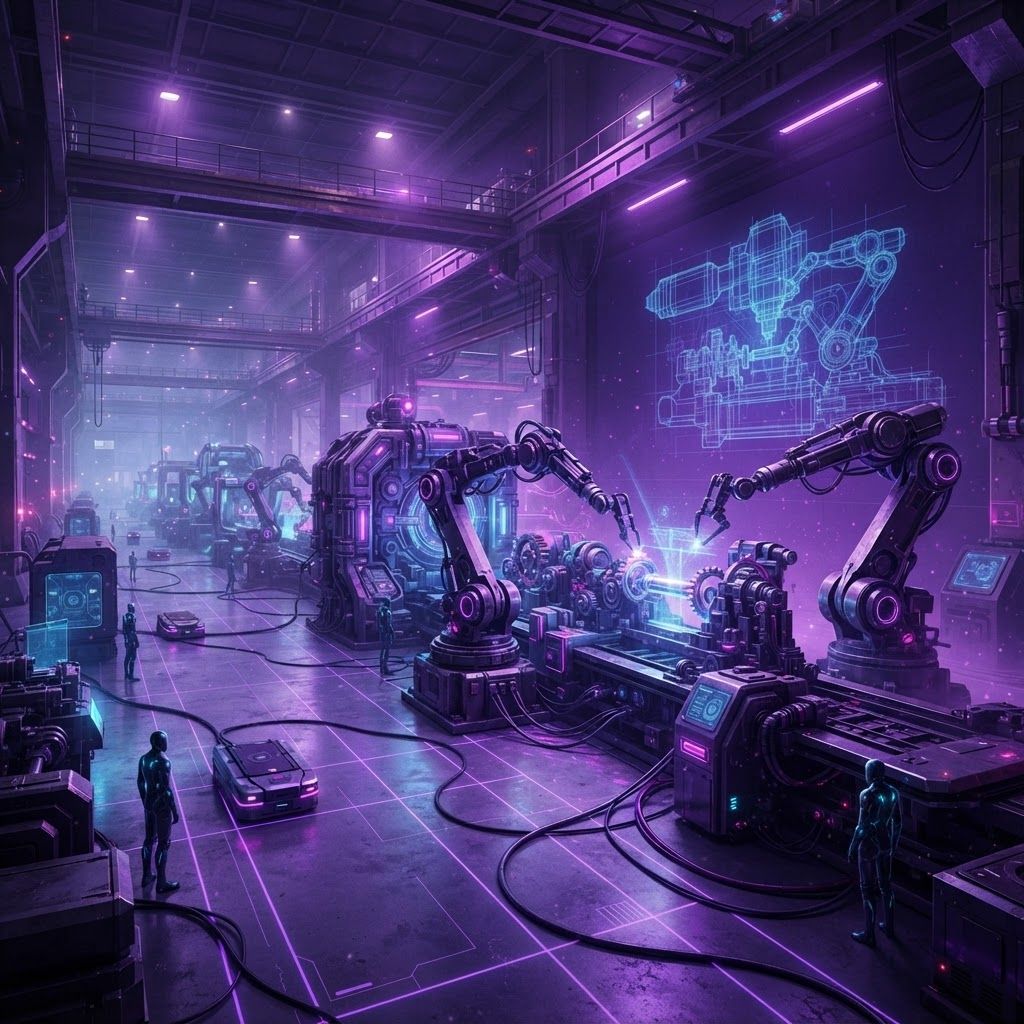
Machinery Built for the Work Actually Done Here
Machinery manufacturing in Sunrise Manor exists because the surrounding economy runs on equipment that must keep working in demanding conditions. Construction sites across the valley need material handling and concrete equipment. Distribution warehouses require conveyors, sorters, and packaging lines. Mining and aggregate operations in the broader region need crushing, screening, and conveying machinery. Hospitality kitchens and laundries depend on specialized commercial equipment. Rather than mass-producing standard machines, local manufacturers concentrate on custom builds, automation integration, precision machining, and the rebuilding of equipment that would be expensive to replace.
The Range of Local Capability
Machine shops in the area provide computer-controlled milling and turning for precision parts. Custom equipment builders design and fabricate machines to solve a specific production problem that no catalog product addresses. Automation integrators combine robotics, conveyors, sensors, and control systems into working production lines. Hydraulic and pneumatic specialists build and service power systems for heavy equipment. Rebuild operations restore worn machinery to working condition, often at a fraction of replacement cost. Several firms also provide reverse engineering, producing replacement parts for equipment whose original manufacturer no longer supports it.
Top 10 Best Machinery Manufacturers in Sunrise Manor
1. Sunrise Manor Machine Works. A well-equipped precision machining and fabrication operation producing custom parts, assemblies, and complete machines for industrial clients.
2. Desert Valley Automation Systems. Designs and integrates conveyors, robotic cells, and packaging automation for warehouses and light manufacturing facilities.
3. Mojave Heavy Equipment Fabrication. Builds attachments, buckets, booms, and structural components for construction and aggregate machinery operating in abrasive conditions.
4. Silver State Hydraulics and Power Systems. Manufactures and services hydraulic cylinders, power units, and pneumatic systems for equipment operators throughout the region.
5. Boulder Highway Precision Machining. Focuses on tight-tolerance computer-controlled machining, producing components for gaming equipment, aerospace suppliers, and instrumentation makers.
6. Horizon Material Handling Manufacturing. Produces racking, carts, lift tables, and custom handling equipment designed around specific facility layouts.
7. Valley Commercial Kitchen Equipment. Fabricates stainless steel work surfaces, hoods, and specialized food service equipment for restaurants and institutional kitchens.
8. Nellis Industrial Rebuild Services. Restores worn machinery through component replacement, remachining, and control system modernization, extending equipment life significantly.
9. Sunrise Conveyor and Systems Company. Specializes in conveying solutions for distribution centers, from simple gravity sections to powered sortation lines.
10. Pinnacle Engineering and Prototyping. Provides mechanical design, prototyping, and small-batch production for companies developing new equipment concepts.
Custom Equipment Solves Problems Catalogs Cannot
The core value of local machinery manufacturing lies in solving specific problems. A distribution center with an unusual product mix may find no standard sorter fits its throughput and package geometry. A food producer might need a filling and sealing arrangement that no equipment supplier offers. A construction contractor may require an attachment configured for a particular material and machine combination. In each case, a custom build designed around the actual operation delivers better results than adapting a general-purpose machine. The process typically moves from requirements analysis through concept design, engineering, fabrication, assembly, testing, and installation, with the customer involved at each stage.
Precision, Materials, and Wear
Desert industrial environments accelerate wear in specific ways. Airborne dust acts as an abrasive on exposed bearings, chains, and slides. Heat reduces lubricant viscosity and shortens seal life. Temperature cycling loosens fasteners over time. Manufacturers who understand these conditions specify sealed bearings, hardened wear surfaces, abrasion-resistant liners, and generous lubrication access. Material selection matters as well, with hardened steels and appropriate surface treatments extending service intervals substantially. These choices increase initial cost but reduce downtime, which is nearly always the larger expense for an operating business.
Automation and Workforce Reality
Automation interest in the valley is driven less by cost reduction than by labor availability. Warehouses struggle to staff repetitive positions consistently, and turnover imposes ongoing training costs. Well-implemented automation handles the monotonous portion of a process while people manage exceptions, quality, and maintenance. The most successful projects start small, automating one clearly defined bottleneck and proving results before expanding. Local integrators who advise clients toward this incremental approach tend to produce better outcomes than those proposing complete line replacement at the outset.
Rebuilding Versus Replacing
Equipment rebuilding deserves more attention than it usually receives. A machine with a sound frame and worn components can often be restored for a fraction of replacement cost, with modernized controls and improved safety features included. Lead times for new industrial equipment can stretch for many months, making rebuild the faster path back to production. Rebuilding also preserves familiarity, since operators already know the machine. Evaluating this option requires an honest assessment of frame condition, parts availability, and remaining useful life, which reputable shops will provide before quoting.
Selecting a Manufacturer
Evaluate engineering capability, not just fabrication equipment. Ask how requirements are captured, whether the shop produces drawings and documentation, and how it validates a machine before delivery. Confirm who handles installation and commissioning, and what support looks like afterward, since a custom machine has no manufacturer hotline. Request references from projects at least two years old to learn how the equipment held up. For automation work, ask about control system standards and whether the customer receives program access, which prevents dependence on a single vendor for every future change.
Conclusion
Machinery manufacturers in Sunrise Manor keep the region's construction, warehousing, and hospitality operations running through custom builds, precision machining, automation, and rebuild services. The firms listed above cover that full range. Businesses that involve a manufacturer early, specify duty cycles and conditions honestly, and treat documentation as part of the deliverable end up with equipment that performs reliably for many years in a climate that is unforgiving to machines.