
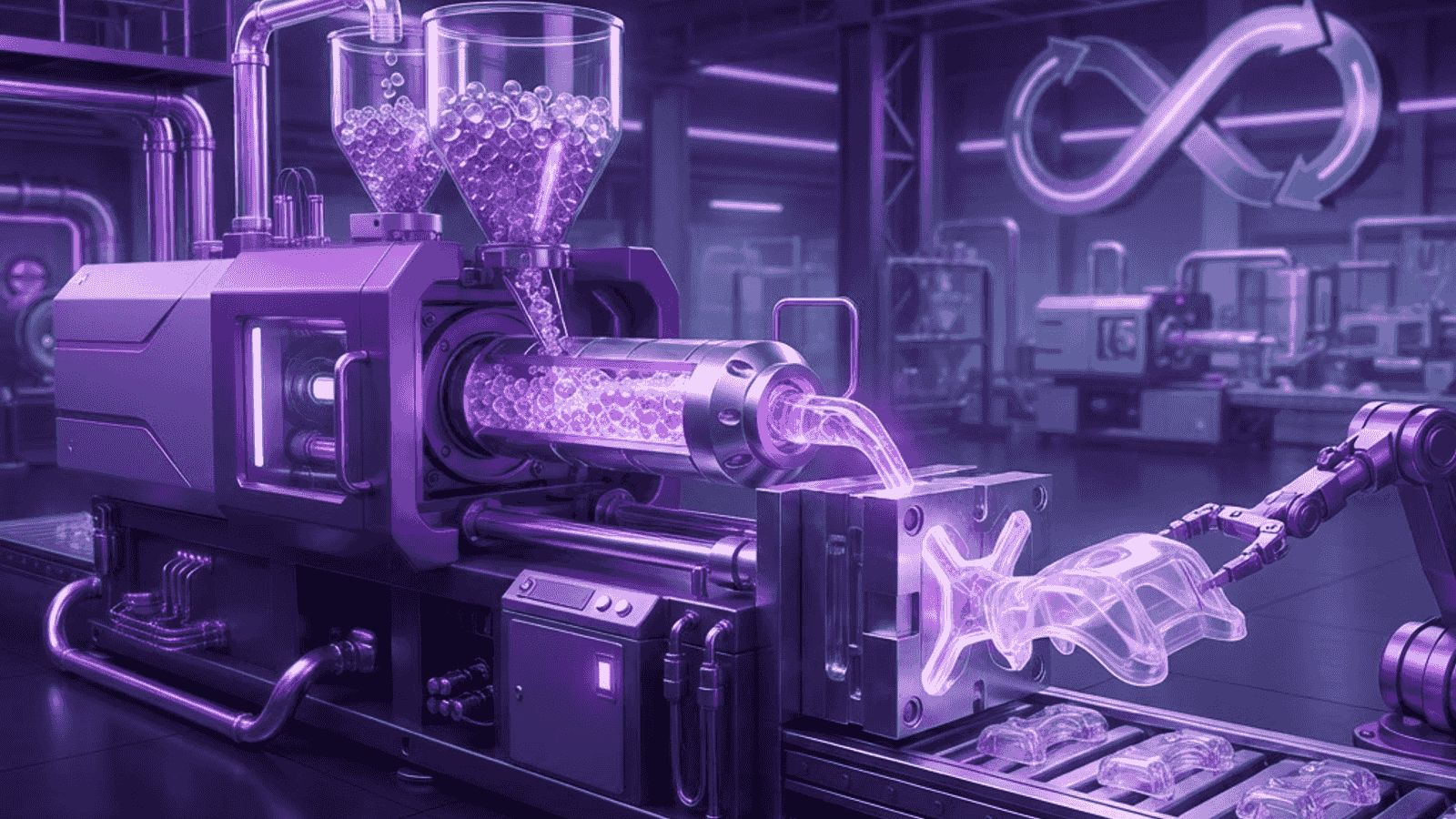
Plastics Manufacturing in the Long Beach Area
Plastics are the connective tissue of modern manufacturing, and the industrial belt surrounding Long Beach contains an impressive concentration of moulders, extruders, thermoformers, and composite fabricators. Demand comes from several directions at once: aerospace and defence require high-performance engineering polymers, the medical device sector needs cleanroom moulding with full traceability, food and consumer goods producers consume packaging in volume, and the region's boating industry relies on fibreglass and composite fabrication.
California's regulatory environment shapes this industry in specific ways. Restrictions on single-use plastics have accelerated development of recycled-content and alternative material formulations. Extended producer responsibility requirements are shifting packaging design toward recyclability. Air quality rules affect solvent use and thermoset processing. The manufacturers that thrive here have generally responded by moving upmarket into technical applications and by investing seriously in recycled material processing capability.
Evaluation Criteria
Companies were assessed on process capability, material expertise, quality certifications, tooling and engineering support, sustainability investment, and relevance to the industries that drive local demand. The list includes resin producers, precision moulders, packaging specialists, and composite manufacturers.
1. Berry Global
Berry Global is one of the largest plastic packaging manufacturers in the world, producing containers, closures, films, and engineered materials. Its scale allows substantial investment in recycled resin processing, including post-consumer content in food-contact applications, which is technically demanding. For regional consumer goods and food producers navigating California packaging rules, that recycled-content capability combined with reliable supply is a decisive advantage.
2. Amcor
Amcor specialises in flexible and rigid packaging with a strong focus on recyclable and reduced-material designs. Its packaging development laboratories work with brands to redesign structures so that they remain functional while becoming recyclable, a genuinely difficult engineering problem in multilayer barrier films. That design capability, rather than manufacturing capacity alone, is what distinguishes it in regulated markets.
3. Sealed Air
Sealed Air produces protective packaging and food packaging systems, and its relevance around Long Beach is closely tied to the enormous volume of goods moving through the port and regional distribution centres. Beyond materials, it supplies the equipment that forms and applies packaging on high-speed lines. Combining material and machinery under one supplier simplifies performance accountability for warehouse operators.
4. Nypro
Nypro, part of Jabil, focuses on precision injection moulding for healthcare and diagnostics, operating cleanroom environments with validated processes. Medical moulding demands tolerances and documentation far beyond commodity plastics work, including full material traceability and process validation. Its ability to carry a device from prototype tooling through validated production within a single quality system is a significant advantage for medical customers in the region.
5. Ensinger
Ensinger manufactures high-performance engineering plastic stock shapes and machined components from materials such as polyetheretherketone, polyimide, and other advanced polymers. These materials replace metal in aerospace, semiconductor, and medical applications where weight, chemical resistance, or electrical insulation matter. Its differentiator is material breadth combined with precision machining capability for low-volume technical parts.
6. Röchling Industrial
Röchling produces thermoplastic composites and engineering plastic components for industrial, marine, and mobility applications. Its glass-reinforced and high-temperature materials suit demanding environments including electrical insulation and chemical handling, both relevant to the local refining and energy sector. Technical consultation on material selection is a core part of its offering rather than an add-on.
7. Hexcel
Hexcel is a leading advanced composites manufacturer supplying carbon fibre, prepregs, and honeycomb structures to aerospace and space customers, several of which operate in the Long Beach corridor. Composite materials are central to weight reduction in launch vehicles and aircraft, and Hexcel's qualified material systems appear on a wide range of certified platforms. Its qualification pedigree substantially reduces development risk for new programmes.
8. Toray Composite Materials America
Toray produces carbon fibre and composite prepreg systems used extensively in aerospace, sporting goods, and increasingly automotive applications. Its fibre technology underpins some of the most weight-critical structures in production. For the region's commercial space manufacturers, availability of qualified aerospace-grade prepreg from a supplier with substantial capacity is strategically important.
9. Trex Company
Trex manufactures composite decking and outdoor products from recycled polyethylene and reclaimed wood fibre, and its relevance to Long Beach is straightforward: coastal residential and marine construction benefits enormously from materials that resist moisture, salt, and ultraviolet degradation. Its use of high recycled content also aligns with California building sustainability expectations, making it common in specification documents.
10. PolyOne
PolyOne, operating as Avient, produces specialised polymer formulations, colourants, and additive masterbatches that allow manufacturers to tune material properties precisely. Its lightweighting and sustainable solutions portfolios address two dominant customer priorities simultaneously. For regional moulders, access to custom compounding means they can meet unusual performance requirements without changing base resin suppliers.
Trends in the Plastics Industry
Circularity now dominates strategic planning. Mechanical recycling capacity is expanding, and chemical recycling is attracting significant investment as a route to food-grade recycled content. Design for recyclability is reshaping packaging structures, replacing multilayer laminates with mono-material alternatives. Lightweighting continues in transport applications, driving substitution of metal by engineering polymers and composites. Regulatory compliance around per- and polyfluoroalkyl substances is forcing reformulation in several product categories. Automation and in-mould sensing are improving yield and reducing scrap, which matters both economically and environmentally.
How to Select a Plastics Manufacturer
Buyers should begin with process match, since injection moulding, extrusion, thermoforming, and composite layup suit very different geometries and volumes. Tooling ownership and maintenance terms deserve careful attention, as tooling disputes are among the most common sources of supply disruption. For regulated products, confirm certification scope precisely rather than assuming general quality registration covers medical or aerospace requirements. Ask about scrap rate and regrind policy, which reveals both process control and environmental discipline. Finally, evaluate design for manufacturability support, because early input on wall thickness, draft, and gate location prevents expensive tooling revisions later.
Final Thoughts
Plastics manufacturing around Long Beach has evolved well beyond commodity production into precision medical moulding, aerospace composites, and sophisticated recycled-content packaging. The companies profiled here reflect that range, from global packaging producers to advanced composite suppliers and specialty compounders. For product developers and manufacturers working in this region, the combination of technical capability, regulatory fluency, and proximity to the port makes it one of the more capable plastics markets in the country.