
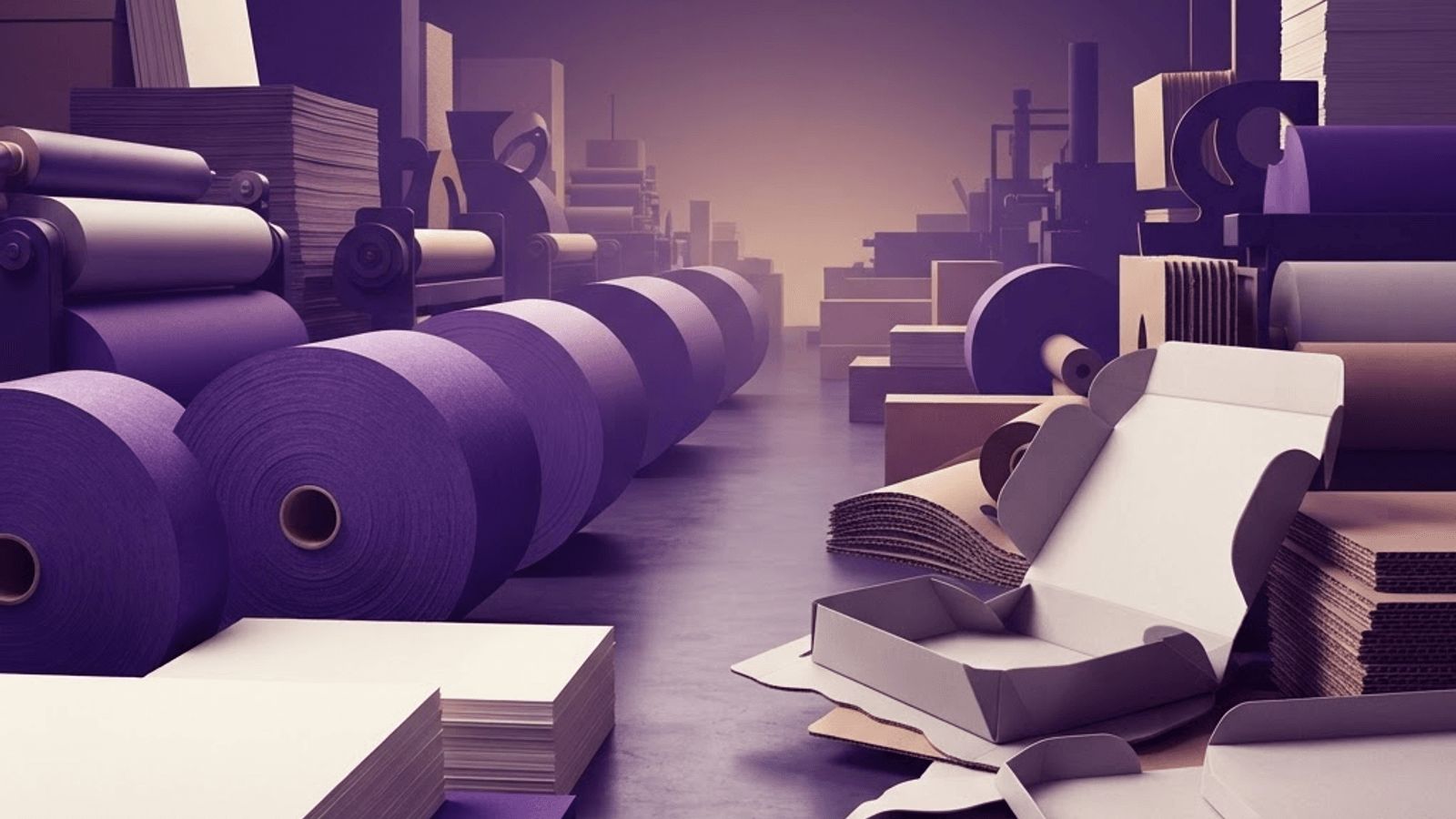
Paper Manufacturing in a Digital Age
Predictions of a paperless economy have proven half right. Office printing and print media have declined substantially, but packaging, hygiene products, and specialty paper applications have grown, largely because online retail moves physical goods that require protection. The industry did not shrink so much as shift.
Huntington's paper goods sector reflects that shift. Local manufacturers concentrate on corrugated packaging, protective materials, hygiene and away-from-home products, and specialty converting. Regional fiber supply, established converting capability, and freight economics all favor local production, since shipping air inside empty boxes over long distances makes little economic sense.
How These Companies Were Reviewed
Assessment considered converting capability, structural design support, print quality, sustainability certification, delivery reliability, and reputation among industrial and commercial buyers.
1. Riverport Corrugated Packaging
Riverport manufactures corrugated boxes, partitions, and protective inserts, with structural design and drop testing capability in-house. Their engineers frequently reduce customer packaging cost by redesigning box structure rather than downgrading board grade, which protects product integrity while lowering spend.
2. Meridian Custom Cartons
Meridian produces folding cartons and printed retail packaging with high-quality graphics for food, consumer goods, and promotional customers. Color consistency across production runs and short-run digital capability for seasonal packaging are notable strengths.
3. Cardinal Hygiene Products
Cardinal manufactures tissue, towel, napkin, and away-from-home hygiene products for institutional and commercial distribution. Serving schools, healthcare facilities, and hospitality operators requires dependable volume supply, and the company's consistency has built long institutional relationships.
4. Appalachian Specialty Papers
Appalachian produces coated, laminated, and functional papers for industrial applications including release liners, barrier papers, and technical substrates. This is engineering work rather than commodity production, and the company's laboratory supports customer-specific development.
5. Summit Protective Packaging
Summit supplies paper-based void fill, wrapping, and cushioning systems along with the dispensing equipment to use them efficiently. Demand has risen sharply as shippers move away from plastic protective materials, and the company's systems approach reduces both material use and labor time.
6. Ironline Industrial Paper Products
Ironline manufactures cores, tubes, edge protectors, and paperboard components for industrial customers. These unglamorous products are essential to shipping and winding operations, and the company competes on dimensional consistency and crush strength.
7. Valley Commercial Printing and Converting
Valley combines commercial printing with converting, producing labels, forms, tags, and printed paper products. Variable data printing capability supports customers needing serialized or individualized output at volume.
8. Renew Fiber Recycling
Renew collects and processes recovered paper and cardboard into pulp feedstock, supplying regional mills and converters. Contamination control determines the value of recovered fiber, and the company invests heavily in sorting quality to maintain grade.
9. Heritage Stationery and Fine Papers
Heritage produces stationery, invitations, and fine paper goods using letterpress and specialty finishing techniques. Demand for tactile, high-quality printed material has proven durable precisely because digital communication is so abundant.
10. Foundry Packaging Design Studio
Foundry provides structural and graphic packaging design, prototyping, and testing for brands and manufacturers. Working independently from any single converter, the studio designs for performance and cost rather than for a particular plant's equipment.
Trends Shaping Paper Goods
Substitution away from plastic packaging has become the sector's strongest growth driver, particularly in protective and food service applications. Brand owners increasingly require certified fiber sourcing and recycled content documentation. Right-sizing packaging to reduce dimensional shipping weight has become a measurable cost lever, favoring converters with design capability. And shorter print runs with digital production allow packaging variation that would have been prohibitively expensive a decade ago.
How to Buy Paper Products Effectively
Specify performance rather than material where possible, including stacking strength, drop protection, and moisture exposure, then allow the converter to propose the most efficient construction. Request testing data instead of relying on board grade alone. Discuss order quantities and warehousing honestly, since packaging carries real storage cost and obsolescence risk when artwork changes. Confirm certification documentation if you make sustainability claims, and evaluate total delivered cost including freight, since low unit price on bulky items is often illusory.
Sustainability in Practice
Paper has a genuine advantage in recovery rates, since corrugated and office paper are among the most successfully recycled materials in the economy. That advantage is not automatic, though. Coatings, laminations, adhesives, and plastic windows can render an otherwise recyclable package difficult to process, and mixed material construction is a common reason packaging fails recovery in practice.
Manufacturers that take this seriously design for recovery from the outset, choosing water-based coatings where performance allows, minimizing material combinations, and specifying recycled content that the converting process can actually handle without strength loss. For buyers making public sustainability claims, the important step is asking for documentation of fiber sourcing, recycled content, and end-of-life recyclability under real municipal conditions rather than under laboratory assumptions.
Final Thoughts
Huntington's paper goods manufacturers span corrugated, cartons, hygiene, specialty papers, protective packaging, industrial products, printing, recycling, fine paper, and design services. The sector proved adaptable rather than obsolete, and buyers who engage converters as design partners consistently spend less while protecting their products better.