
Paint Here Is Protection, Not Decoration
Exterior paint in San Bernardino works harder than in almost any other climate in the country. Ultraviolet radiation is intense and nearly year-round, surface temperatures on south and west elevations climb well past air temperature, and the daily swing between afternoon heat and cool nights makes substrates expand and contract continuously. Add wind-driven dust, occasional intense rain, and irrigation overspray, and a coating is under constant attack.
The dominant local substrate is stucco, which changes the calculus further. Stucco is porous, alkaline when new, and prone to hairline cracking as buildings settle and thermal cycles accumulate. A coating applied over unrepaired cracks or an unsealed surface will fail early regardless of how expensive the paint was. This is why the difference between a five-year paint job and a fifteen-year paint job is almost entirely preparation, not product.
Painting Contractors Serving the City
The local market divides between residential repaint specialists, commercial and industrial coating firms, and full-service companies that do both. Residential-focused operations along the lines of Inland Empire Painting, Precision Painting, and Elite Painting and Restoration handle interior and exterior repaints, stucco crack repair, trim and door refinishing, and cabinet coating.
CertaPro Painters style franchise operations bring standardized estimating, written scopes, and warranty administration, which appeals to homeowners who want documentation and a predictable process. Five Star Painting and Custom Painting style firms compete in the same band with strong emphasis on scheduling reliability.
On the commercial side, contractors resembling Empire Coatings, Pacific Coast Painting, and Sinanian Development style painting divisions handle apartment complexes, retail centers, warehouses, and institutional buildings, where scale, traffic control, and occupied-building coordination matter as much as finish quality. Specialty firms handle elastomeric recoating, industrial floor coatings, tank and structural steel work, and anti-graffiti systems.
Choosing the Right Coating
For stucco exteriors, high-quality 100 percent acrylic paint remains the mainstream choice. It breathes, tolerates alkalinity better than oil-based products, and holds color under UV exposure when the pigment package is good. Elastomeric coatings are thicker, bridge hairline cracks, and offer superior water resistance, but they must be applied at correct thickness over properly prepared surfaces or they trap moisture and blister. Elastomeric is a repair-oriented product, not a universal upgrade.
For trim, doors, and metal, waterborne alkyd and urethane-modified acrylic enamels have largely replaced traditional oil paint. They level well, cure hard enough to resist handling wear, and avoid the yellowing and long dry times of solvent-based enamels. Cabinet refinishing generally calls for a sprayed catalyzed or waterborne urethane system, which is why cabinet work is quoted separately from ordinary interior painting.
Color choice has a functional dimension too. Darker exterior colors absorb significantly more heat, which raises surface temperature, accelerates coating failure, and increases cooling load. Lighter and mid-tone colors last longer and perform better in this climate, and some newer formulations use infrared-reflective pigments to keep deeper colors cooler.
Preparation Determines Longevity
A defensible exterior scope should include pressure washing to remove chalk, dust, and mildew, then full drying time before coating. Hairline stucco cracks are typically filled with an elastomeric patching compound, while wider cracks may require cutting out and patching with stucco material. Failed or peeling areas are scraped back to sound substrate and feathered. Bare or repaired stucco needs a masonry primer or conditioner. Wood is sanded, cleaned, and spot primed, especially at end grain and joints where water enters first.
Caulking is the most commonly shortchanged step. Windows, door frames, penetrations, and dissimilar-material joints should be sealed with a high-grade elastomeric or polyurethane sealant, not painter's caulk that hardens and splits within a couple of seasons. Ask specifically which sealant will be used and where.
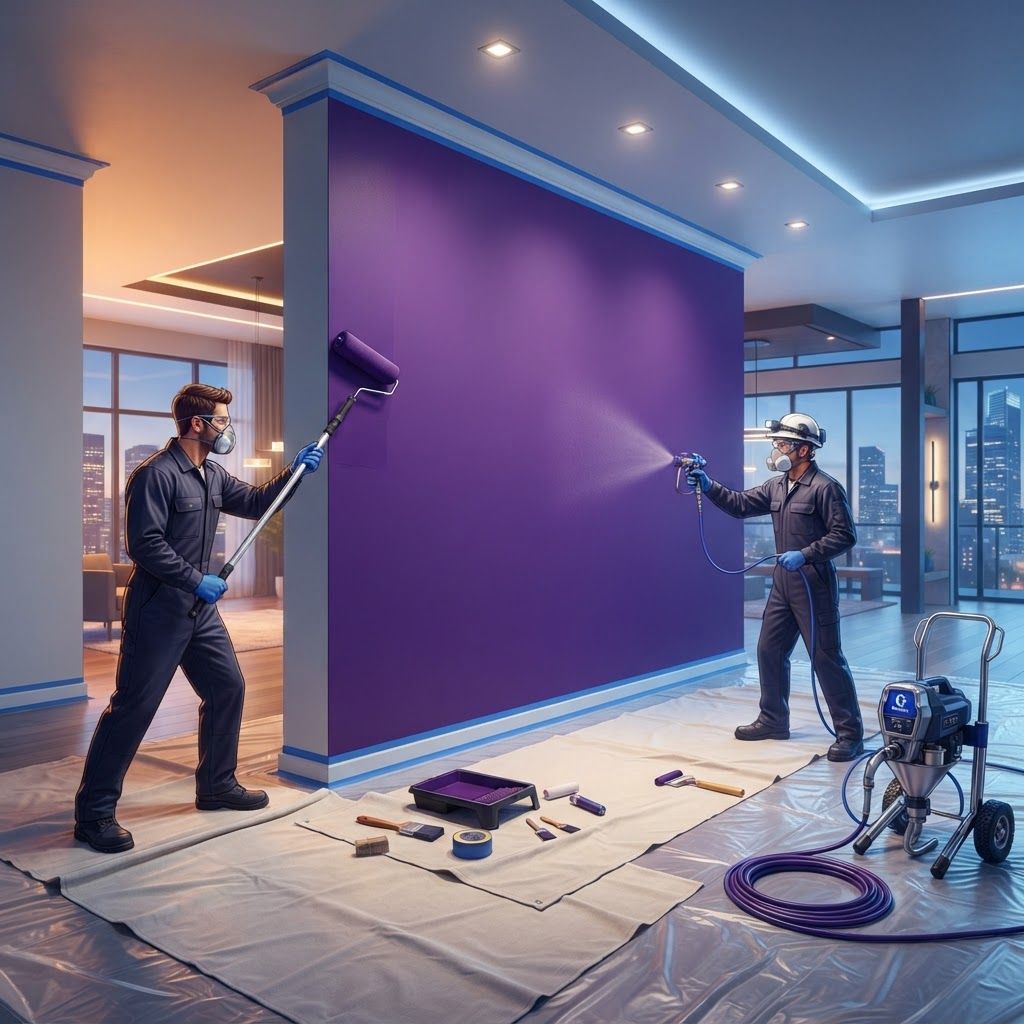
Application matters as well. Spray application on stucco gives even coverage into the texture, but it should be back-rolled on the first coat so the coating is worked into the surface rather than sitting on the peaks. Two full coats are the norm for a color change or a weathered surface. Manufacturer spread rates in the specification are a useful check against under-application.
Reading a Painting Estimate
Compare bids on scope, not just price. A complete proposal should state surface preparation steps, patching and caulking materials, the exact product and finish sheen for each surface, number of coats, masking and protection procedures, and the warranty term with what it actually covers. Two bids that differ by thousands usually differ in washing, patching, priming, and coat count, all of which are invisible on the day the job finishes and decisive three years later.
Verify a current California contractors license, active workers compensation coverage, and general liability insurance. In California, a licensed contractor may not request a down payment exceeding ten percent of the contract or one thousand dollars, whichever is less, and progress payments should follow completed work. For occupied homes, confirm daily cleanup expectations, work hours, and how furniture and landscaping will be protected. For properties built before 1978, lead-safe renovation practices are legally required when disturbing painted surfaces.
Timing and Maintenance
Spring and fall generally produce the best results because surface temperatures stay within manufacturer application ranges. Mid-summer work is possible but should follow the shade around the building and avoid coating surfaces above recommended temperature limits, where paint dries too fast to form a proper film. Winter is workable in this climate provided overnight lows stay above minimum application temperature.
Between repaints, low-effort maintenance extends coating life considerably: rinse dust and irrigation deposits off walls, redirect sprinklers away from stucco and wood, keep landscaping trimmed back from the building, inspect caulk joints annually, and touch up chips before water reaches the substrate. A well-prepared acrylic exterior can reasonably last ten to fifteen years in San Bernardino, while a poorly prepared one may need attention in five.