
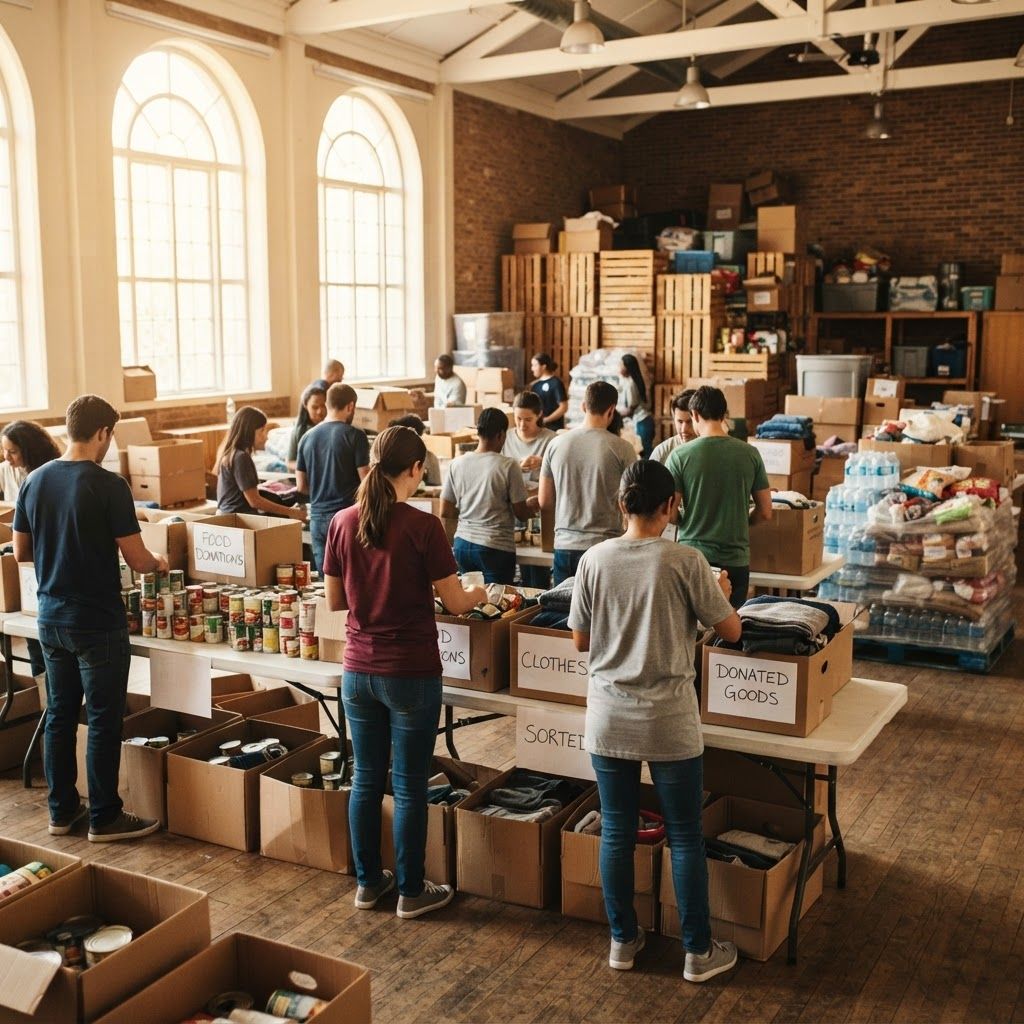
A City Built on Civic Commitment
St. Louis has one of the most active nonprofit sectors of any mid-sized American metro. Generations of family foundations, corporate giving programs and grassroots neighborhood associations have created an ecosystem where large institutional charities and small volunteer-run organizations work side by side. The result is a region where food assistance, housing support, workforce training and youth programming are delivered through dense, often overlapping networks of community organizations.
The city's challenges are real. Concentrated poverty in parts of north St. Louis, uneven access to healthcare, aging housing stock and educational disparities all demand sustained attention. The organizations below have earned recognition for addressing these issues with transparency, strong governance and outcomes that can actually be measured. Whether you are looking for a place to volunteer, a partner for corporate giving or simply an understanding of who does what locally, this list is a useful starting point.
1. Operation Food Search
Operation Food Search distributes free food and nutrition education across the bi-state region, supplying a large network of partner pantries, shelters and school programs. What distinguishes the organization is its emphasis on nutrition quality rather than volume alone, with fresh produce initiatives, weekend meal programs for students and cooking education for families. Its logistics operation is efficient enough that a single donated dollar translates into multiple meals, which is part of why it consistently earns high marks from charity evaluators.
2. St. Louis Area Foodbank
Serving dozens of counties across Missouri and Illinois, the St. Louis Area Foodbank functions as regional infrastructure for hunger relief. It sources, warehouses and distributes millions of pounds of food annually through hundreds of member agencies. Beyond distribution, the organization does significant work on benefits enrollment and on mobile markets that reach rural and transit-limited communities where traditional pantries are scarce.
3. Habitat for Humanity Saint Louis
Habitat's local affiliate builds and rehabilitates homes for working families and operates critical home repair programs that let older residents stay safely in place. In a city with substantial historic housing stock, that repair work matters as much as new construction. The affiliate also runs a ReStore that diverts building materials from landfills while funding operations, and it engages thousands of volunteers annually on build sites.
4. Urban League of Metropolitan St. Louis
The Urban League has been a central civil rights and economic empowerment institution in the region for over a century. Its programs span workforce development, financial literacy, entrepreneurship support, youth education and emergency assistance. The organization is often the first responder in community crises and has played a visible role in neighborhood stabilization efforts, particularly in north St. Louis and north St. Louis County.
5. Better Family Life
Better Family Life focuses on community stabilization at the block level, combining workforce training, housing counseling, cultural programming and violence de-escalation work. Its street outreach teams are widely respected for credible, relationship-based conflict mediation. The organization's cultural center also preserves and celebrates African American heritage, tying community development to cultural identity in a way few nonprofits attempt.
6. St. Patrick Center
St. Patrick Center provides housing, employment and health services to individuals experiencing or at risk of homelessness. Its model emphasizes permanent supportive housing paired with case management, mental health care and job placement rather than short-term shelter alone. That integrated approach has produced strong retention outcomes and made the organization a key partner in regional efforts to reduce chronic homelessness.
7. Nurses for Newborns
This organization sends registered nurses into the homes of at-risk new mothers across the region, providing health assessments, safe sleep education, breastfeeding support and connections to social services. Given persistent infant mortality disparities in parts of St. Louis, its work targets one of the region's most stubborn health gaps. The home visiting model builds trust with families who might otherwise avoid clinical settings.
8. Boys & Girls Clubs of Greater St. Louis
With clubhouses and school-based sites across the metro, this organization serves thousands of young people with after-school academic support, athletics, arts and career readiness programming. Its teen centers focus on graduation and post-secondary planning, and long-running mentoring relationships are a hallmark of the local clubs. For working parents, the clubs provide safe, affordable supervision during the hours when youth risk is highest.
9. Gateway Greening
Gateway Greening supports community gardens, urban farms and school gardens throughout the city, turning vacant lots into productive green space. The work touches food access, environmental education, neighborhood cohesion and job training simultaneously. In a city with a significant number of vacant parcels, the organization has demonstrated how land reuse can generate both food and social capital.
10. Forest Park Forever
Forest Park Forever partners with the city to restore and maintain one of the largest urban parks in the country, a space that draws millions of visitors each year and remains free to the public. Through private philanthropy, the organization has funded ecological restoration, athletic facilities, waterway projects and accessibility improvements. Its conservancy model has become a national reference point for public-private park stewardship.
How to Choose Where to Give or Volunteer
Effective giving starts with clarity about what you want to change. Direct service organizations produce visible short-term results, while advocacy and capacity-building groups work on slower structural change. Both are necessary. Reviewing an organization's annual report and audited financials reveals how much of each dollar reaches programs and whether revenue is diversified enough to weather a grant loss.
Volunteers should look honestly at time commitment. Skilled volunteering, such as accounting help, legal advice, marketing support or board service, often creates more value than occasional event shifts. Many St. Louis nonprofits are actively recruiting board members with financial and technical expertise.
Trends in the Local Nonprofit Sector
Several developments are reshaping how these organizations operate. Collaborative funding, where multiple foundations pool resources around a shared outcome, has grown. Data reporting expectations have risen, pushing organizations to invest in evaluation capacity. Many groups have adopted trauma-informed practice standards. And the persistent talent competition for social service staff has made compensation and retention a strategic priority rather than an afterthought.
Final Thoughts
The strength of the St. Louis nonprofit sector lies in its combination of long-established institutions and nimble neighborhood organizations. The ten profiled here differ in scale and method but share disciplined operations and clear community accountability. Supporting any of them, with money, time or professional skill, contributes to a civic infrastructure that has held the region together through decades of change.