
Why Equipment Suppliers Are Part of the Care Team
The gap between discharge and home
A hospital discharge plan often depends entirely on equipment arriving correctly and on time. A patient cleared to go home after hip surgery cannot leave safely without a walker, a raised toilet seat, and often a hospital bed or commode. Oxygen-dependent patients cannot be discharged until home concentrators are delivered and demonstrated. When equipment is delayed, misfitted, or never properly explained, readmission risk rises and recovery slows. Durable medical equipment suppliers, usually abbreviated DME, sit in this critical path and their competence has real clinical consequences.
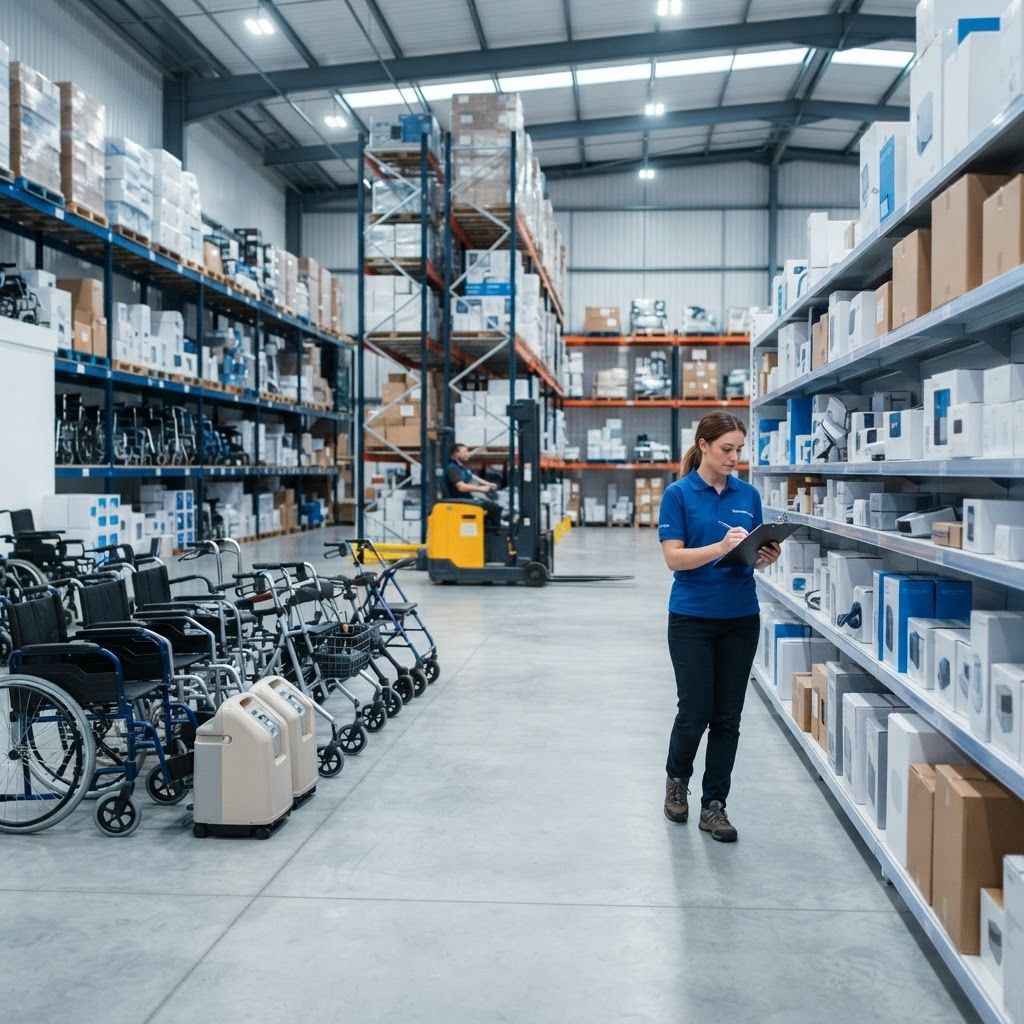
The category covers mobility equipment such as wheelchairs, walkers, and scooters; respiratory equipment including oxygen concentrators, CPAP, and nebulizers; hospital beds and pressure-relief mattresses; bathroom safety equipment; ostomy, wound care, and incontinence supplies; and diabetic testing and monitoring supplies. Few suppliers do all of it well, and specialization is common.
Insurance, Authorization, and Cost
How coverage actually works
Medicare Part B covers durable medical equipment when a physician documents medical necessity, typically paying eighty percent of the approved amount after the deductible, with the remainder falling to the patient or a supplemental plan. Crucially, Medicare pays only suppliers who are enrolled and, for competitively bid categories, contracted, which means choosing an out-of-network supplier can leave a patient paying the entire cost. Medi-Cal has its own authorization process and provider list. Commercial insurers frequently require prior authorization with clinical documentation before delivery.
The practical implication is that the physician's documentation determines approval. A prescription reading walker is often insufficient; approval usually requires a note establishing the diagnosis, the functional limitation, and why the specific equipment is necessary. Good suppliers help obtain that documentation rather than simply denying the request, and this administrative competence is one of the clearest differentiators in the industry.
Rental versus purchase
Many items are rented rather than bought, with Medicare converting some rentals to ownership after a set number of months. For short-term needs such as post-surgical recovery, rental is nearly always correct. For permanent needs, purchase or capped rental to ownership makes sense. Complex rehabilitation wheelchairs are custom-configured and effectively must be purchased with careful fitting, since an ill-fitting custom chair causes pressure injuries and cannot simply be swapped.
Ten Medical Supply Companies Serving Chula Vista
1. South Bay Medical Equipment
A full-service DME supplier covering mobility, beds, and bathroom safety with same-day or next-day delivery for hospital discharges and in-home setup demonstrations.
2. Bayfront Respiratory Services
Specialized in oxygen, CPAP, and BiPAP with respiratory therapists on staff for mask fitting and adherence follow-up. Fit quality is the primary determinant of CPAP compliance, making this expertise genuinely valuable.
3. Chula Vista Mobility Solutions
Focused on wheelchairs, power chairs, and scooters, including seating evaluations conducted with therapists for complex rehabilitation needs. Also handles repairs, which matters because a broken chair immobilizes a person entirely.
4. Eastlake Home Health Supply
Retail-plus-delivery model carrying wound care, ostomy, incontinence, and diabetic supplies with subscription reordering, reducing the risk of running out between shipments.
5. Otay Orthotics and Prosthetics
Custom bracing, orthotic fabrication, and prosthetic fitting by certified practitioners, with in-house adjustment capability for the iterative fitting these devices require.
6. Third Avenue Surgical Supply
Serves clinics and physician offices alongside consumers, stocking clinical consumables, examination supplies, and instruments. Useful for practices needing reliable local resupply.
7. Bonita Accessibility and Home Modification
Installs grab bars, ramps, stair lifts, and walk-in showers, addressing the environment rather than only supplying devices. Home modification prevents falls more effectively than equipment alone.
8. Palomar Diabetic Supply Center
Concentrated on glucose meters, test strips, continuous glucose monitors, insulin pump supplies, and therapeutic footwear, with staff experienced in the specific documentation these categories require.
9. Rancho del Rey Rehabilitation Equipment Rentals
Short-term rental specialist for post-surgical and post-injury needs, including knee walkers, CPM machines, and transport chairs, with flexible weekly terms.
10. Harborside Bariatric and Specialty Equipment
Supplies higher weight-capacity beds, lifts, wheelchairs, and bathroom equipment, a category with limited availability despite substantial need. Also provides patient lifts that protect caregivers from injury.
Getting Equipment That Actually Gets Used
Fitting and training are not optional
A walker set at the wrong height alters gait and increases fall risk. A wheelchair cushion chosen without pressure consideration causes skin breakdown. A CPAP mask that leaks gets abandoned within two weeks. Insist that delivery includes fitting, a demonstration, written instructions, and a contact number for adjustment. Ask specifically what happens when something breaks, including turnaround time for repairs and whether loaner equipment is available.
Reducing waste and cost
Before ordering, confirm the item is not already available through a lending closet, community program, or the discharging facility. Verify supplier network status with the specific insurance plan before delivery, not after. Keep documentation of medical necessity, since insurers audit and retroactive denials occur. For items being purchased outright, compare local supplier pricing against retail, because some bathroom safety and basic mobility items cost less purchased directly than processed through insurance with a deductible.