
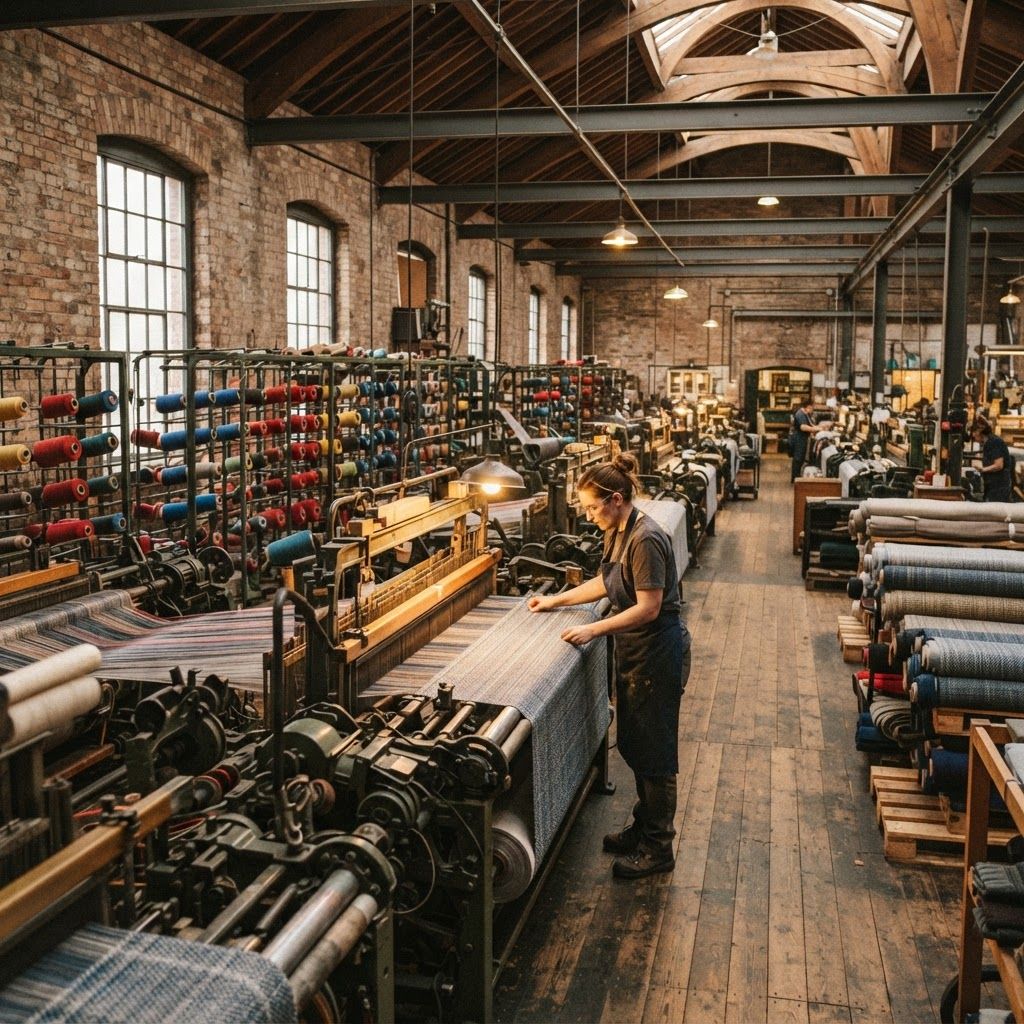
From Garment District to Technical Textiles
Few people realize how central St. Louis was to American clothing. In the early twentieth century, Washington Avenue housed one of the largest garment manufacturing districts in the nation, with the city ranking among the leading producers of junior dresses and shoes. The brick loft buildings that now hold apartments and offices were once filled with cutting tables, sewing lines, and pattern rooms employing tens of thousands of workers.
Global trade restructuring moved most commodity apparel production overseas, but the industry did not vanish locally. It transformed. What remains and what has grown is a sector focused on technical textiles, industrial fabrics, specialty and protective apparel, uniforms and workwear, upholstery and furnishing textiles, geotextiles, filtration media, medical textiles, and decoration and finishing services. These niches reward proximity, speed, engineering support, and quality control rather than the lowest possible labor cost.
Understanding the Segments
Technical and industrial textiles serve manufacturing, construction, agriculture, and transportation. Products include filtration fabrics, geotextiles for erosion control and roadbed stabilization, composite reinforcements, insulation materials, conveyor and belting fabrics, and coated substrates. These businesses look more like engineering firms than fashion houses, with laboratory testing, specification compliance, and material science expertise at their core.
Protective and performance apparel covers flame-resistant workwear, high-visibility garments, cut-resistant materials, and healthcare textiles. Certification against recognized standards is central, and traceability requirements are strict. Uniform and workwear manufacturing serves institutional customers including hospitals, schools, hospitality operators, transit agencies, and industrial employers, often paired with laundry and rental services.
Custom apparel and decoration is the most visible segment locally, encompassing screen printing, embroidery, direct-to-garment printing, sublimation, and cut-and-sew production for brands, teams, breweries, universities, and events. The region's strong sports culture, university presence, and dense craft beverage scene create steady demand. Finally, home textiles and upholstery production supports the region's furniture manufacturers and commercial interior designers with cut-and-sew soft goods, cushions, drapery, and specialty covers.
What Makes a Strong Textile Manufacturer
Quality systems come first. Serious producers document specifications precisely, maintain incoming material inspection, run in-process quality checks rather than end-of-line sorting, and hold relevant certifications for their market, whether that is ISO quality management, medical device requirements, or protective apparel standards. They can produce test data on tensile strength, colorfastness, shrinkage, flammability, or abrasion resistance rather than asserting quality generally.
Engineering support is a strong differentiator. The best partners help refine a design for manufacturability, suggest alternative constructions that reduce cost or improve performance, and prototype quickly. This collaborative capability is exactly what domestic production offers that offshore sourcing at distance typically cannot.
Operational discipline matters just as much. Realistic lead times, accurate capacity planning, transparent communication when a schedule slips, and consistent yields separate reliable suppliers from those that quote aggressively and deliver late. Sample approval processes, pre-production runs, and clear tolerance definitions prevent the most common disputes.
Trends Reshaping the Industry
Reshoring and nearshoring have gained real momentum. Supply chain disruptions taught buyers that landed cost is not the same as total cost when inventory sits on a ship for weeks and demand shifts. Domestic producers offering shorter lead times and lower minimums have captured business from brands that need responsiveness.
Sustainability has moved from marketing to specification. Recycled polyester content, organic and regenerative fiber sourcing, water and chemical reduction in dyeing and finishing, and take-back programs increasingly appear in requests for proposal. Traceability documentation is now a purchasing requirement for many institutional buyers, not an optional extra.
Automation and digitalization have changed the shop floor. Automated cutting, digital printing that eliminates screen setup and reduces water use, computer-aided pattern making, three-dimensional sampling, and production tracking systems have improved both efficiency and consistency. Smart textiles incorporating sensors and conductive materials represent a growing frontier, with medical and industrial monitoring as the leading applications.
How to Choose a Production Partner
Start by defining your requirements precisely: fiber content, construction, weight, performance standards, colorways, sizing, quantity, and delivery window. Vague specifications produce vague quotes and disappointing results. Then match scale honestly. A manufacturer built for fifty-thousand-unit runs will not serve a five-hundred-unit launch well, and vice versa.
Visit the facility whenever possible. Cleanliness, organization, equipment condition, and workforce stability communicate more than any brochure. Ask about capacity utilization, typical lead times during peak season, and how they handle rework. Request references and, critically, samples produced to your specification rather than generic showroom pieces.
Understand costing structure. Fabric, trim, cutting, sewing labor, decoration, finishing, packaging, and freight each contribute, and a partner who breaks this down helps you find savings intelligently. Clarify minimum order quantities, tooling or screen charges, payment terms, and ownership of patterns and artwork in writing.
Building a Durable Relationship
The most successful buyer-manufacturer relationships in this industry share information generously. Forecasts, even imperfect ones, allow producers to buy fabric efficiently and schedule labor. Early involvement in design lets manufacturers propose constructions that hit price targets. Regular quality reviews with data rather than anecdote keep standards climbing.
The Outlook for St. Louis Textiles
The region's textile sector will not return to its garment district scale, and it does not need to. Its future lies in technical performance, speed, customization, and engineering partnership, supported by central geography that puts most of the country within a short freight haul. Buyers who bring clear specifications, realistic volumes, and a collaborative approach will find capable and durable manufacturing partners across the metro.