
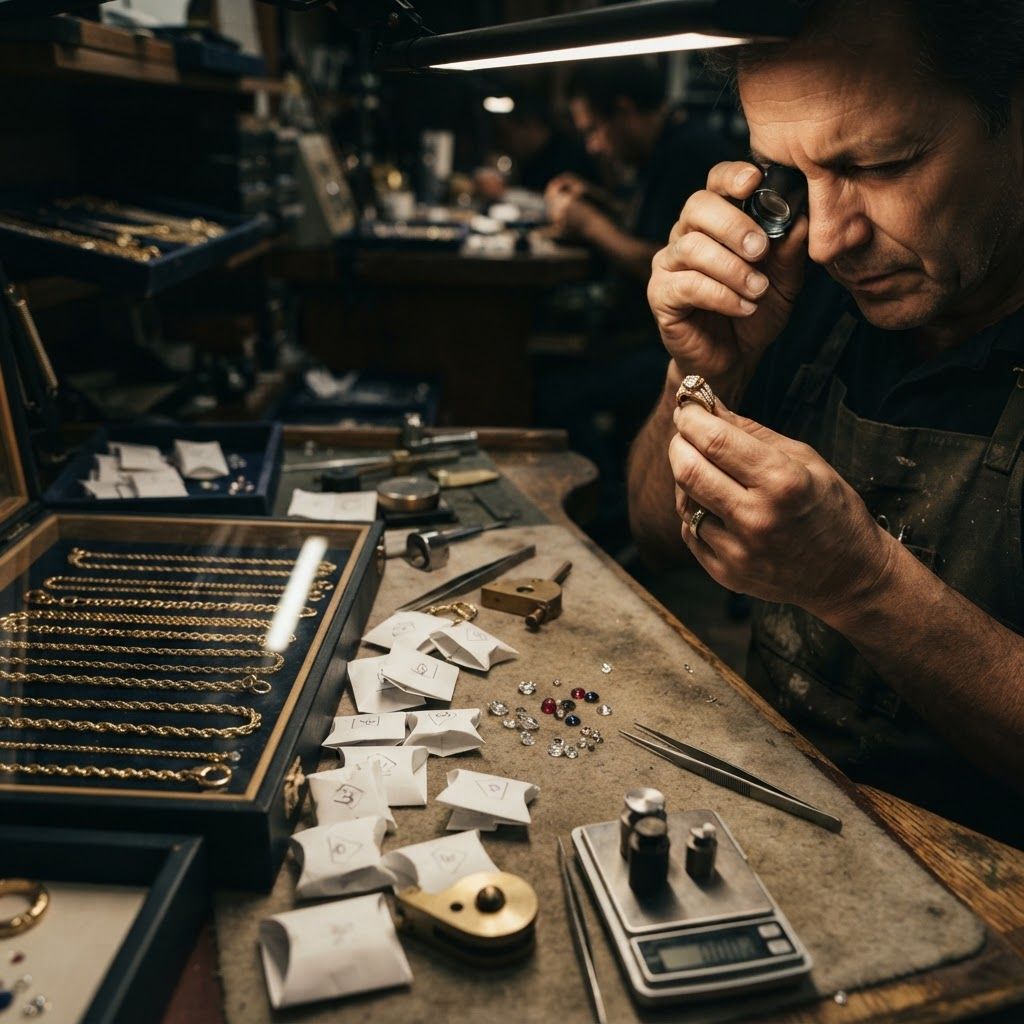
A Distinctive Jewelry Market
Jewelry buying in Chula Vista carries cultural weight that pure market data does not capture. Quinceanera celebrations, baptisms, weddings, and anniversaries all involve gifting traditions where jewelry plays a central role. Gold in particular functions as both adornment and store of value for many families, which sustains steady demand for higher karat pieces alongside the fashion driven market.
This creates a two sided opportunity for retailers. On one side sits classic demand for gold chains, religious pendants, bridal sets, and heirloom quality pieces. On the other sits a younger customer base drawn to minimalist stacking rings, lab grown diamonds, permanent jewelry, and personalized designs. Wholesalers who can serve both are the ones local retailers keep on speed dial.
Understanding the Wholesale Structure
The jewelry supply chain has several distinct layers. Manufacturers produce finished goods. Casting houses and findings suppliers serve designers who assemble their own pieces. Loose stone dealers supply diamonds and colored gemstones separately from the mountings. Refiners and bullion dealers handle precious metal in raw form. Understanding which layer you need prevents paying for margin you do not require.
Certification and disclosure are non negotiable. Diamonds should carry grading from a recognized laboratory such as the Gemological Institute of America or the International Gemological Institute. Lab grown stones must be disclosed clearly at every stage. Precious metal content must be accurately stamped. Retailers who cut corners here face liability that dwarfs any sourcing savings, and in a community driven market, reputational damage travels quickly.
1. Los Angeles Jewelry District Wholesalers
The downtown Los Angeles jewelry district remains the primary wholesale destination for Southern California retailers, and it is a comfortable day trip from Chula Vista. Hundreds of wholesalers operate there across finished goods, loose stones, findings, and repair services. The advantage is competitive density. The requirement is knowledge, because pricing and quality vary widely between neighboring booths.
2. Stuller
Stuller is the reference supplier for many independent jewelers in the United States. Its catalog covers mountings, findings, loose diamonds, tools, packaging, and metals, all available in small quantities with fast shipping. For a retailer who needs a specific head, shank, or setting today rather than in three weeks, its inventory depth is difficult to match.
3. Rio Grande
Rio Grande serves designers and bench jewelers with metals, gemstones, tools, and equipment. Its strength is supporting the making side of the business, from casting supplies to soldering equipment to finishing compounds. The growing community of independent makers and custom studios in the South Bay relies heavily on suppliers like this.
4. Lab Grown Diamond Suppliers
Lab grown diamonds have moved from novelty to mainstream in under a decade. Wholesalers specializing in this category offer certified stones at price points that let retailers present significantly larger center stones within a customer budget. Because pricing in this segment has been volatile, working with a supplier who provides current market pricing and clear grading is essential.
5. Gold Chain and Findings Specialists
Gold chain is a volume business with thin margins and high turnover. Specialists in this niche supply Italian and domestic chain in a wide range of styles and karats, sold by weight with a fabrication charge. Retailers serving the traditional gold market in Chula Vista typically maintain a direct relationship with a chain house rather than buying through a general wholesaler.
6. Colored Gemstone Dealers
Sapphire, ruby, emerald, and a widening range of alternative stones such as spinel, tourmaline, and morganite have gained ground in engagement jewelry. Reputable colored stone dealers disclose treatments, origin where known, and durability considerations. That last point matters practically, since a beautiful but fragile stone in a daily wear ring becomes a warranty problem.
7. Silver and Fashion Jewelry Wholesalers
Sterling silver and fashion jewelry drive foot traffic and impulse purchases. Wholesalers in this category offer trend responsive assortments with low minimums, which allows retailers to test styles without deep inventory commitment. Rapid turnover and strong visual merchandising are what make this segment work.
8. Watch Distributors
Authorized watch distribution is tightly controlled, but wholesalers serving the accessible and mid tier segments supply brands that pair well with jewelry assortments. Battery service, strap replacement, and warranty handling are recurring service needs that keep customers returning to the store.
9. Refiners and Precious Metal Buyers
Refiners close the loop. Retailers accumulate bench sweeps, scrap, and trade in pieces that carry real value. A reputable refiner provides transparent assay results, clear fee structures, and prompt settlement. Many local jewelers find that a disciplined scrap program contributes meaningfully to annual profitability.
10. Custom Manufacturing and Design Services
Custom design has become a growth engine for independent jewelers. Wholesale partners offering computer aided design, three dimensional printing, casting, and finishing let a small store deliver bespoke work without owning the equipment. Turnaround time and revision handling are the criteria that separate a good partner from a frustrating one.
Trends Shaping the Category
Three shifts stand out. Lab grown stones have permanently altered price expectations and pushed natural diamond marketing toward rarity and provenance. Permanent jewelry, where a chain is welded directly on the wrist, has created a service revenue stream with minimal inventory risk. And traceability is rising in importance, with customers increasingly asking where materials originate, which favors suppliers who can document their chain of custody.
Advice for Retailers and Designers
Diversify deliberately. Anchor with one broad line supplier for mountings and findings, add a specialist for your strongest category, and maintain a custom partner for high margin bespoke work. Negotiate consignment terms on higher value goods so display inventory does not consume your working capital. Above all, invest in your own gemological knowledge. In a business built on trust, the retailer who can explain exactly what a customer is buying wins the relationship and the referral.