
Why Home Security in Buffalo Is About More Than Burglary
Security systems in Western New York earn their keep in winter. A furnace that fails during a January cold snap can freeze and split supply lines in hours, and the resulting water damage routinely costs more than a burglary would. That is why the most useful Buffalo installations pair intrusion sensors with low-temperature sensors, water leak detectors near hot water tanks and laundry hookups, and smoke and carbon monoxide devices integrated into the same monitored panel. When the system calls a central station for a temperature drop, a homeowner traveling in February gets a chance to intervene before the pipes burst.
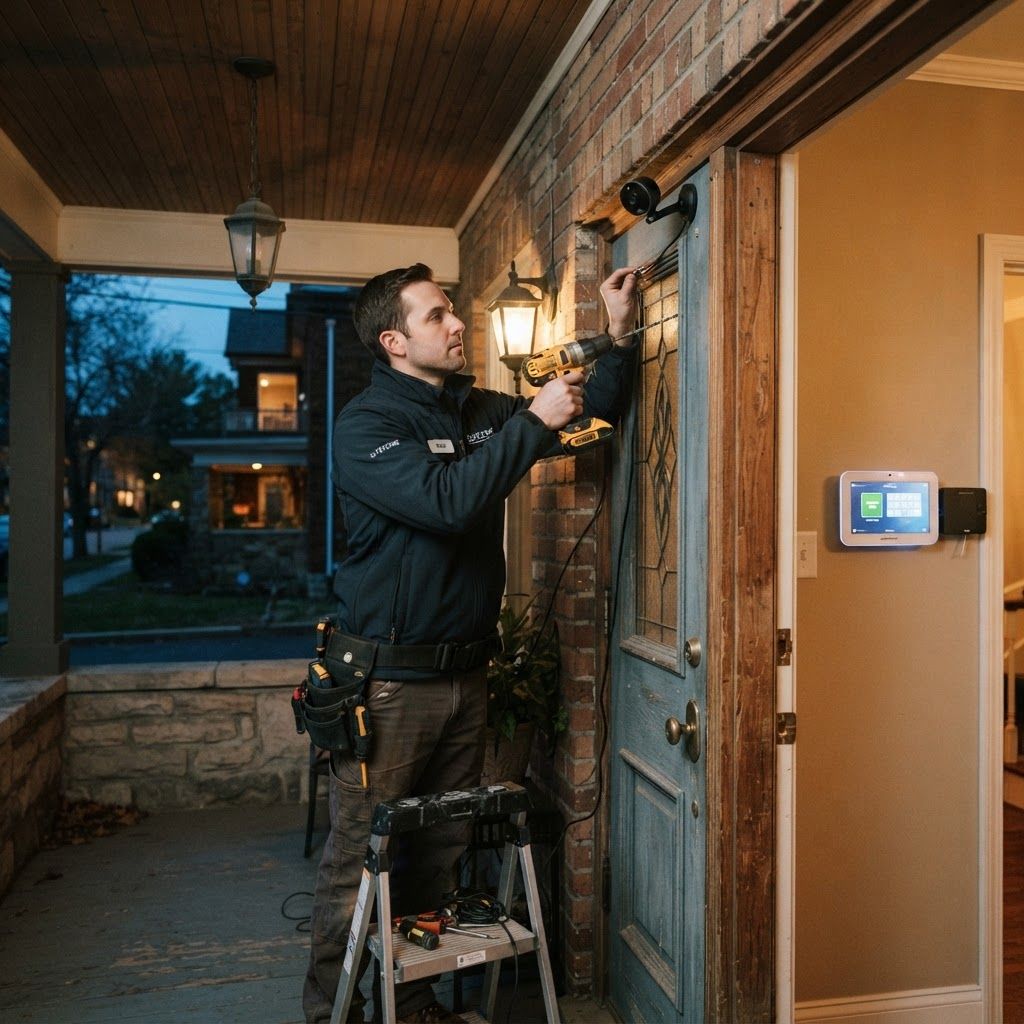
Package theft and porch-camera monitoring have become the second driver of demand, particularly in dense neighborhoods with street-front entries. Video doorbells and exterior cameras with local storage and cloud backup are now standard requests rather than premium add-ons.
Professional Monitoring Versus Self-Monitoring
The core decision for most households is whether to pay for professional central-station monitoring or rely on self-monitored app alerts. Professional monitoring means a trained operator verifies the alarm and dispatches Buffalo police or fire, which matters when you are asleep, out of cell coverage, or on a flight. Self-monitoring costs less and works well for deterrence and awareness, but it puts the dispatch burden entirely on you.
Buffalo, like many municipalities, takes false alarms seriously, so systems with verified response, two-way voice, or camera confirmation reduce the risk of nuisance dispatches. Cellular backup is also essential given regional storm-related power and internet outages, and battery backup should be sized to carry the panel through a multi-hour interruption.
Ten Home Security Providers Serving Buffalo
1. Doyle Security Systems is a family-owned Upstate New York company with its own UL-listed central station, and it is widely respected in Buffalo for local response and long-term customer retention.
2. ADT remains the most recognized name nationally, with a large Buffalo-area installer and service network, professional monitoring, and a broad equipment catalog spanning intrusion, video, and smart home control.
3. Vivint Smart Home focuses on integrated smart home security with professionally installed cameras, smart locks, and thermostats managed from a single hub, appealing to homeowners who want automation alongside monitoring.
4. SimpliSafe offers a DIY-friendly wireless system with optional professional monitoring and no long-term contract, making it a common pick for renters and smaller Buffalo apartments.
5. Brinks Home combines professional monitoring with flexible equipment options and is often chosen by homeowners who want a monitored panel without a heavy automation package.
6. Ring Alarm pairs affordable hardware with an inexpensive optional monitoring plan and integrates tightly with the video doorbells already installed on thousands of Buffalo porches.
7. Guardian Protection serves the region with professionally installed systems and interactive services, and it is frequently used in new-construction suburbs in Amherst and Clarence.
8. Sonitrol of Western New York specializes in audio-verified detection for commercial and institutional properties, a technology that significantly reduces false dispatches.
9. Kenmore Security and comparable independent local integrators handle custom work such as multi-camera IP surveillance, access control, and integration with existing wiring in older Buffalo homes.
10. Alarm.com-powered regional dealers deliver a common software platform through independent Buffalo installers, giving homeowners local service with a mature, well-supported app ecosystem.
Reading the Contract Carefully
Contract structure is where buyers most often get surprised. Ask three questions before signing: how long is the monitoring term, does it auto-renew, and do you own the equipment outright at the end. Some providers subsidize hardware in exchange for a multi-year agreement, which is reasonable if disclosed but expensive if you move within the term. Also confirm whether the panel is proprietary. Equipment locked to one monitoring company cannot be transferred to a competitor, while systems on open platforms can often be re-provisioned.
Designing Coverage That Actually Works
A well-planned Buffalo system protects the perimeter first: exterior doors, ground-floor windows, and the basement or garage entry that many burglars prefer. Interior motion detection provides a second layer. Cameras should cover approach paths and entry points rather than open lawn, and exterior units need to be rated for sub-zero operation, since consumer cameras can fail in extreme cold. Place the low-temperature sensor near the coldest exterior wall or the furnace zone, and put leak sensors under the water heater, behind the washer, and near any basement floor drain.
Choosing With Confidence
The strongest choice for most Buffalo households is a monitored system with cellular backup, environmental sensors, and clear contract terms from a provider with local technicians who can be on site the same week. Deterrence is valuable, but the real return comes from catching a furnace failure or a slow leak before it becomes a claim.