
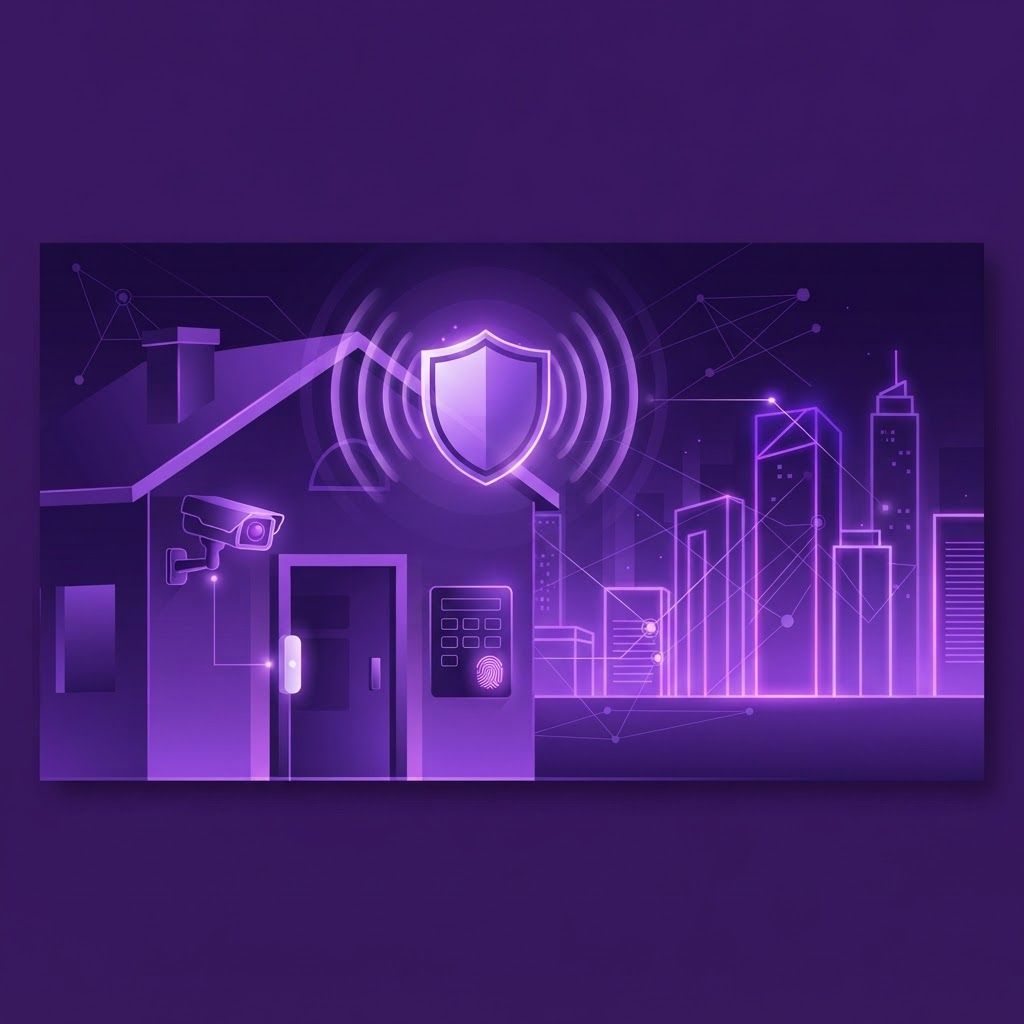
Security as a Layered System
Home security is most effective when it is understood as a series of layers rather than a single product. The outermost layer is deterrence: visible cameras, lighting, gates, and signage that make a property a less attractive target. The next layer is delay, meaning physical measures such as quality locks, reinforced doors, window locks, and secured access points that slow an intruder down. Then comes detection, provided by motion sensors, door and window contacts, glass-break sensors, and cameras with analytics. The final layer is response, whether that is a monitoring centre, a mobile alert, or a neighbour with a key.
Systems fail when one layer is over-invested and the others ignored. A property with eight cameras and an unlocked side gate is poorly protected, and so is one with excellent locks and no way to know a breach has occurred. The strongest security companies in Babylon begin with a site survey that identifies weak layers rather than immediately quoting hardware.
Ten Security Companies With Strong Local Standing
Babylon Secure Systems is a full-service integrator offering design, installation, and monitoring across alarms, cameras, and access control, valued for structured cabling and documented system layouts. GuardTech Surveillance Solutions specialises in video, from residential camera packages to multi-site network video recorder deployments with remote viewing.
SafeGate Access Control focuses on entry management, including gate automation, video intercoms, keypad and card access, and biometric readers for villas and residential compounds. Sentinel Alarm Monitoring operates a round-the-clock monitoring centre with verified response protocols, which addresses the layer most self-installed systems lack.
SmartShield Home Automation integrates security with broader home automation, linking lighting, blinds, locks, and climate control into unified control applications. Their strength is coordination rather than any single device. Crescent Commercial Security serves offices, retail units, and warehouses, adding intrusion detection, staff access logging, and integration with fire and evacuation systems.
IronDoor Physical Security concentrates on the mechanical layer, supplying high-security locks, reinforced doors, safes, window security, and grille systems designed to be discreet rather than institutional. FiberEye Network Security supports the increasingly important digital side, hardening home networks, segmenting connected devices, and securing camera systems against remote compromise.
Northgate Fire & Life Safety covers smoke, heat, and gas detection alongside intrusion systems, recognising that fire remains a more statistically likely household emergency than burglary. Completing the list, Atlas Rapid Response Security provides manned guarding, mobile patrols, and event security for compounds and larger properties.
Specifying Cameras Sensibly
Camera selection generates more confusion than any other part of a security system. Resolution matters, but placement and lens choice matter more. A high-resolution camera mounted too high captures the tops of heads rather than identifiable faces, while a well-placed camera at approach height provides usable identification at modest resolution.
In Babylon's climate, environmental rating is critical. Outdoor units need adequate weather sealing, heat tolerance, and shading from direct sun, since internal temperatures inside a poorly shaded housing can exceed component limits and shorten lifespan dramatically. Infrared performance determines night usefulness, and cameras positioned behind glass suffer badly from reflection, so external mounting is generally preferable.
Storage strategy deserves early attention. Local recording retains footage without ongoing fees but is vulnerable to theft of the recorder, while cloud storage protects footage offsite at a recurring cost. Many households choose a hybrid, keeping full-resolution local recording alongside cloud backup of alert clips. Also confirm retention period, as footage that is overwritten within two days is often useless by the time an incident is noticed.
Alarms, Sensors, and False Alarm Fatigue
Sensor design determines whether a system is trusted or ignored. Poorly configured motion detectors triggered by pets, curtains moving under air conditioning, or sunlight patterns produce constant false alarms, and households quickly stop responding. Pet-immune sensors, correctly angled placement, dual-technology detectors, and camera-verified alerts all reduce this problem substantially.
Perimeter detection is generally more useful than interior volumetric coverage in occupied homes, since door and window contacts allow the system to remain armed at night without restricting movement indoors. Battery backup and tamper detection are essential, as is a communication path that does not depend solely on mains power or a single internet connection.
Privacy and Digital Security
Connected security devices introduce their own risks. Cameras with default passwords, outdated firmware, or exposed remote access ports have been compromised often enough that treating them as inherently safe is unwise. Practical measures include changing default credentials, enabling two-factor authentication on the management application, keeping firmware current, and placing cameras on a separate network segment from personal computers.
Privacy within the household matters too. Cameras should be positioned to cover entry points and shared spaces rather than bedrooms and bathrooms, and their coverage should respect neighbouring properties. Reputable installers in Babylon raise these considerations proactively, and their willingness to do so is a useful indicator of professionalism.
Choosing a Provider and Avoiding Overspend
Ask for a site survey before any quotation, and expect the resulting proposal to explain why each device is placed where it is. Compare the total cost of ownership rather than hardware price alone, including monitoring subscriptions, cloud storage, maintenance visits, and battery replacement. Long monitoring contracts with early termination penalties deserve careful reading.
Resist feature accumulation. Most households genuinely benefit from good locks, entry point sensors, two or three well-placed cameras, reliable alerting, and smoke detection. Facial recognition analytics, dozens of cameras, and elaborate automation add cost and complexity that many owners never use. Spend the budget on the weakest layer instead.
Final Thoughts
Effective home security in Babylon comes from balanced layers, sensible specification, and systems that residents actually trust and use. The ten companies profiled here cover integration, video, access control, professional monitoring, automation, physical hardening, network security, life safety, and manned response. Start with a survey, strengthen physical measures alongside electronics, secure the digital side properly, and choose a provider that explains its recommendations rather than simply selling equipment.