
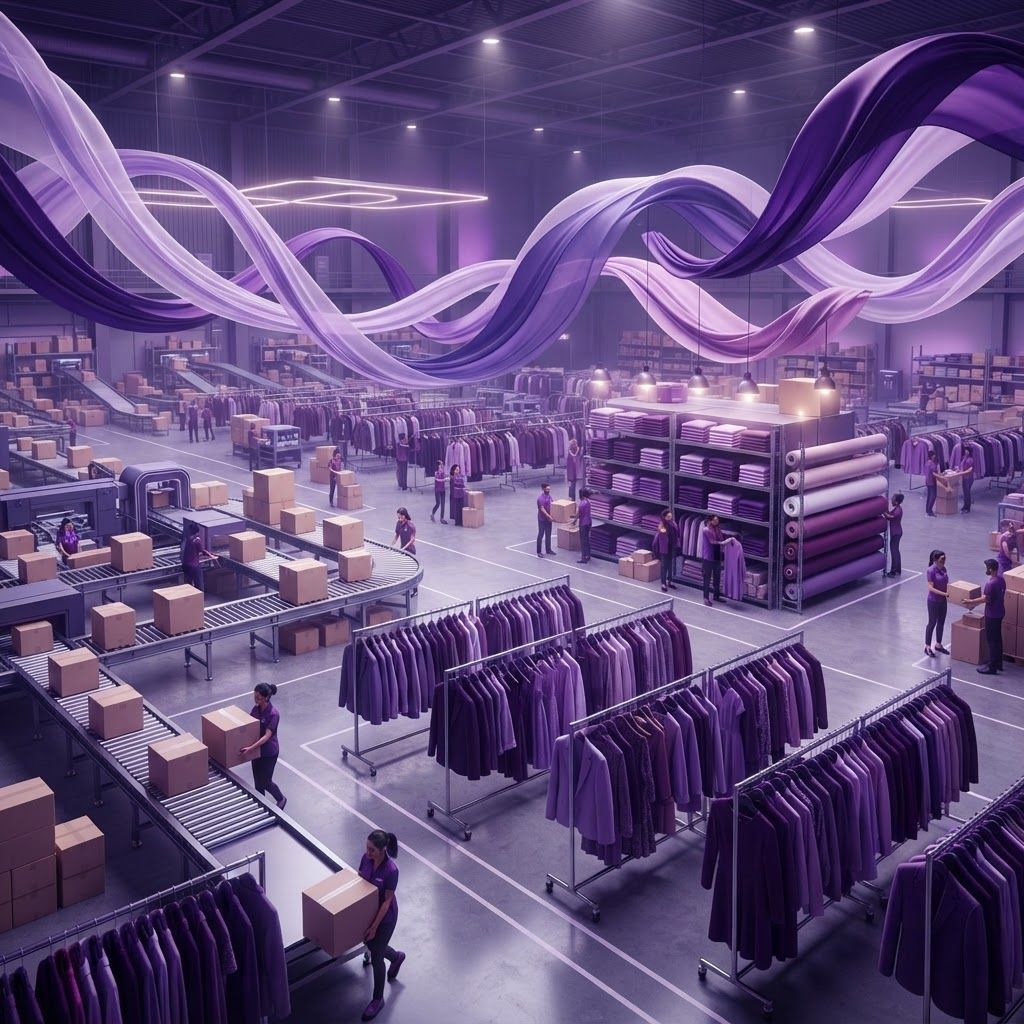
Fontana's Position in the Apparel Supply Chain
Los Angeles remains one of the world's major apparel centres, and Fontana has become an increasingly important extension of it. As downtown warehouse costs rose, distribution and fulfilment operations moved inland where space is affordable and freight access is superior. For apparel wholesalers, that shift makes sense. Clothing is high in volume, requires substantial storage, and moves through rapid seasonal cycles that demand efficient pick and pack operations.
The buyer base here is broad and growing. Independent boutiques across the Inland Empire, online sellers operating from home or small warehouses, screen printing and embroidery shops needing blanks, uniform programs serving logistics and hospitality employers, and event merchandise businesses all purchase wholesale apparel locally. Being able to visit a showroom, inspect fabric and pick up inventory the same day is a real advantage over ordering from photographs.
Understanding Apparel Wholesale Categories
Blank apparel wholesalers supply undecorated garments for printing and embroidery, competing on consistency and colour range. Fashion wholesalers carry trend-driven styles with short lifecycles and frequent new arrivals. Basics wholesalers focus on staples that sell year-round. Uniform and workwear distributors serve employers with durable garments and often provide decoration services. Closeout and liquidation wholesalers offer discounted overstock. Each category has a different rhythm, and mixing them requires deliberate planning.
The Top 10 Clothing Wholesalers Serving Fontana
1. Inland Empire Apparel Wholesale
A broad-line wholesaler carrying women's, men's and children's apparel across casual and everyday categories. Its strength is assortment flexibility, with pack sizes that let small boutiques test styles before committing to depth. Regular new arrivals keep the assortment relevant through seasonal shifts.
2. Fontana Blanks and Print Supply
Blank tees, hoodies, hats and activewear serve screen printers, embroiderers and merchandise brands. Consistent sizing and dye lot management matter enormously to decorators, since mismatched garments in one order create customer complaints regardless of print quality.
3. Sierra Fashion Distribution
Focused on trend-forward women's apparel including dresses, tops and outerwear, this wholesaler refreshes its assortment frequently. Buyers who follow fast-moving trends value the pace, and a physical showroom allows them to judge drape and fabric weight in person.
4. Valley Workwear and Uniform Supply
Durable workwear, high-visibility garments, scrubs and hospitality uniforms serve employers across warehousing, construction, healthcare and food service. Programme management with size sets, reorder support and decoration keeps employer accounts simple to administer.
5. Cypress Children's Apparel Wholesale
Infant, toddler and youth clothing is supplied to boutiques and online sellers. Safety compliance including drawstring and flammability standards is treated seriously here, which protects retailers from liability they may not fully understand.
6. Fontana Denim and Casual Wholesale
Jeans, denim jackets and casual bottoms across a range of fits and washes form the specialty. Fit consistency is the persistent challenge in denim, and this wholesaler's attention to grading and sample verification reduces return rates for its retail customers.
7. Foothill Activewear and Athleisure Distribution
Leggings, sports bras, performance tops and athleisure sets serve fitness studios, boutiques and online brands. Technical fabric knowledge including moisture management and stretch recovery helps buyers select product that performs as marketed.
8. Arrow Ridge Accessories and Footwear Wholesale
Bags, belts, scarves, jewellery and footwear complement apparel assortments and typically carry stronger margins. For boutiques, accessories increase average transaction value, making this a strategically useful supplier alongside clothing sources.
9. Metro West Closeout Apparel
Overstock, end-of-season and cancelled order inventory is offered at substantial discount to value retailers and online sellers. Transparent condition and quantity disclosure is essential in liquidation, and reliability there has earned repeat business.
10. Rialto Fontana Private Label Apparel
Rather than reselling existing brands, this company supports private label development including fabric sourcing, sampling and production coordination. For brands ready to move beyond reselling, having a local partner for development shortens the learning curve considerably.
Evaluating Quality Before You Commit
Photographs conceal almost everything that determines apparel quality. Request samples and evaluate fabric weight, stitch density, seam finishing, colourfastness and label quality. Wash test samples, because shrinkage and fading are the most common sources of customer complaints. Verify sizing against your customer base rather than assuming standard measurements. Check that fibre content and care labeling comply with regulations, since retailers carry responsibility for accurate labeling. For any garment intended for children, confirm applicable safety compliance in writing.
Terms, Minimums and Cash Flow
Apparel wholesale terms vary widely. Some wholesalers sell by the piece, others require pre-packs with assorted sizes, and some enforce minimum order values. Understand how these structures affect your inventory risk, because a pre-pack forces you to buy sizes you may not sell. Ask about payment terms, reorder availability and whether the wholesaler will hold inventory against a forecast. Clarify return policies for defective goods. Most importantly, avoid tying up capital in slow-moving depth, since apparel that misses its season loses value rapidly.
Trends in Apparel Wholesale
Sustainability is influencing sourcing decisions, with organic cotton, recycled polyester and transparent supply chain documentation increasingly requested by end consumers. Nearshoring has accelerated, shortening lead times and reducing minimum quantities relative to distant sourcing. Direct-to-consumer growth has expanded the small-buyer segment, pushing wholesalers to lower minimums and offer dropshipping. Finally, inclusive sizing has become a mainstream expectation rather than a niche, reshaping assortment planning throughout the industry.
Final Thoughts
Fontana's clothing wholesalers serve everyone from a single-person online shop to established uniform programmes. Success as a buyer comes from disciplined assortment planning, honest quality evaluation and terms that protect your cash flow. Build relationships with two or three wholesalers whose categories complement each other, order samples before depth, and let actual sell-through rather than intuition guide your reorders.