
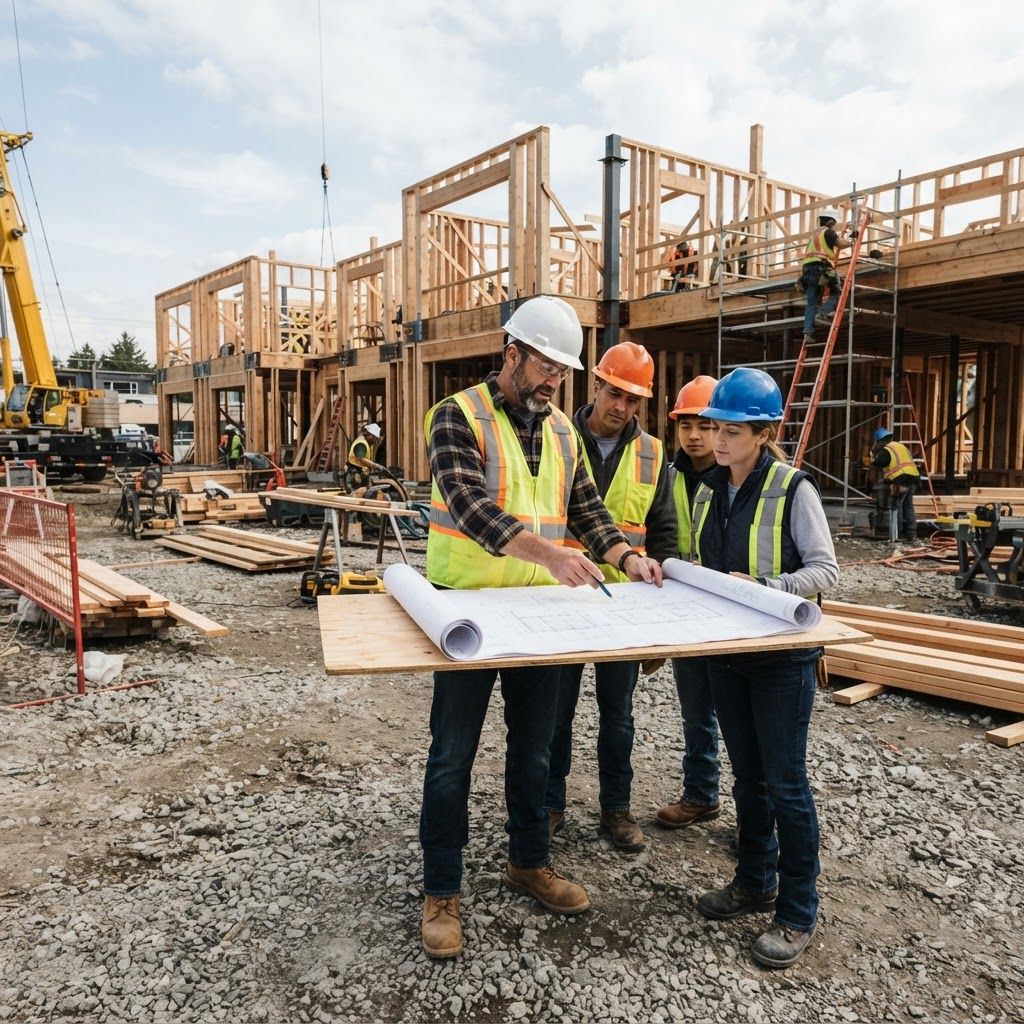
The Role of the General Contractor
A general contractor is the organizing intelligence of a construction project. The role covers preconstruction estimating, permitting, scheduling, subcontractor procurement, site safety, quality control, materials logistics, inspections and closeout documentation. On a well-run project, the contractor absorbs complexity so the owner makes decisions rather than managing crises. On a poorly run one, the owner discovers the difference between a low bid and a real budget.
St. Louis is a strong market for this work. The region has a deep skilled trades base, an established union presence in commercial construction, and a construction history spanning nineteenth-century brick housing stock, mid-century suburban expansion and a current wave of adaptive reuse in the city core. That mix means local contractors routinely encounter both historic renovation constraints and modern building system requirements.
Ten Leading General Contractors Serving the St. Louis Region
1. McCarthy Building Companies is headquartered in St. Louis and ranks among the largest builders in the country. Its portfolio spans healthcare, education, water treatment, industrial and complex institutional work, and it is known for sophisticated preconstruction services and self-perform capability on concrete and structural scopes.
2. Clayco is a nationally significant design-build firm with deep St. Louis roots. Its integrated model combines architecture, engineering and construction under one contract, which compresses schedules on industrial, corporate and large-scale residential projects.
3. Alberici Constructors has a long history in the region with particular strength in heavy industrial, automotive, water and infrastructure projects. Its engineering-driven approach suits technically demanding facilities.
4. Tarlton Corporation is a well-established St. Louis general contractor and concrete specialist, recognized for institutional, healthcare and infrastructure work along with genuine self-perform concrete expertise, which improves schedule control.
5. Paric Corporation serves the region across commercial, multifamily, senior living, education and industrial sectors. It is frequently cited for collaborative project delivery and strong virtual design and construction practices.
6. S. M. Wilson and Company has built a strong reputation on education, healthcare and retail construction in the metro area, and is particularly experienced with occupied-facility renovations where phasing and safety planning determine success.
7. BSI Constructors is a long-tenured local firm with a portfolio spanning cultural institutions, healthcare, education and historic renovation work, a valuable capability given the region's inventory of significant older buildings.
8. Kadean Construction focuses on commercial, industrial, warehouse and multifamily projects across the metro area and is known for design-build delivery and speed on distribution and light industrial facilities.
9. Interface Construction Corporation serves the region across commercial and institutional sectors, with a track record on municipal, education and community-facing projects.
10. Established residential and light commercial general contractors across the metro area complete the list. For homeowners and small business owners, a mid-sized local firm with a documented history of similar projects is usually a better fit than a large commercial builder. The key is verifying licensing, insurance, references and financial stability at whatever scale you are building.
Delivery Methods and Why They Matter
Competitive bid delivery awards the project to the lowest responsive bidder against completed drawings. It maximizes price competition but limits contractor input during design and often generates change orders where documents are incomplete. Construction management at risk brings the contractor in during design with a guaranteed maximum price, improving cost certainty and constructability. Design-build consolidates responsibility, shortening schedules and reducing disputes between designer and builder. Choosing the right method for the project's complexity and schedule is one of the highest-leverage owner decisions.
Local Conditions Contractors Must Navigate
Several regional realities affect project execution. Permitting and inspection timelines differ substantially between the City of St. Louis, St. Louis County municipalities, St. Charles County and the Illinois metro east, and experienced local contractors build those differences into schedules. Historic districts and preservation review add requirements on many city projects. Soil conditions vary across the region, and expansive clays plus karst geology in some areas make geotechnical investigation essential rather than optional. Weather planning matters too, with freeze cycles limiting concrete and masonry work and spring storms affecting excavation.
How to Evaluate and Engage a Contractor
Verify licensing and registration for the specific jurisdiction, confirm general liability and workers compensation coverage, and request bonding capacity for larger work. Ask for three references on projects of similar scope and, importantly, ask each reference how the contractor handled problems rather than only whether they were satisfied. Review the proposed project team, since the estimator who wins the job is often not the superintendent who runs it.
Insist on a detailed schedule of values rather than a lump sum, a clear change order process with documented pricing, defined allowances for undecided selections, and a realistic schedule with identified long-lead items. Retainage and payment terms should be explicit, and the contract should specify warranty duration and closeout deliverables including as-built drawings, equipment manuals and lien waivers.
Managing the Project as an Owner
Make selections early, because material decisions drive procurement and late choices cause the most avoidable delays. Attend regular progress meetings and document decisions in writing. Expect some unforeseen conditions, particularly in renovation of older St. Louis buildings, and hold a contingency of ten to twenty percent depending on project complexity. Resist scope additions mid-project unless they are genuinely necessary, since incremental changes compound cost and schedule impact.
Conclusion
St. Louis is home to nationally significant builders and a strong bench of mid-sized regional firms. Match the contractor to the project scale and type, select an appropriate delivery method, verify credentials and references thoroughly, and manage the process with early decisions and disciplined documentation. Those practices, more than the initial bid number, determine whether a project finishes on time and on budget.