
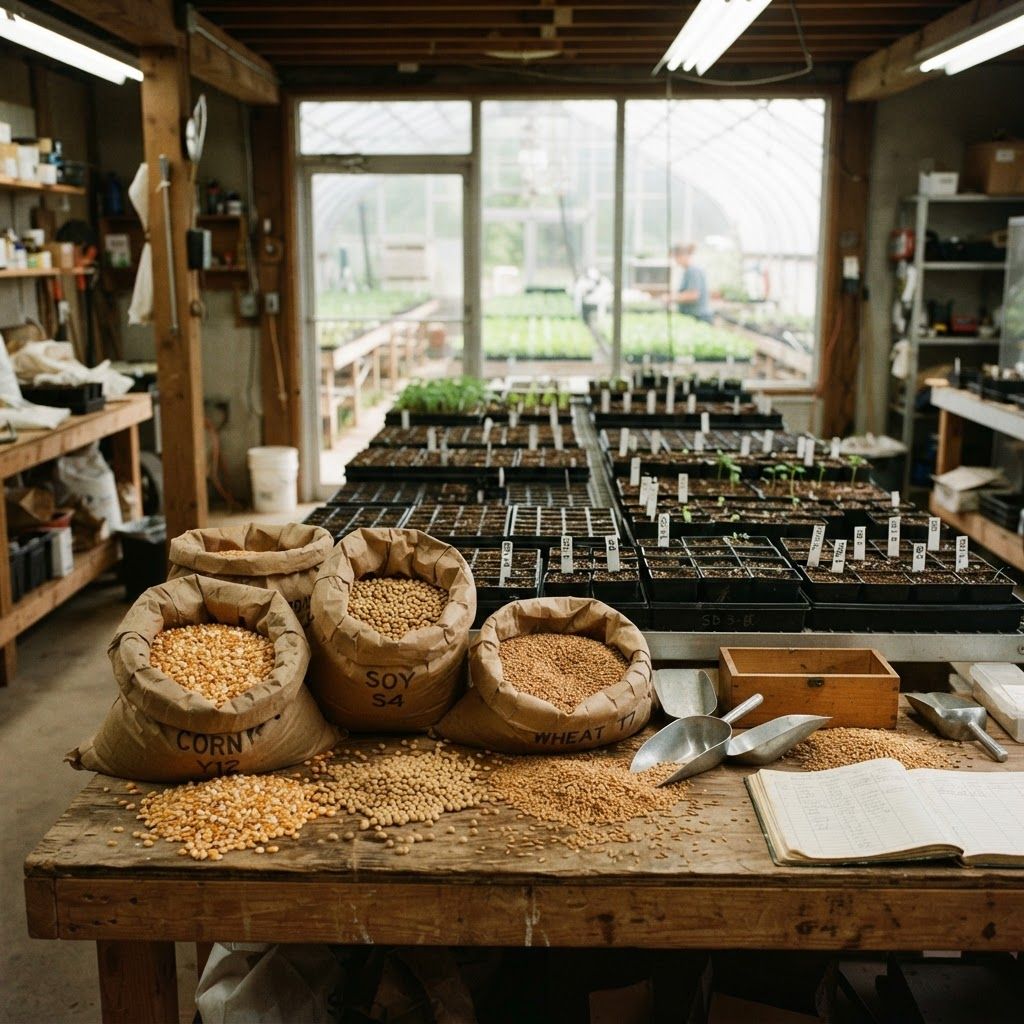
Why St. Louis Is a Global Seed Capital
Few cities in the world carry as much weight in the seed industry as St. Louis. Sitting at the meeting point of the Mississippi and Missouri rivers, surrounded by some of the most productive corn and soybean ground in North America, the region evolved from a grain trading hub into a dense cluster of plant science laboratories, breeding programs and seed distribution networks. Today the metro area is home to research greenhouses, gene editing labs, agtech startups and regional dealer networks that together influence what gets planted on millions of acres each spring.
For growers, that concentration is a practical advantage. Trial plots sit close enough to visit, agronomists understand local soil types and disease pressure, and new genetics often reach Missouri and Illinois fields early in the commercialization cycle. The following ten seed companies and organizations represent the range of what the St. Louis area offers, from multinational breeding programs to specialty and heirloom seed suppliers.
1. Bayer Crop Science
The Creve Coeur campus is the anchor of the region's seed industry and one of the largest agricultural research sites anywhere. Bayer Crop Science develops corn, soybean, cotton and vegetable genetics along with trait packages for insect resistance and herbicide tolerance. Its breeding pipeline combines conventional selection with genomics, phenotyping automation and data modeling. For area farmers, the practical output is a steady stream of hybrids and varieties tested under Midwestern conditions, backed by agronomic support and digital field management tools.
2. Beck's Hybrids
Beck's has built a strong following across Missouri and Illinois as the largest family-owned retail seed company in the United States. Its reputation rests on independent product testing, transparent yield data and a practical field agronomy team. Beck's sells corn, soybean and wheat seed sourced from multiple genetics providers, which allows growers to compare trait platforms rather than commit to a single supplier. Its multi-year trial program is widely used by St. Louis area farmers as an unbiased reference point.
3. Burrus Seed
Operating out of nearby Arenzville, Illinois, Burrus serves a large share of the greater St. Louis farming corridor. The company is known for a lean, grower-focused model and for corn hybrids selected specifically for river bottom and claypan soils common in the region. Burrus also invests heavily in local plot days, where farmers can walk trial rows and evaluate standability, disease tolerance and drydown before making seed decisions.
4. Wyffels Hybrids
Wyffels concentrates exclusively on corn, and that focus shows in its breeding discipline. The company's agronomists work with growers on population, placement and planting date rather than simply selling volume. Its independence from a single trait provider allows it to license genetics broadly and match hybrids carefully to field-level conditions across eastern Missouri and western Illinois.
5. Pioneer Seed Dealers of the St. Louis Region
Corteva Agriscience's Pioneer brand reaches St. Louis growers through a network of local dealers who are typically farmers themselves. That structure gives the brand unusually strong on-the-ground service, with dealers delivering seed, troubleshooting emergence issues and coordinating replant when weather turns. Pioneer's corn and soybean lineups are backed by one of the largest breeding programs in agriculture.
6. Danforth Plant Science Center
The Donald Danforth Plant Science Center is not a commercial seed seller, but no honest list of St. Louis seed organizations can omit it. As the largest independent plant science research institute in the world, Danforth works on root architecture, drought tolerance, nutritional quality and crop resilience. Its discoveries feed into commercial breeding programs and its greenhouse and imaging facilities support startups working on next generation seed technology.
7. Benson Hill
Benson Hill approaches seed development from the food side of the supply chain. Rather than optimizing for yield alone, the company breeds soybeans with higher protein content and improved composition for food and feed markets. That strategy has attracted growers interested in identity-preserved contracts and premium pricing rather than commodity delivery, and it reflects a broader industry shift toward seed designed for specific end uses.
8. Baker Creek Heirloom Seeds
Serving Missouri gardeners and small market farmers, Baker Creek has become one of the best known heirloom seed suppliers in the country. Its catalog spans hundreds of open pollinated vegetable, flower and herb varieties, many with documented regional histories. For urban growers, community gardens and small-scale producers around St. Louis, it offers genetic diversity and seed saving potential that commercial hybrids do not.
9. MFA Incorporated
MFA is a farmer-owned cooperative with a deep footprint across Missouri, and its local centers supply seed alongside fertilizer, crop protection and agronomy services. The cooperative model appeals to growers who value bundled input purchasing, financing options and locally staffed agronomists who know individual fields. MFA carries multiple seed brands, giving members flexibility in hybrid and variety selection.
10. Kruger Seeds
Kruger operates through a direct farmer-dealer network and is known for aggressive local testing and for hybrid placement advice tailored to field-by-field variability. Its lineup covers corn, soybeans and alfalfa. Growers frequently cite responsive service during planting and harvest windows as the reason they stay with the brand year after year.
What to Evaluate Before Buying Seed
Yield potential is the headline number, but it rarely tells the whole story. Standability, disease tolerance, emergence under cool wet conditions and consistency across soil types matter enormously in the St. Louis region, where spring rainfall can be unpredictable and claypan soils drain slowly. Multi-year, multi-location trial data is far more reliable than a single strong plot result.
Trait platforms and herbicide programs should also be considered together. Selecting genetics without confirming compatibility with the intended weed control plan creates costly problems mid-season. Seed treatment options, replant policies and the availability of an agronomist who will actually walk the field are practical differentiators worth weighing.
Industry Trends Shaping the Region
Several shifts are changing how seed is developed and sold locally. Gene editing has shortened development timelines for traits like disease resistance. Data-driven placement tools now recommend hybrids by management zone rather than by whole field. Interest in cover crop seed has grown sharply as producers pursue soil health and carbon program eligibility. And demand for identity-preserved and specialty crops continues to expand, giving growers alternatives to straight commodity marketing.
Final Thoughts
The concentration of plant science talent in St. Louis gives area growers and gardeners unusual access to both cutting-edge genetics and knowledgeable local support. Whether the goal is maximizing corn yield on river bottom acres, capturing a protein premium on soybeans or filling a backyard plot with heirloom vegetables, the companies above offer credible options. The best results usually come from pairing strong genetics with an advisor who understands the specific ground being planted.