
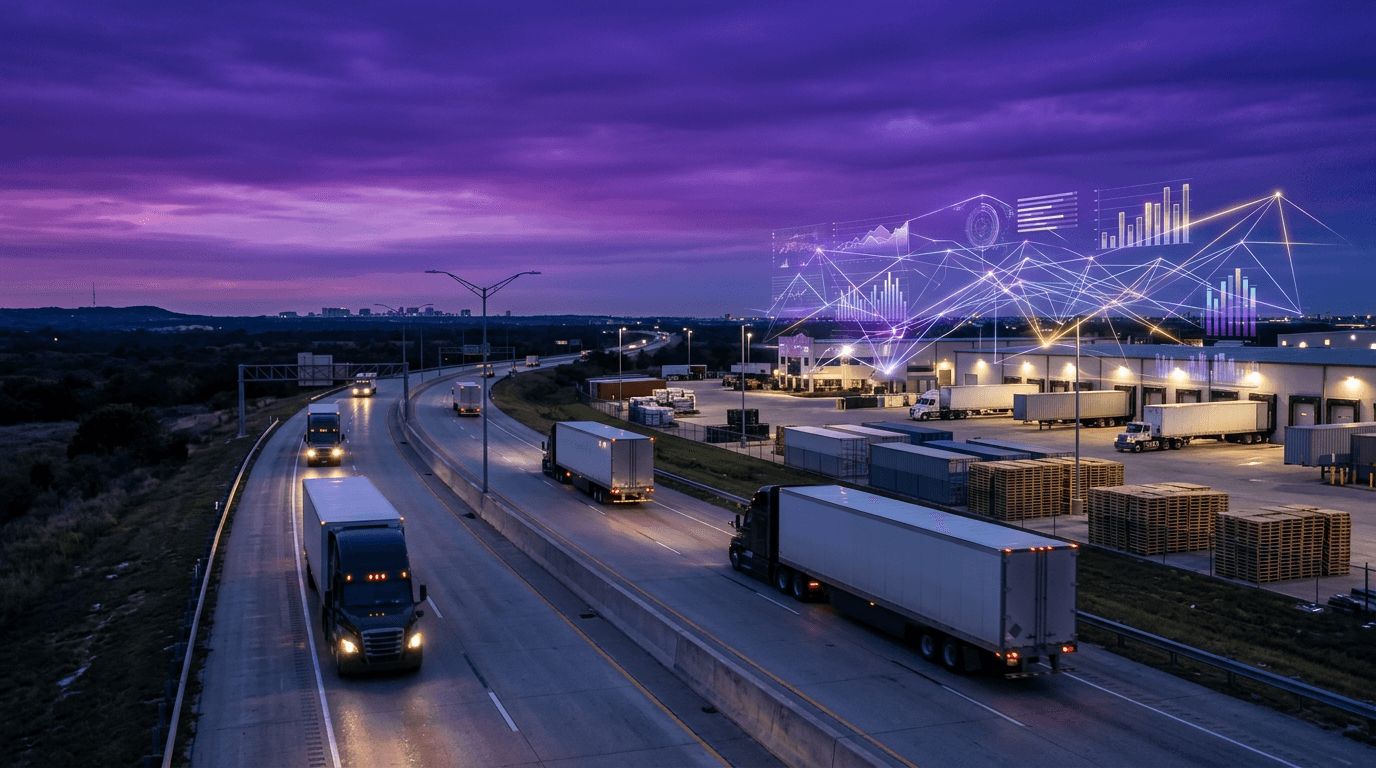
Freight and the Brazos Valley Economy
The Bryan-College Station region is strategically located within the Texas Triangle formed by Houston, Dallas, and San Antonio. State Highway 6 connects the area to Houston and Interstate 45, while nearby routes link to Interstate 35. This central position makes the Brazos Valley a practical base for distribution, manufacturing, agriculture, and research-driven industries.
Local businesses rely on freight carriers to receive supplies, deliver products to customers, and ship equipment for university research. Here are ten freight companies that serve College Station shippers.
The Top 10 Freight Companies
1. FedEx Freight
FedEx Freight is one of the largest less-than-truckload carriers in North America. Its priority and economy services offer flexible options for businesses shipping palletized freight across Texas and the country.
2. Old Dominion Freight Line
Old Dominion is renowned for industry-leading on-time performance and low cargo claims. Shippers value its reliability for time-sensitive LTL shipments.
3. XPO
XPO provides LTL freight services with advanced technology for tracking and pricing. Its extensive terminal network supports efficient service throughout the Southwest.
4. Estes Express Lines
Estes is a large privately owned freight carrier offering LTL, volume, and truckload services. Its customer service and diverse solutions appeal to small and mid-sized businesses.
5. Saia
Saia has expanded its national LTL network significantly in recent years. Its strong presence in Texas makes it a dependable partner for regional shipping.
6. TForce Freight
TForce Freight, formerly UPS Freight, offers LTL and truckload services across North America. Shippers appreciate its integration with logistics and supply chain services.
7. J.B. Hunt Transport Services
J.B. Hunt is a leader in truckload and intermodal transportation. Its dedicated fleet services and digital freight platform help businesses manage capacity and costs.
8. Werner Enterprises
Werner provides truckload, dedicated, and logistics services. Its large fleet and focus on safety make it a reliable choice for high-volume shippers.
9. Schneider National
Schneider offers truckload, intermodal, and logistics solutions. Its recognizable orange trucks are a common sight on Texas highways, moving freight for businesses of all sizes.
10. Southeastern Freight Lines
Southeastern Freight Lines specializes in regional LTL service across the South, including Texas. Its emphasis on quality service and claims-free delivery has earned strong customer loyalty.
Industries Driving Freight Demand
Agriculture remains vital to the Brazos Valley, with shipments of cattle feed, equipment, cotton, and produce. Construction materials are in high demand due to residential and commercial growth. Research institutions, including Texas A&M and the RELLIS Campus, ship sensitive scientific equipment. Retailers and restaurants depend on consistent inbound freight to stock shelves and kitchens.
Freight Trends in Texas
Texas continues to lead the nation in freight volume due to population growth, international trade, and manufacturing expansion. Technology is transforming freight, with digital booking, real-time tracking, and dynamic pricing becoming standard. Carriers are investing in fuel-efficient trucks, alternative fuels, and driver retention programs. Nearshoring trends and trade with Mexico are also increasing freight flows across the state.
Choosing the Right Freight Carrier
Consider shipment size and frequency. LTL carriers are ideal for smaller loads, while truckload carriers suit large shipments. Evaluate transit times, coverage areas, claims ratios, and accessorial charges such as liftgate service or residential delivery. Strong communication and tracking tools are essential for managing customer expectations.
Tips for Shipping Freight
Accurately measure and weigh shipments to avoid reclassification fees. Package goods securely on pallets, label clearly, and provide complete documentation. Building long-term relationships with carriers can lead to better rates and priority service, especially during peak seasons.
Frequently Asked Questions
What is the difference between LTL and truckload?
LTL, or less-than-truckload, combines shipments from multiple customers on one trailer, making it cost-effective for smaller loads. Truckload shipping dedicates an entire trailer to a single shipper, ideal for large volumes.
How are freight rates calculated?
Rates depend on distance, weight, freight class, dimensions, fuel surcharges, and accessorial services such as liftgate delivery, inside delivery, or residential pickup.
Can small businesses get competitive freight rates?
Yes. Small businesses can negotiate rates directly with carriers, use freight brokers, or join shipping programs through industry associations to access volume discounts.
How can I reduce freight damage?
Use sturdy pallets, stretch wrap, corner protectors, and clear labeling. Accurately describing the freight and choosing carriers with low claims ratios also helps protect shipments.
Which freight carrier is best for agricultural shipments?
Agricultural shippers in the Brazos Valley often use a mix of regional LTL carriers for equipment parts and truckload carriers for feed, seed, and bulk materials. Temperature-controlled carriers are needed for perishables. Working with a broker can help match each shipment type with the most suitable and cost-effective carrier.
Conclusion
Reliable freight service is essential for the continued growth of College Station's economy. Whether you need regional LTL shipping or national truckload capacity, the carriers above offer proven solutions that keep Brazos Valley businesses connected to customers and suppliers across the country.