
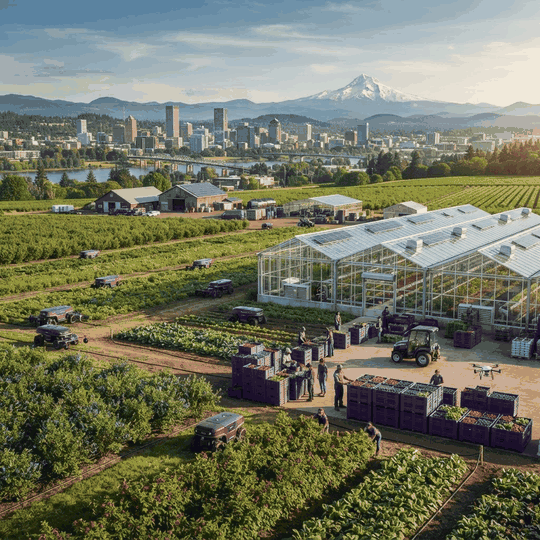
Farming Around Portland: A Rich Agricultural Tradition
Portland sits at the edge of the fertile Willamette Valley, one of the most productive agricultural regions in the country. Farming companies around the city grow a remarkable variety of crops, from berries and vegetables to grains, nursery plants, and specialty produce. This agricultural abundance underpins Portland's celebrated food culture, supplying restaurants, farmers markets, grocers, and food producers with fresh, local ingredients.
The region's mild climate, rich soils, and strong farm-to-table ethos make it a national leader in sustainable and diversified agriculture. Farming companies here increasingly blend traditional practices with modern technology to meet growing demand while protecting the land.
What Defines a Leading Farming Company
Quality and consistency are the cornerstones of a respected farming operation. Buyers depend on reliable harvests, careful handling, and produce that meets high standards for freshness and flavor. Companies that manage their crops with care and maintain strong post-harvest practices build lasting relationships with restaurants and grocers.
Sustainability and stewardship also distinguish top farming companies. Practices such as crop rotation, water conservation, and reduced chemical use protect long-term productivity and appeal to Portland's environmentally conscious market. Transparency about growing methods further strengthens buyer trust.
Leading Farming Companies Serving Portland
Several operations stand out across the region. Willamette Valley Farms is known for its diverse produce and strong ties to local restaurants and markets. Rose City Organic Growers specializes in certified organic vegetables and greens, serving Portland's farm-to-table community.
Cascade Berry Farms focuses on the region's famous berries, supplying fresh and processing markets alike, while Bridgetown Family Farms offers a mix of vegetables, grains, and seasonal crops. Columbia River Produce Co. serves wholesale and retail buyers with dependable volume.
Additional standouts include Northwest Dairy Farms, a trusted source for regional dairy; Stumptown Urban Farms, known for innovative small-footprint growing; and Hawthorne Heritage Farm, favored for heirloom and specialty crops. Powell Valley Growers provides reliable vegetable production, and Pearl District Farm Collective rounds out the list, connecting local growers with city buyers.
Trends Shaping Portland-Area Agriculture
Sustainable and regenerative farming continues to gain momentum, with growers adopting soil-building practices, cover cropping, and reduced tillage to enhance resilience. Consumer demand for organic, local, and traceable food remains strong, encouraging farms to deepen relationships with restaurants and markets.
Technology is also reshaping agriculture. Precision farming tools, greenhouse innovation, and data-driven crop management help growers improve yields and reduce waste. Urban and vertical farming initiatives are expanding within the city, bringing fresh produce closer to consumers and shortening supply chains.
Choosing the Right Farming Partner
Restaurants, grocers, and food producers should evaluate crop quality, reliability, growing practices, and delivery capabilities when partnering with a farming company. Visiting farms, understanding seasonal availability, and confirming sustainability credentials help ensure alignment. A grower who communicates clearly and shares your values becomes a dependable long-term partner.
In a region defined by agricultural richness and culinary pride, the right farming company helps businesses deliver fresh, local quality year-round. By partnering with growers who prioritize sustainability and consistency, Portland's food community can continue to thrive on the strength of its remarkable farmland.
Practical Steps Before Opening an Account
Before placing a first order, create a concise purchasing brief that lists required specifications, acceptable substitutions, target margins, delivery frequency, and expected monthly volume. Share it with shortlisted suppliers and compare their answers on equal terms. Ask for samples or a small trial order whenever possible. This provides a realistic view of product consistency, packing standards, invoicing accuracy, and communication without exposing the business to unnecessary risk.
References from similar Portland businesses can reveal how a supplier performs during busy periods, not merely when courting a new account. Buyers should also review minimum-order requirements, payment terms, damage or return procedures, fuel surcharges, and policies for shortages. Written expectations protect both parties. If sustainability matters to customers, request meaningful evidence about sourcing, packaging, waste reduction, or third-party certifications rather than relying on broad claims.
Planning for Portland Logistics and Seasonality
Portland's location offers access to Interstate 5, regional rail, air freight, and marine shipping, but congestion, winter weather, wildfire disruptions, and seasonal demand can still affect delivery. Strong buyers plan reorder points around realistic lead times and keep sensible safety stock for indispensable items. At the same time, carrying too much inventory ties up cash and increases the chance of damage or obsolescence. A simple inventory review each month helps balance availability with financial discipline.
Seasonality deserves particular attention in the Pacific Northwest. Tourism, holidays, school calendars, construction cycles, harvest windows, and wet-weather demand can create sharp changes in purchasing patterns. Sharing forecasts with a wholesale partner allows that supplier to reserve stock and schedule transport more effectively. Quarterly business reviews are useful for discussing fill rates, returns, upcoming promotions, and opportunities to consolidate deliveries.
Building a Productive Long-Term Relationship
The best wholesale arrangements are collaborative rather than purely transactional. Designate one person to manage communication, document recurring issues, and monitor useful measures such as on-time delivery, order accuracy, defect rate, and response time. Give suppliers prompt, specific feedback and pay according to agreed terms. In return, expect transparency about shortages, price changes, and substitute products.
It is prudent to maintain a qualified backup source for critical goods, yet constantly switching vendors for a minor price difference can undermine service and continuity. Total value includes dependable availability, reduced administrative effort, knowledgeable support, and fewer customer complaints. Portland businesses that combine careful comparison with respectful partnership are better positioned to secure favorable terms, adapt to market changes, and build a supply chain that supports sustainable growth.