
Equipment Distribution in a Multi-Industry City
Oxnard's economy spans agriculture, logistics, construction, food processing, marine operations and hospitality. Each of those sectors runs on equipment, and equipment needs parts, service and eventual replacement. That combination sustains a wholesale and dealer network that is broader than many visitors would expect from a mid-sized coastal city.
Equipment buying differs fundamentally from consumable purchasing. The acquisition price is often the smaller part of the story. Uptime, parts availability, technician access, fuel or power efficiency and resale value determine whether a machine is genuinely economical. The best local distributors understand this and sell support as much as hardware.
Major Equipment Categories
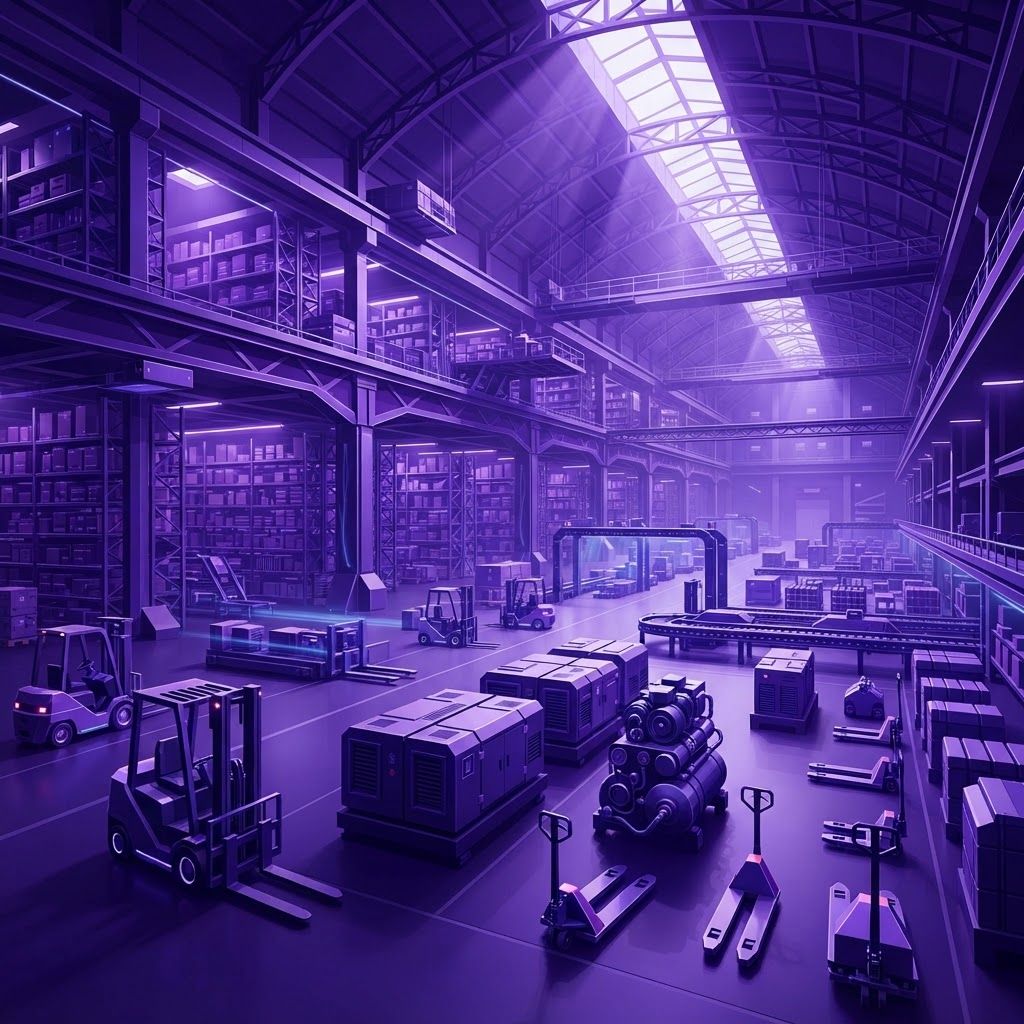
Material handling equipment includes forklifts, pallet jacks, order pickers, conveyors and racking. With significant warehouse and cold storage capacity in the region, this category is especially active.
Construction equipment covers excavators, skid steers, compactors, generators, lifts and concrete tools, serving both large contractors and small trade businesses.
Agricultural equipment ranges from tractors and implements to irrigation components and harvest aids, reflecting the surrounding farmland.
Commercial kitchen and foodservice equipment supports restaurants, caterers and institutional kitchens with refrigeration, cooking lines, dish systems and prep equipment.
Facility and power equipment includes compressors, pressure washers, floor care machines, HVAC units and backup generators used across nearly every industry.
The Top Equipment Wholesalers Serving Oxnard
1. Pacific Coast Material Handling. Forklifts, pallet trucks, racking and warehouse systems with in-house service technicians and planned maintenance programs that minimize downtime.
2. Channel Islands Construction Equipment. A full range of compact and heavy construction machinery, attachments and site tools, with both sales and rental options for contractors managing variable workloads.
3. Gold Coast Agricultural Machinery Supply. Tractors, implements, sprayers and harvest equipment tailored to the specialty crops grown across the Oxnard Plain.
4. Ventura Restaurant Equipment Wholesale. Commercial refrigeration, cooking equipment, prep stations and smallwares, including kitchen layout consultation for new builds.
5. Harbor Power Systems Distribution. Generators, transfer switches, compressors and industrial power equipment, an increasingly important category given grid reliability concerns.
6. Sunwest Landscape and Turf Equipment. Mowers, trimmers, blowers and irrigation tools supporting the county's landscape maintenance contractors and municipal crews.
7. Rincon Welding and Shop Equipment. Welders, plasma cutters, lifts, air systems and fabrication tooling for metal shops and maintenance departments.
8. Coastline Cleaning and Sanitation Equipment. Floor scrubbers, pressure washers, extractors and sanitation systems serving food plants, schools and facility service companies.
9. Oxnard Aerial and Access Equipment. Scissor lifts, boom lifts, scaffolding and fall protection for contractors and facility maintenance teams working at height.
10. Seabreeze Used Equipment Exchange. Inspected and reconditioned machinery offering a lower-cost entry point for growing businesses, with documented service histories.
Buying Versus Renting
The decision comes down to utilization. Equipment used consistently, roughly sixty percent of available time or more, usually justifies ownership. Equipment needed for occasional projects almost always makes more sense as a rental, because rental pricing includes maintenance, storage and the flexibility to match machine size to job requirements.
Leasing occupies a middle ground, preserving capital while providing consistent access and predictable monthly cost. For businesses with seasonal peaks, a mixed strategy works well: own the core fleet and rent for peak demand.
Whichever route you choose, factor in operator training and compliance. California workplace safety regulations require documented training for powered industrial trucks and aerial equipment, and reputable distributors offer or arrange it.
Service and Total Cost of Ownership
Ask specific questions before buying. How many technicians does the distributor employ locally? What is typical response time for a breakdown? Are common wear parts stocked on the shelf or ordered from out of state? Is there a loaner program for critical equipment?
Calculate total cost of ownership across the expected service life rather than comparing purchase prices. Include fuel or electricity, scheduled maintenance, consumables, expected repairs, insurance and residual value. A machine that costs more upfront but runs reliably with local parts support frequently wins this comparison decisively.
Warranty terms vary widely. Understand what is covered, for how long, and whether labor is included. Extended coverage can be worthwhile for high-utilization equipment.
Trends in the Equipment Market
Electrification is advancing quickly in material handling and compact construction equipment. Electric forklifts already dominate indoor applications, and battery-powered compact machines are gaining ground where emissions and noise matter, including near residential areas and inside food facilities.
Telematics has become standard on larger equipment, providing utilization data, fault alerts and maintenance scheduling. Fleet managers using this data well reduce both downtime and unnecessary service spend.
Automation is appearing in warehouses through autonomous pallet movers and semi-automated picking systems. Adoption in mid-sized operations is still early but accelerating as costs fall.
California's emissions regulations continue to influence purchasing timelines, particularly for diesel equipment. Distributors who track compliance requirements help customers avoid buying machines that will face operational restrictions.
Final Guidance
Select equipment partners the way you would select a long-term service provider, because that is effectively what they are. Verify local service capability, confirm parts availability, ask for references from similar operations and insist on clear documentation of warranty terms. In Oxnard's demanding, multi-industry environment, the distributor who answers the phone at six in the morning when a machine is down is worth considerably more than the one with the lowest quote.