
Why Quality Driver Education Matters in Chula Vista
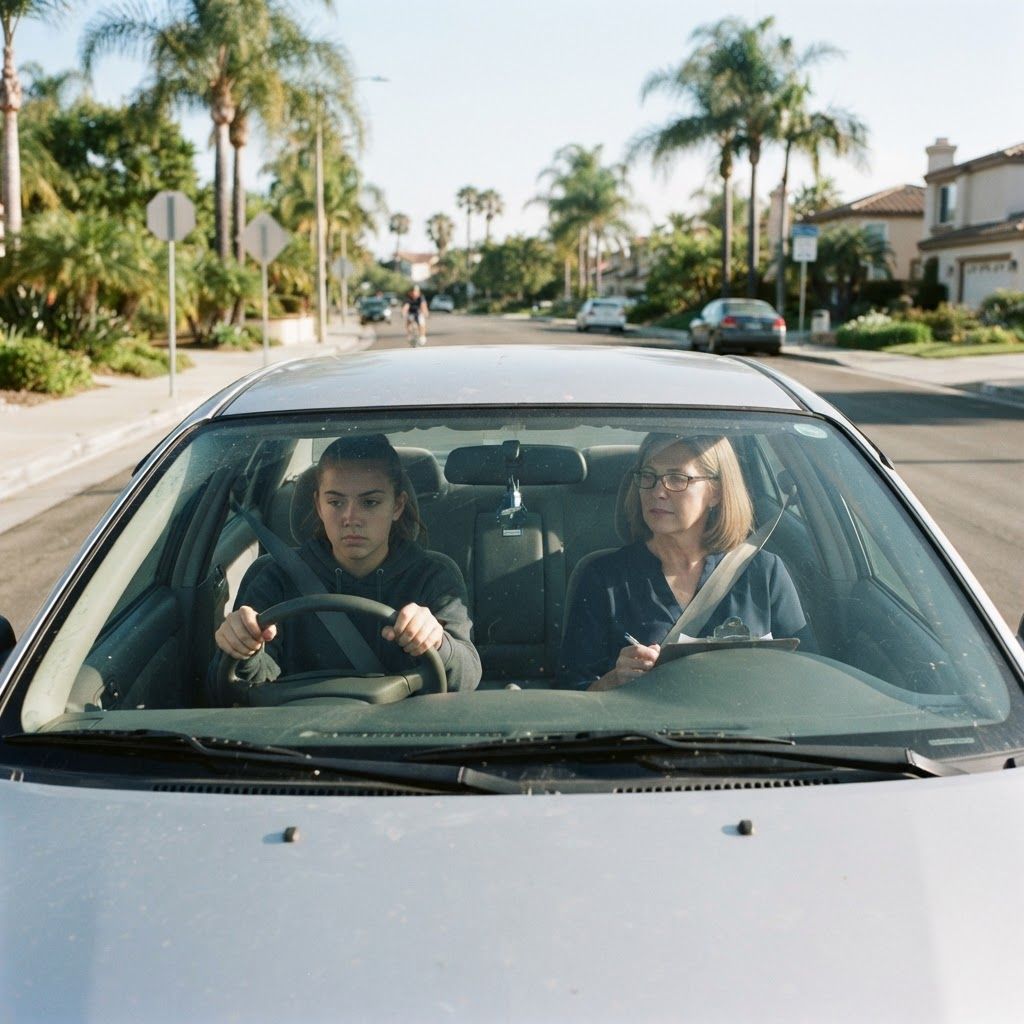
Driver education in Chula Vista carries higher stakes than in many communities because of the driving environment new licensees immediately face. Within minutes of leaving a residential street, a new driver may need to merge onto Interstate 805 at freeway speed, navigate the multi-lane arterials along H Street and Telegraph Canyon Road, or handle complex intersections near major shopping centers. These are not gentle conditions for building confidence.
California's graduated licensing framework requires provisional permit holders under eighteen to complete professional driver education and a specified amount of behind-the-wheel training with a licensed instructor, plus supervised practice hours. Meeting the requirement is straightforward; meeting it well is not. The difference between a school that processes students and one that genuinely teaches hazard perception, defensive positioning and calm decision-making shows up years later in a driver's record.
The Top 10 Driving Schools in Chula Vista
1. South Bay Driver Education Academy
South Bay Driver Education Academy combines classroom instruction with structured behind-the-wheel progression, moving students deliberately from quiet residential streets to arterials and eventually to freeway merging. Instructors are state licensed and vehicles are dual-control equipped. The academy's strength lies in lesson planning: each session has defined objectives and written feedback, so parents can see measurable progress rather than accumulating unfocused hours.
2. Eastlake Teen Driving School
Focused specifically on the provisional permit population, Eastlake Teen Driving School delivers state-approved driver education alongside required behind-the-wheel training. The curriculum emphasizes distraction management, which is the dominant risk factor for young drivers, and includes parent coaching sessions so supervised practice at home reinforces rather than contradicts professional instruction. Flexible scheduling accommodates school and extracurricular commitments.
3. Otay Adult Driving Instruction
Adult learners have different needs and often significant anxiety. Otay Adult Driving Instruction serves first-time adult licensees, newcomers adapting to United States traffic conventions and drivers returning after long gaps. Lessons are paced individually rather than following a fixed teen curriculum, and instructors are experienced in working patiently with nervous students. Multilingual instruction is available, which matters in a diverse community.
4. Third Avenue Defensive Driving Institute
Third Avenue Defensive Driving Institute focuses on post-licensing skill development: collision avoidance, space management, following distance discipline, hazard scanning and skid recovery principles. Courses serve drivers seeking insurance premium reductions, those addressing traffic citations through court-approved programs and parents wanting genuine advanced training for newly licensed teens.
5. Chula Vista Commercial Driver Training
Commercial licensing is an entirely separate discipline, and Chula Vista Commercial Driver Training prepares students for Class A and Class B endorsements. The program covers pre-trip inspection procedures, air brake systems, backing and docking maneuvers, hours-of-service regulations and load securement. Given the volume of freight moving through the nearby border corridor, commercial licensing represents a strong career pathway locally.
6. Bonita Motorcycle Safety Training
Motorcycle instruction demands specialized methodology, and Bonita Motorcycle Safety Training delivers it through structured range exercises covering slow-speed control, emergency braking, swerving and cornering technique, followed by supervised street riding. Completion of an approved course can satisfy the skills test requirement and often reduces insurance costs. For the substantial local riding community, formal training is a genuine safety investment.
7. Palomar Senior Driver Refresher Program
Palomar Senior Driver Refresher Program addresses the specific needs of older drivers, focusing on adaptations for changes in vision, reaction time, flexibility and medication effects. Sessions include vehicle setup optimization, route planning strategies and honest self-assessment tools. The program helps many drivers extend safe independence, and provides a respectful framework for difficult conversations when it is time to reduce driving.
8. Terra Nova Behind the Wheel Services
Terra Nova Behind the Wheel Services concentrates on practical test preparation, offering focused sessions on the maneuvers that commonly cause failures: parallel parking, three-point turns, backing in a straight line, lane changes with proper observation and intersection procedure. The school also provides vehicles for the licensing examination, which resolves a common logistical problem for families.
9. Broadway Traffic School and Online Courses
Broadway Traffic School and Online Courses provides court-approved traffic violator programs in flexible online and classroom formats. Completion can prevent points from appearing on a driving record, protecting insurance rates. The content also functions as legitimate refresher education on right-of-way rules, speed regulations and pedestrian responsibilities that many experienced drivers have partly forgotten.
10. Harborside Fleet and Corporate Driver Training
Employers with vehicle fleets carry substantial liability exposure, and Harborside Fleet and Corporate Driver Training addresses it through on-site programs covering defensive driving, vehicle inspection routines, incident reporting procedures and distraction policy compliance. Documented training reduces collision frequency and often lowers commercial insurance costs, making the program a measurable business investment.
How to Choose the Right Driving School
Verify state licensing first. Legitimate schools hold a valid California license for driving instruction, employ credentialed instructors and use properly insured, dual-control vehicles. Ask to see documentation rather than assuming it exists.
Examine the curriculum, not just the hour count. A quality program teaches perception and judgment rather than merely accumulating time. Ask how lessons progress in difficulty, whether freeway instruction is included, and whether the school provides written progress reports. Freeway competence in particular is non-negotiable in this area, yet some low-cost providers avoid it.
Consider instructor consistency. Students learn faster with the same instructor throughout a program, since each session builds on established rapport and known weaknesses. High instructor turnover is a warning sign. Vehicle condition also matters: modern vehicles with current safety systems better reflect what students will actually drive.
Finally, compare total cost transparently. Packages advertised at low prices sometimes exclude required classroom hours, testing vehicle use or certificate processing. Request an itemized breakdown and confirm cancellation and rescheduling policies before paying.
Trends in Driver Education
Driver training is evolving in several directions. Online classroom instruction has become standard and is now well integrated with in-car training. Curriculum increasingly addresses advanced driver assistance systems, teaching students what adaptive cruise control and lane keeping assistance do and, more importantly, what they do not do. Distraction education has expanded significantly in response to persistent crash data. Simulation technology is being introduced for hazard perception training in controlled conditions. There is also growing emphasis on electric vehicle familiarization, including regenerative braking behavior and instant torque characteristics that differ from combustion vehicles.
Final Thoughts
The best driving school in Chula Vista depends on the student. Teen learners need state-approved education paired with structured behind-the-wheel progression and parent involvement. Adult and returning drivers benefit from patient, individually paced instruction. Motorcycle riders, commercial license candidates, seniors and corporate fleets each require genuinely specialized programs. Verify licensing, prioritize curriculum quality over the lowest price, insist on freeway instruction, and treat driver education as the safety investment it genuinely is.