
The Civic Fabric of Chula Vista
With a population approaching three hundred thousand, Chula Vista is large enough to face the full range of urban challenges and cohesive enough that community organizations can address them meaningfully. The city has a young median age, a substantial immigrant and binational population, a large military connected community, and considerable economic diversity between its western and eastern neighborhoods. Each of these characteristics shapes what local nonprofits do and how they do it.
What distinguishes the nonprofit sector here is collaboration. Because many organizations serve overlapping populations, referral networks between food assistance, housing support, healthcare access, and youth programs are unusually well developed. A family entering the system through one door is frequently connected to three other services, which is precisely how a social safety net should function.
How to Evaluate a Nonprofit
Impact reporting matters more than emotional appeal. Strong organizations publish specific outcome data, not just activity counts. They report how many families achieved stable housing, not merely how many meals were served. They disclose their financials, maintain independent governance, and undergo annual audits appropriate to their size.
Administrative overhead deserves nuance rather than a blanket rule. An organization spending very little on administration may be underinvesting in the staff, data systems, and evaluation capacity that make programs effective. Look instead for transparency, credible outcome measurement, and a clear theory of how activities produce change.
1. Food Security and Hunger Relief Organizations
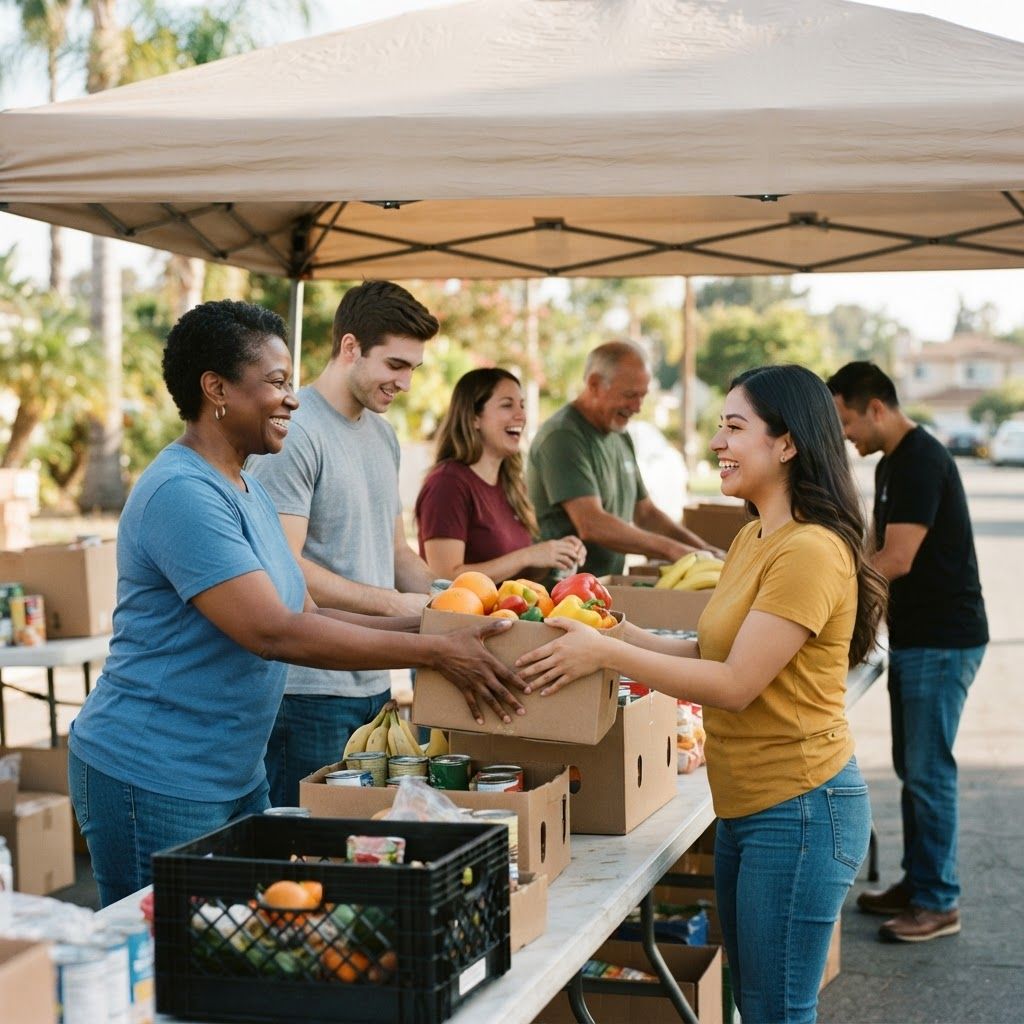
Food assistance is the largest and most visible nonprofit category in the region. The San Diego Food Bank and its network of local distribution partners, along with community pantries operating out of churches and schools throughout Chula Vista, provide groceries to tens of thousands of households. Many have moved toward client choice models that preserve dignity and reduce waste, and several now emphasize fresh produce distribution and nutrition education alongside shelf stable goods.
2. Boys and Girls Clubs and Youth Development Programs
The Boys and Girls Clubs of Greater San Diego and similar youth serving organizations operate after school programs, summer camps, athletics, and academic support across the South Bay. Their value extends well beyond supervision. Structured after school time correlates strongly with improved attendance, higher graduation rates, and reduced juvenile justice involvement, and for working parents it is essential infrastructure.
3. Affordable Housing and Homelessness Services
Housing cost is the defining economic pressure in Southern California, and nonprofits in this space work across the full continuum. Organizations such as South Bay Community Services provide emergency shelter, transitional housing, rental assistance, and permanent supportive housing, while affordable housing developers add units to a chronically undersupplied market. Case management and eviction prevention deliver some of the highest returns per dollar in the entire sector.
4. Community Health Centers and Clinics
Federally qualified health centers and community clinics serving Chula Vista provide primary care, dental services, behavioral health, and preventive screening on a sliding fee scale regardless of insurance status. In a community with substantial uninsured and underinsured populations, these clinics are the difference between managed chronic conditions and emergency room crises.
5. Immigrant and Refugee Support Organizations
Given its border proximity, Chula Vista hosts organizations providing legal assistance, English language instruction, workforce integration, and family reunification support. Legal representation dramatically changes immigration case outcomes, making these services among the most consequential provided anywhere in the region. Many also offer citizenship preparation and know your rights education.
6. Veterans and Military Family Support Groups
The San Diego region hosts one of the largest military populations in the country, and Chula Vista is home to many active duty families, veterans, and retirees. Nonprofits in this space address employment transition, mental health, benefits navigation, family support during deployment, and housing assistance. Peer led models have proven especially effective in this community.
7. Educational Equity and Scholarship Foundations
Education focused nonprofits provide tutoring, mentorship, college access counseling, and scholarships. In a city where many students are the first in their family to attend college, guidance through applications, financial aid, and enrollment is often the decisive factor. School based foundations also fund arts, music, and athletics programs that public budgets cannot fully cover.
8. Environmental and Bayfront Conservation Groups
Organizations working on San Diego Bay water quality, wetland restoration, native habitat protection, and environmental education play an important role in a city with significant coastal and open space assets. The Sweetwater Marsh and adjacent wildlife refuge areas benefit from volunteer restoration efforts, and youth environmental education programs build long term stewardship.
9. Arts, Culture, and Heritage Organizations
Cultural nonprofits including community theaters, music programs, cultural centers, and heritage preservation groups sustain the civic identity of the city. They also generate real economic activity, drawing visitors to downtown Third Avenue and supporting local businesses. Youth arts programs additionally deliver documented academic and social benefits.
10. Senior Services and Caregiver Support
As the population ages, organizations providing senior nutrition, transportation, adult day programs, in home support, and caregiver respite have become increasingly vital. Reducing social isolation among older adults has measurable health effects, and caregiver support prevents the cascading crises that occur when a family caregiver becomes overwhelmed.
How to Support Effectively
Unrestricted recurring donations are the single most useful contribution most donors can make, because predictable funding allows organizations to plan and retain staff. Skilled volunteering in accounting, legal work, technology, or communications often delivers more value than general volunteer hours. And advocacy matters. Many of the constraints these organizations face are policy constraints, and residents who show up at city council meetings amplify their impact well beyond a donation.
The strength of the nonprofit sector in Chula Vista comes from proximity. These are neighbors serving neighbors, and that closeness produces both accountability and understanding that distant institutions rarely achieve.