
Why St. Louis Catering Punches Above Its Weight
Catering in St. Louis benefits from an unusual set of local conditions. The region has an abundance of distinctive event venues, from restored downtown warehouses and botanical gardens to historic mansions, ballparks, and riverfront spaces. Many of these venues have no permanent kitchen, which created sustained demand for caterers capable of building temporary operations and executing flawlessly off site.
The city's food culture also helps. Strong Italian, German, Bosnian, Vietnamese, and barbecue traditions give caterers a genuine menu range rather than a single default cuisine. Combine that with agricultural abundance within a short drive and a hospitality workforce trained by a competitive restaurant scene, and the result is catering quality that surprises visiting planners.
The Top 10 Catering Services in St. Louis
1. Butler's Pantry. One of the most established names in regional catering and event production, handling large weddings, galas, and corporate functions. Its strength is full-service coordination, including rentals, staffing, and design, which reduces the number of vendors a host must manage.
2. Russo's Catering. A family operation with roots in Italian cooking that has grown into one of the metro area's most versatile caterers. Its own event spaces plus off-premise capability make it a common choice for weddings and milestone celebrations.
3. Catering St. Louis. Known for polished plated dinners and thoughtful menu development, this group works frequently in museum and garden venues where presentation standards are high and kitchen access is limited.
4. Salt and Smoke catering. Barbecue is a regional signature, and this operation delivers it at event scale without sacrificing quality. For casual corporate gatherings, rehearsal dinners, and outdoor celebrations, it is a strong and distinctly local choice.
5. Nudo House and modern Asian catering options. Ramen, banh mi, and rice bowl formats have become popular for corporate lunches and younger weddings, offering something more memorable than standard sandwich trays.
6. Sqwires Catering. Operating from Lafayette Square, this restaurant-based caterer brings a consistent culinary point of view and works well for medium-sized events where guests expect restaurant-quality plating.
7. Rise Coffee and breakfast catering specialists. Morning events are frequently underserved, and operators focused on pastry, coffee service, and breakfast platters fill a real gap for conferences and early meetings.
8. Kitchen Kulture and market-driven caterers. Chefs who built followings at local farmers markets bring seasonal, ingredient-focused menus that appeal to hosts who want food to be the centerpiece rather than the backdrop.
9. Bosnian and Mediterranean caterers in south city. Grilled meats, pita, ajvar, and layered pastries make an excellent buffet format, and these operators typically offer exceptional value for large guest counts.
10. Bissinger's and dessert-focused providers. Specialty dessert catering, from chocolate stations to custom cakes and gooey butter cake bars, is worth booking separately when the meal comes from a savory-focused kitchen.
Matching the Caterer to the Event
Different events require genuinely different capabilities. A plated wedding dinner for two hundred and fifty demands kitchen logistics, service staff ratios, and timing discipline that a casual lunch caterer may not have. Conversely, a recurring corporate lunch program rewards reliability, packaging quality, and delivery punctuality more than culinary ambition.
For outdoor events, ask specifically about hot holding, refrigeration, power requirements, and weather contingencies. For venues without kitchens, ask what equipment the caterer brings and whether that equipment cost appears in the quote. These operational details determine whether food arrives at the right temperature far more than menu descriptions do.
How to Hire Without Surprises
Request a fully itemized proposal. The headline per-person figure often excludes service staff, rentals, linens, delivery, setup, gratuity, and administrative fees, and those additions can increase a total substantially. Ask for the all-in number and confirm which items are estimates versus fixed.
Schedule a tasting for significant events, and pay attention to how the caterer handles feedback. Willingness to adjust seasoning, portion size, or presentation reveals the working relationship you can expect. Confirm dietary accommodations explicitly, including vegetarian, vegan, gluten-free, and allergy protocols, and ask how those meals are labeled and delivered so guests are not left guessing.
Verify licensing and insurance, and confirm the caterer is approved by your venue, since many venues maintain exclusive or preferred lists. Establish staffing ratios in writing: a rough guide is one server per twenty guests for buffet service and one per twelve for plated dinners, with bartenders scaled to guest count.
Clarify the timeline in detail. Arrival time, setup duration, service start, and breakdown responsibilities should all be documented. Ask who the on-site lead will be and get their contact information. Finally, review cancellation terms, deposit schedules, and final headcount deadlines before signing.
Trends in Regional Catering
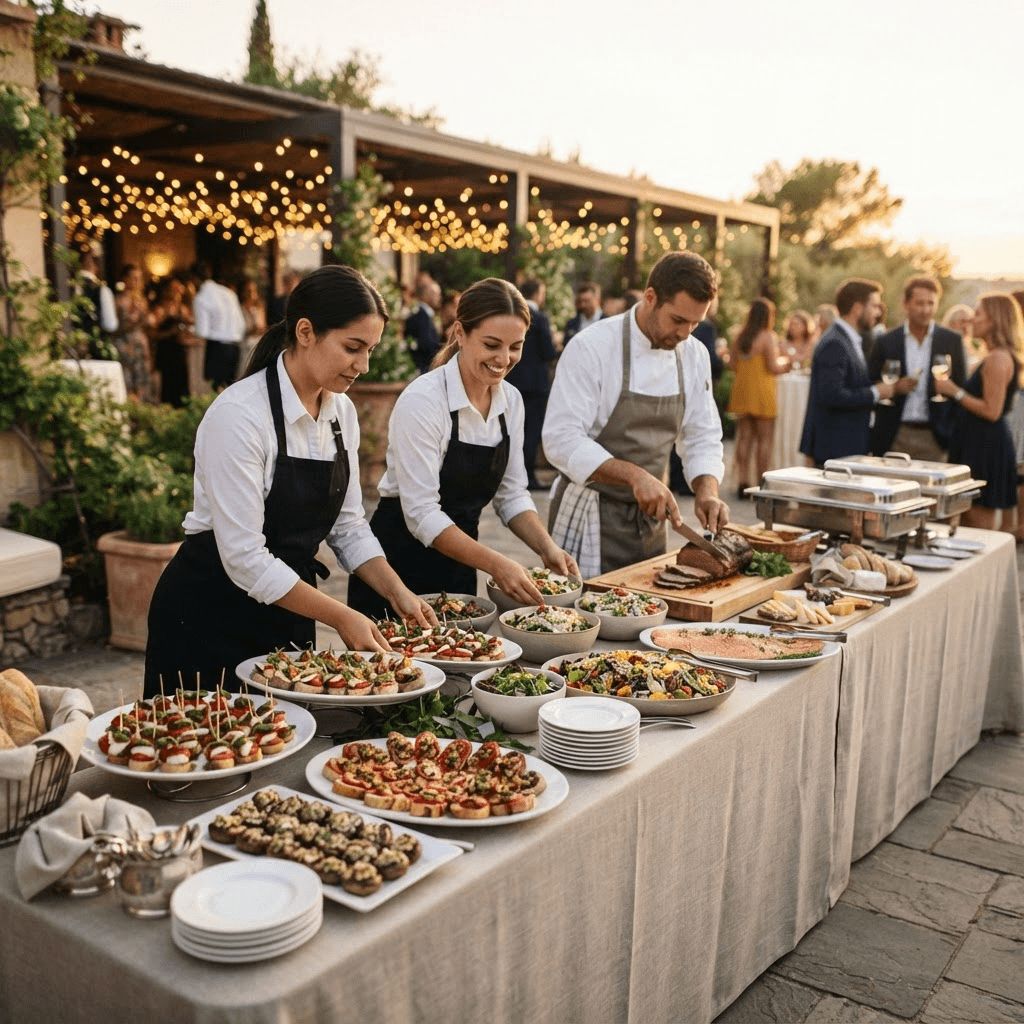
Interactive stations have largely replaced long static buffets, both for guest experience and for service flow. Family-style service has gained popularity for weddings because it encourages conversation and reduces the pacing problems of individual plating at scale.
Sourcing transparency continues to grow, with hosts asking where proteins and produce originate. Beverage programs have become more sophisticated, including thoughtful non-alcoholic options rather than an afterthought pitcher. And sustainability practices, from reduced single-use packaging to donation of surplus food, now factor into vendor selection for many corporate clients.
The practical conclusion for anyone planning an event in the metro area is that quality is available at nearly every budget level. Booking early, particularly for spring and autumn weekends, matters more than almost any other decision, because the best caterers in this market fill their calendars a year in advance.