
Why Renting Makes Sense on the South Plains
Construction equipment is expensive to buy, expensive to maintain and expensive to store. For most contractors and nearly all homeowners, the arithmetic favours renting unless a machine will be used consistently. Renting converts a capital purchase into a project cost, eliminates maintenance and depreciation exposure, and gives access to the right machine for each job rather than forcing every job onto the one machine you happen to own.
Lubbock's mix of agricultural operations, steady residential construction, commercial development and a large do-it-yourself population supports a healthy rental market spanning national chains and independent local yards. Each has strengths worth understanding.
Choosing Between National Chains and Local Yards
National rental chains typically offer newer fleets, broader inventory including large earthmoving equipment, standardised paperwork, online reservation and the ability to source a substitute machine from another branch if yours breaks down. They tend to be less flexible on pricing and less personal in service.
Independent local yards often win on relationship, flexibility and practical advice. Staff who have run the machines themselves can tell you that a walk-behind trencher will fight your caliche and that you should take the ride-on instead. They may extend informal grace on return timing and know local ground conditions intimately.
Many Lubbock contractors use both: a chain for large or specialised equipment and a local yard for routine tools and quick turnarounds.
Equipment Commonly Rented in Lubbock
Earthmoving
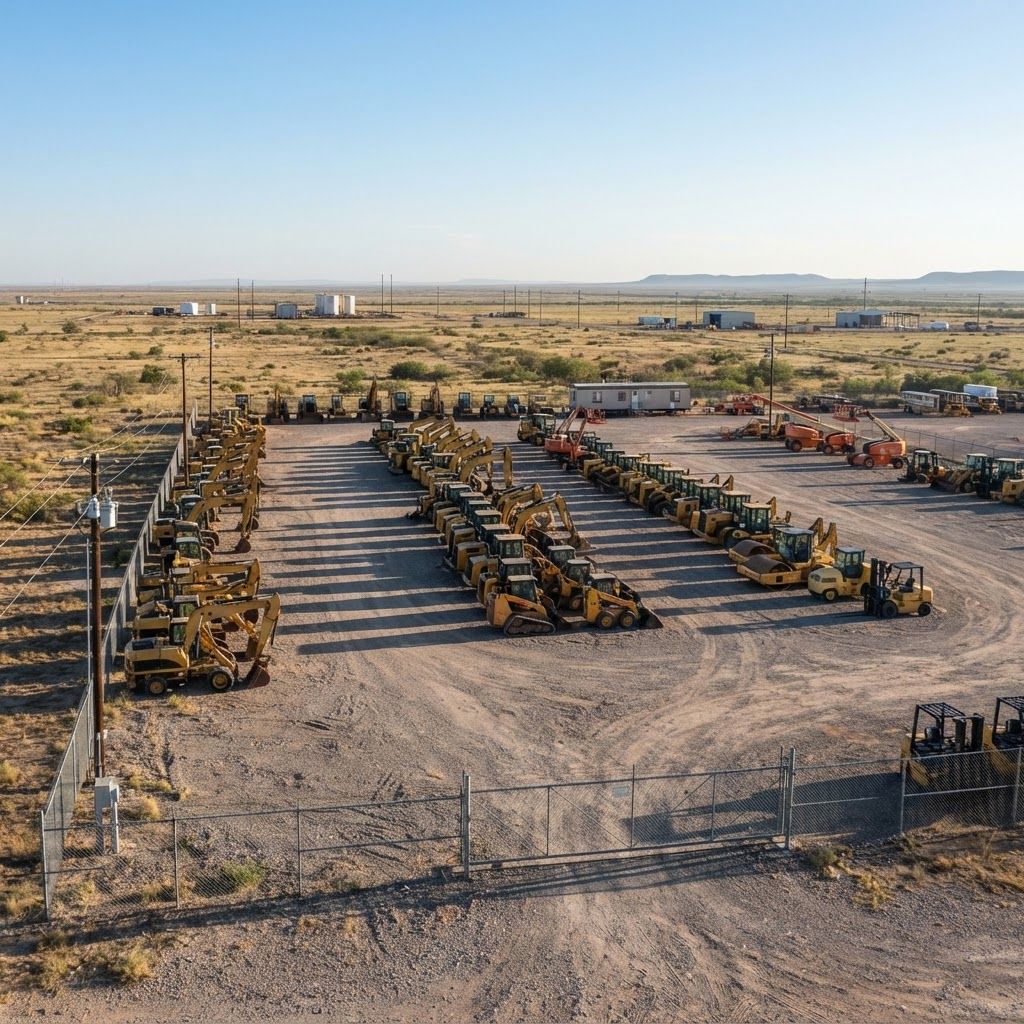
Mini excavators handle utility trenching, footing excavation, tree removal and pool work in tight residential lots. Skid steers and compact track loaders are the workhorses of grading, material handling and demolition, with attachments extending their use to augers, breakers and brooms. Backhoes remain popular for combined digging and loading on smaller sites. Larger excavators and dozers appear on commercial and agricultural jobs.
Compaction
Plate compactors, jumping jack rammers and ride-on rollers matter more here than many realise. Lubbock's expansive clay soils and caliche require proper compaction in lifts if slabs, driveways and pavers are to stay flat over time. Under-compacted fill is a leading cause of settlement problems.
Concrete Equipment
Mixers, power screeds, walk-behind saws, core drills, power trowels and vibrators support flatwork and repair. Given how much concrete work happens in a growing city with hard soils, this category sees heavy demand.
Aerial and Lifting
Scissor lifts, boom lifts, telehandlers and material lifts serve commercial interiors, roofing, sign installation and warehouse work. Wind is a real constraint on outdoor aerial work in Lubbock, and rental staff should discuss manufacturer wind limits with you.
Trenching and Boring
Trenchers for irrigation and electrical, and directional boring equipment for going under driveways and sidewalks, are widely used. Caliche layers can stop undersized machines, so honest sizing advice matters.
Site Support
Generators, light towers, pumps, heaters, air compressors and temporary fencing round out most rental fleets. Dust control equipment is a Lubbock-specific consideration on larger sites.
What to Inspect Before You Take a Machine
- Fluid levels and leaks. Check under the machine and around hydraulic fittings. Document any existing leak before leaving.
- Tyres or tracks. Look for cuts, missing lugs, uneven wear and correct tension.
- Hour meter reading. Photograph it. Some agreements bill by hours beyond a daily allowance.
- Controls and safety devices. Test every function, confirm the seat interlock works, verify horn, lights and backup alarm.
- Attachments and pins. Confirm the correct attachment is loaded, with pins and couplers present.
- Existing damage. Walk the machine with a staff member and photograph everything. This single habit prevents the majority of return disputes.
Understanding Rental Pricing and Terms
Rates are typically quoted daily, weekly and monthly, with weekly rates offering large savings over multiple days and monthly rates better still. If a job will run five or six days, price the week. Watch for these additional items:
- Fuel policy. Most yards expect return with a full tank or bill for refuelling at a premium.
- Hour allowances. Daily rentals often include eight hours; heavy use beyond that incurs charges.
- Delivery and pickup. Transport charges apply to anything you cannot legally or safely tow. Confirm both directions.
- Environmental or damage waiver fees. Often a percentage of the rental. Understand what the waiver actually covers, because it usually excludes negligence, tyre damage and theft.
- Insurance requirements. Many yards require a certificate of insurance for larger equipment. Verify whether your general liability or homeowner policy provides coverage before assuming it does.
Safety and Competence
Rental yards will hand over powerful machines to anyone who signs, which places responsibility squarely on the renter. Certain equipment requires operator training or certification, particularly aerial lifts and telehandlers on commercial sites subject to OSHA requirements. Always call for utility locates before any digging; in Texas that means contacting the 811 service well before you break ground, and it is both a legal obligation and the difference between a routine trench and a struck gas line.
Ask the yard for operating orientation on any machine you have not run before. Reputable staff will walk you through controls, hazards and shutdown procedures rather than simply pointing at the trailer.
Practical Tips for Better Rentals
Reserve ahead during peak season, since spring and early summer strip inventory quickly. Plan your work so the machine is used continuously rather than sitting idle on the clock. Have your site prepared, materials on hand and locates completed before delivery. Return equipment clean; excessive cleaning fees are avoidable. Build a relationship with one or two yards, because regular customers get better availability, sharper pricing and more useful advice.
Final Thoughts
Equipment rental in Lubbock is a mature market with good options for everything from a weekend fence project to a full commercial site package. The keys are matching the machine honestly to the ground conditions you will face, inspecting and documenting before you leave the yard, understanding the full cost including fuel, hours, transport and waivers, and treating safety requirements such as utility locates as non-negotiable. Do those things and rental becomes one of the most cost-effective decisions on any project.