
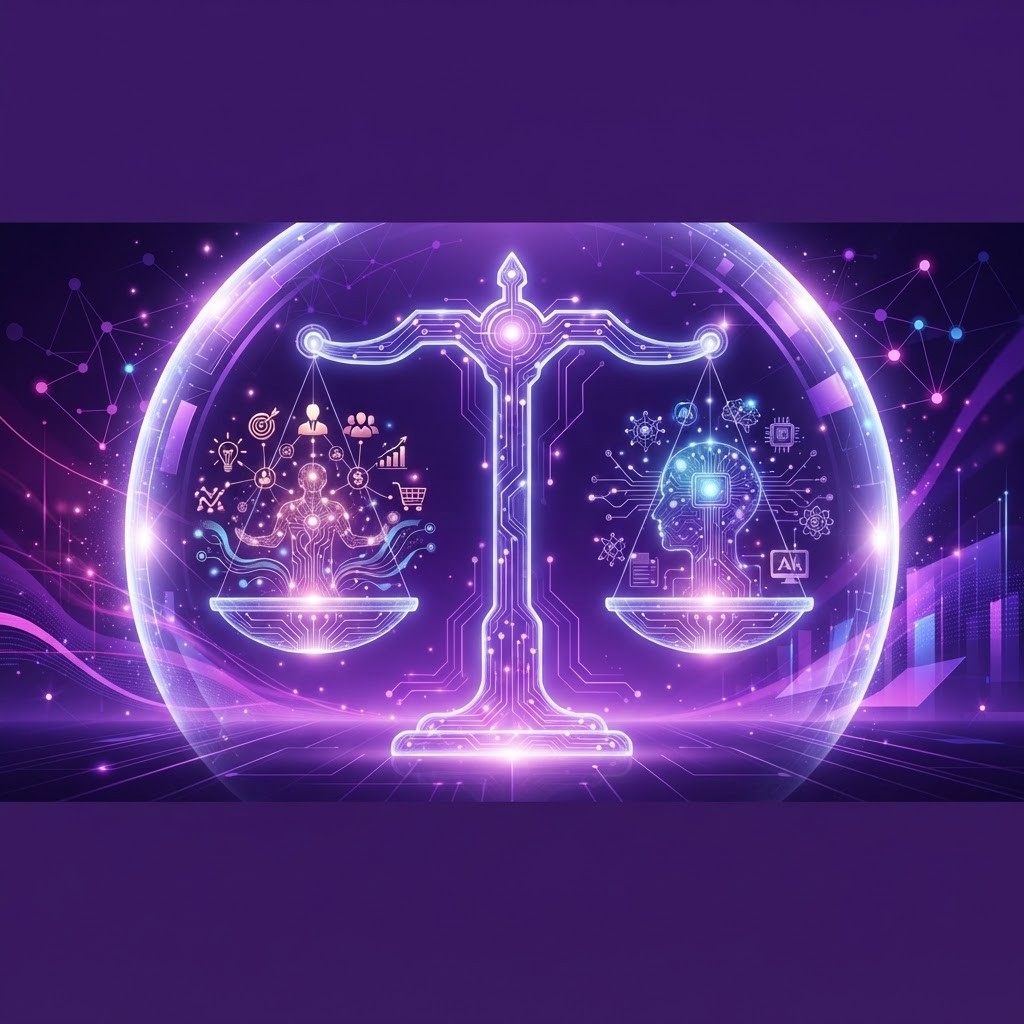
Every technological revolution brings a familiar fear: that machines will render human effort obsolete. With artificial intelligence now writing copy, designing creatives, and optimizing campaigns, digital marketers are understandably asking whether their field is safe. The reality is that digital marketing is not disappearing, but it is being redefined. Certain tasks are becoming automated, while others are becoming more valuable. Understanding this divide is the key to knowing what is safe and what requires adaptation.
Separating Hype From Reality
Media headlines often exaggerate AI's ability to replace entire professions. In practice, AI is a tool that performs specific functions extremely well but lacks the broad reasoning, empathy, and accountability that define human work. In digital marketing, AI can accelerate execution, but it cannot own outcomes, understand a client's unspoken concerns, or take responsibility for a brand's reputation. These limitations mean that the profession as a whole is far safer than alarmist predictions suggest.
How AAMAX.CO Helps Marketers Adapt With Confidence
The safest marketers are those who partner with experts who understand how to integrate AI without losing the human touch. AAMAX.CO is a full-service digital marketing company operating worldwide, and they help businesses and professionals adopt AI-driven workflows while preserving strategic and creative control. Their approach treats AI as an accelerator rather than a replacement, using it to enhance research, personalization, and analytics. By offering services such as generative engine optimization, they ensure their clients remain visible in an AI-first search environment, turning a potential threat into a competitive advantage.
The Tasks Most Exposed to Automation
To assess safety honestly, we must acknowledge what AI is already replacing. Routine tasks such as bulk content generation, basic keyword research, A/B test setup, and performance reporting are increasingly automated. Marketers who spend most of their day on these mechanical activities are the most exposed. However, automation of these tasks does not necessarily eliminate jobs; it often shifts them toward higher-value work. The professional who once spent hours compiling reports can now spend that time interpreting insights and shaping strategy.
The Skills That Remain Protected
Several competencies remain firmly in human hands. Strategic thinking, which connects marketing activity to business objectives, cannot be delegated to an algorithm. Creativity that breaks conventions and captures attention still originates from human imagination. Emotional intelligence, essential for understanding customer motivations and managing client relationships, is uniquely human. Ethical judgment around privacy, transparency, and brand values requires accountability that AI cannot provide. These skills form the safe core of the profession.
Why Human Oversight Is Non-Negotiable
AI systems are powerful but fallible. They can generate inaccurate information, misread context, and produce content that is technically correct but strategically wrong. Every AI output requires human review to ensure accuracy, brand alignment, and appropriateness. This oversight role is becoming a central part of the modern marketer's job. Rather than eliminating positions, AI is creating a new layer of responsibility focused on quality assurance and strategic curation.
Building an AI-Resistant Career
Marketers who want job security should focus on developing skills that complement rather than compete with AI. Learning to use AI tools effectively is essential, but so is deepening expertise in areas machines struggle with: brand strategy, data storytelling, cross-channel planning, and client communication. Continuous learning is the best insurance. Professionals who evolve alongside technology will always find themselves in demand, while those who resist change risk obsolescence. Investing in a strong digital marketing foundation ensures adaptability across changing tools and platforms.
The Rising Value of Trust and Authenticity
As AI-generated content saturates the web, audiences are becoming more skeptical and more selective. Trust, authenticity, and genuine human connection are emerging as premium assets. Brands that communicate with sincerity and demonstrate real expertise will earn loyalty that no automated system can manufacture. This shift favors marketers who understand human psychology and can craft messages that resonate on an emotional level, further reinforcing the safety of human-led marketing.
Conclusion
Is digital marketing safe from AI? The profession is safe, but complacency is not. AI is automating repetitive tasks while elevating the importance of strategy, creativity, and trust. Marketers who embrace this transition and continuously upgrade their skills will find their careers more secure and more rewarding. The future does not belong to AI alone, nor to humans working in isolation, but to the partnership between them. With expert guidance, marketers can navigate this change confidently and turn disruption into opportunity.