
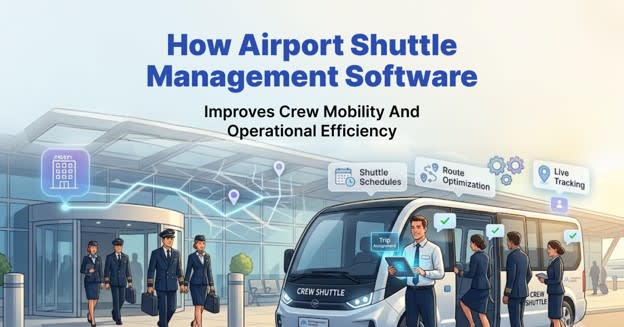
Picture a busy airport at six in the morning. Dozens of flights depart within the same hour. Pilots and cabin crew move between terminals for check-in. Ground teams track shuttle timings, vehicle capacity, and shifting schedules together. A single delay in this chain can affect flight departure times.
Crew transport involves many moving parts across a single day. Terminals get busier, and crew schedules shift constantly. Coordinating this without the right system can get complicated fast. Older transport processes were not built for this pace of change.
This is exactly where airport shuttle management software steps in. It replaces scattered coordination with structured, automated crew movement. Airlines get real time visibility into every shuttle and every trip. Dispatchers move from reacting to problems toward preventing them early.
This blog walks through how this software transforms crew mobility. It also explains why operational efficiency depends on the right transport system. Airlines that understand this connection can avoid costly delays. They can also build a more reliable ground operations process overall.
Why Airlines Cannot Rely on Manual Crew Transport
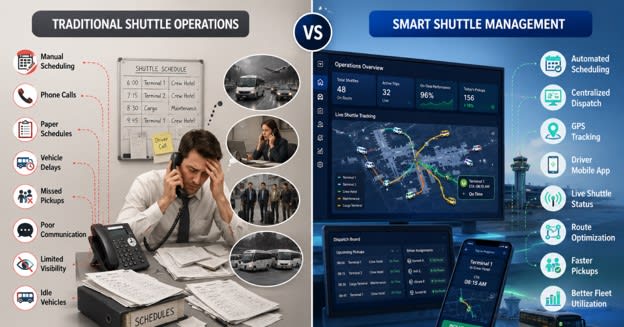
Airline operations run on tight schedules. Crew members work across rotating shifts and multiple terminals. Coordinating this manually creates room for human error. A single missed shuttle can delay an entire flight. Dispatchers often struggle to track vehicle availability in real time. This leads to double bookings or missed pickups.
Rising transportation costs add more pressure on airlines. Without proper crew logistics management, fuel and vehicle usage go unmonitored. Airlines end up paying for inefficiencies they cannot even see.
Airline crew transportation services need a smarter, faster solution today. Manual systems simply cannot scale with growing flight volumes.
Consider a hub airport during a sudden weather delay. Dozens of flights get rescheduled within a few hours. A dispatcher tracking this manually cannot update every shuttle. Crew members end up waiting longer than expected.
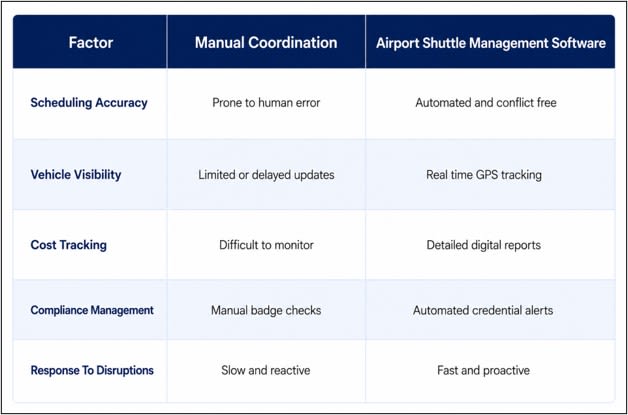
This kind of situation is common during peak travel months. The table below compares manual coordination with automated software.
What Is Airport Shuttle Management Software
Airport shuttle management software is a digital platform for crew transport. It automates scheduling, dispatch, and real time tracking. Airlines use this system to manage crew movement efficiently.
The software connects directly with flight schedules and shift data. It assigns vehicles based on crew location and terminal needs. This removes the guesswork from daily transport planning.
Core Functions Of The System
The platform typically includes several connected functions.
Automated trip planning based on flight timing
Centralized dispatch across all terminals
Real time GPS tracking for every vehicle
Digital records for reporting and audits
Together, these functions reduce delays and improve accuracy. Airlines gain full visibility into every crew movement.
Key Features That Improve Crew Mobility
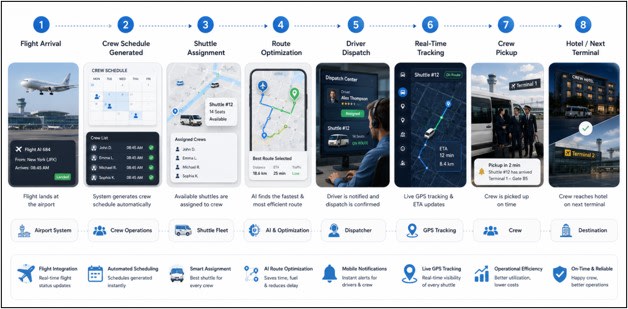
Crew mobility depends on speed, accuracy, and communication. Airport shuttle management software strengthens all three areas at once. Below are the features that directly improve mobility.
● Automated Crew Grouping By Flight Timing
The system groups crew members based on flight schedules. It considers terminal location and shift timing together. This reduces waiting time for pilots and cabin crew. Manual grouping often ignores small scheduling conflicts. Automated grouping catches these conflicts before they cause delays. Crew reaches the aircraft faster and with less stress.
● Real Time GPS Tracking
Live tracking shows exact vehicle location at all times. Dispatchers can see delays before they escalate further. Crew members also receive accurate pickup time updates. This visibility builds trust between airlines and transport teams. Everyone works from the same real time information. Nothing depends on guesswork or outdated schedules anymore.
● Automated Vehicle Allocation
The software assigns vehicles based on capacity and route. It avoids overloading vehicles during high traffic periods. Route optimization also reduces unnecessary travel time. This directly supports better airline crew scheduling across shifts. Vehicles arrive exactly where and when they are needed. Airlines reduce idle time for both crew and drivers.
● Centralized Dispatch Across Multiple Terminals
Large airports often have crew spread across several terminals. A centralized dispatch system manages all of them together. Dispatchers no longer juggle separate systems for each terminal. This single view improves coordination during shift changes. It also supports faster response during unexpected schedule shifts. Crew mobility improves because dispatch decisions happen instantly.
How This Software Strengthens Operational Efficiency
Operational efficiency is not just about speed. It is about consistency, cost control, and accuracy. Airport shuttle management software supports all three consistently.
● Reducing Delays Caused By Manual Errors
Manual coordination often leads to missed pickups. A single missed shuttle can delay flight departure. Automated scheduling removes most of these manual errors.
The system flags conflicts before they affect crew movement. This proactive approach keeps daily operations running smoothly. Airlines see fewer last minute scrambles during shift changes.
● Cutting Transportation And Operational Costs
Route optimization reduces fuel consumption significantly over time. Fewer empty trips mean lower overall transport costs. Airlines can track spending through detailed digital reports.
This level of visibility supports better budget planning. Airlines identify cost patterns that manual systems often miss. Over time, savings from airline crew transportation systems add up.
● Improving Accuracy And Speed Of Trip Planning
Automated planning removes repetitive manual scheduling tasks. Dispatchers spend less time managing daily transport requests. This frees up time for handling actual disruptions.
Faster planning also means fewer scheduling conflicts overall. Crew transport becomes predictable instead of reactive. This predictability supports better on time flight performance.
● Supporting Compliance Through Credential Tracking
Crew transport also involves strict security requirements. Drivers need valid badges to access airport zones. The software tracks badge numbers and expiration dates automatically.
Automated alerts prevent expired credentials from disrupting operations. This keeps airlines compliant with airport authority regulations. Compliance becomes a background process instead of a manual task.
The Role Of Data And Analytics In Crew Transport Decisions
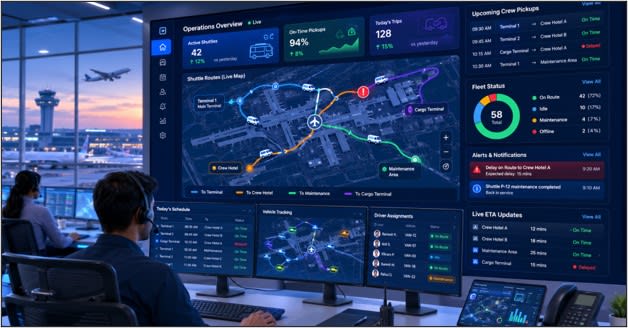
Flight delays and last minute changes happen constantly. Airlines need real time data to respond quickly. Airport shuttle management software provides exactly this kind of visibility.
Dashboards show live trip status across every terminal. Managers can reroute vehicles during sudden schedule changes. This reduces the ripple effect of a single delay.
Historical data also reveals recurring transport bottlenecks. Airlines can adjust vehicle allocation based on past patterns. Over time, this data driven approach improves overall reliability.
Strong crew logistics management depends on this kind of visibility. Without data, airlines are simply reacting to problems. With data, they can prevent many of them entirely.
Safety And Compliance Benefits For Airlines
Safety remains a top priority in every airline operation. Crew transport is no exception to this rule. Airport shuttle management software supports safety through several built in features.
● Geofencing For Terminal Zones
Geofencing tracks vehicle entry and exit automatically. It confirms whether a vehicle reached the correct zone. This supports accurate service confirmation for every trip.
● Automated Reporting For Airport Authorities
Airports often require detailed transport activity reports. The software generates these reports without manual data entry. This saves time during regulatory audits and reviews.
● Driver Credential Management
As mentioned earlier, badge tracking prevents access issues. This feature also supports overall airport security standards. Airlines avoid disruptions caused by expired driver credentials.
What Airlines Should Look For When Choosing Airport Shuttle Management Software
Not every platform offers the same level of value. Airlines should evaluate a few key factors first.
Integration with existing airline crew scheduling software
Scalability during peak travel seasons
Real time tracking and reporting capabilities
Support for multiple terminals and airports
Strong customer support during implementation
Choosing the right platform reduces long term operational risk. It also ensures smoother adoption across ground operations teams. Airlines should treat this decision as a long term investment.
The Future Of Crew Transport Technology
Automation in crew transport will only continue growing. Airlines are moving away from manual coordination entirely. Airport shuttle management software will become a standard requirement soon.
Future systems may offer deeper integration with flight operations data. Predictive scheduling could reduce delays even further. Airlines that adopt these systems early gain a clear advantage.
As competition increases, efficient airline crew transportation services become essential. Airlines cannot afford outdated, manual transport processes anymore. The shift toward automation is already well underway.
Final Thoughts
Crew mobility directly affects flight punctuality and overall efficiency. Manual transport systems simply cannot keep pace anymore. Airport shuttle management software solves this problem effectively.
From automated dispatch to real time tracking, the benefits are clear. Airlines gain better control over crew logistics management. They also reduce costs while improving safety and compliance.
If your airline still relies on manual crew transport, it is time for a change. Evaluate your current process and explore how automation can help. The right airport shuttle management software can transform daily operations completely.