
The Warehousing Market in Coastal Orange County
Industrial real estate in Huntington Beach and the surrounding coastal cities is among the most constrained in the United States. Limited developable land, high property values and competing residential and commercial uses have kept vacancy rates low and rents high for years. For businesses that need storage and fulfillment capacity, this makes the choice between leasing space directly and partnering with a third-party warehousing provider a genuinely strategic decision.
Huntington Beach does maintain a meaningful industrial base, concentrated in the areas around Gothard Street, Research Drive and the northern industrial corridors. These facilities serve local manufacturers, surf and apparel brands, medical device suppliers and a large population of e-commerce sellers. When local capacity is unavailable or uneconomical, businesses typically extend into Westminster, Garden Grove, Santa Ana and the larger Inland Empire market.
Warehousing Service Models Explained
Public warehousing provides shared space billed by pallet or square foot with flexible terms. Contract warehousing dedicates space and labor to one client under a longer agreement. Third-party fulfillment adds pick, pack and ship services for e-commerce orders. Bonded warehousing stores imported goods before duties are paid. Cold storage maintains temperature-controlled environments. Self-storage and flex space serve smaller-scale needs. Cross-docking moves goods between inbound and outbound transport with minimal storage time.
1. Regional Third-Party Logistics Warehouses
A substantial population of independent third-party logistics providers serves Orange County with public and contract warehousing. These firms typically offer flexible month-to-month terms, lower minimum volumes than national providers and direct access to decision makers. For growing businesses whose space requirements change quarterly, that flexibility is often worth more than marginally lower per-pallet pricing.
2. GEODIS
GEODIS operates contract logistics and e-commerce fulfillment facilities across North America, including substantial Southern California capacity. Its value-added services cover kitting, labeling, quality inspection, returns processing and retail compliance packaging. Consumer brands scaling from thousands to hundreds of thousands of orders annually frequently make this their transition point away from self-managed warehousing.
3. DHL Supply Chain
DHL provides large-scale contract warehousing with standardized global processes, strong technology integration and sector-specific capability in life sciences, technology, retail and automotive. For businesses with international supply chains, the ability to connect warehousing directly with DHL's forwarding and customs operations reduces handoffs and improves visibility.
4. Ryder Supply Chain Solutions
Ryder combines warehousing with dedicated transportation and fleet services, which suits businesses that need both storage and outbound delivery managed together. Its engineering teams design facility layouts and workflows around specific client requirements, and its scale provides access to automation investments that individual shippers could not justify alone.
5. ShipBob and E-Commerce Fulfillment Platforms
Distributed fulfillment platforms position inventory across multiple facilities to shorten delivery times and reduce shipping zones. For Huntington Beach direct-to-consumer brands, particularly in apparel, wellness and lifestyle categories, this model offers fast onboarding, straightforward per-order pricing and native integration with major e-commerce platforms. The tradeoff is less customization than dedicated contract warehousing provides.
6. Cold Storage and Temperature-Controlled Providers
Refrigerated and frozen warehousing serves the region's food producers, beverage brands, restaurant suppliers, pharmaceutical distributors and life sciences companies. These facilities maintain validated temperature zones, continuous monitoring and documented compliance procedures. Capacity in coastal Orange County is limited and tends to be booked well in advance, particularly ahead of seasonal demand peaks.
7. Bonded Warehouses and Foreign Trade Zone Operators
Given proximity to the ports, bonded warehousing and foreign trade zone facilities offer meaningful cash flow benefits for importers. Duties can be deferred until goods leave the facility for domestic consumption, and goods re-exported may avoid duty entirely. Operators in this category also handle customs-supervised inspection, sorting and repackaging.
8. Self-Storage and Flex Industrial Space
For very small businesses, contractors, online sellers and seasonal inventory, commercial self-storage and small flex units provide affordable entry-level capacity. Many facilities in and around Huntington Beach offer drive-up access, climate control and package receiving. This is often the practical first step before graduating to third-party logistics.
9. Cross-Dock and Transloading Facilities
Transloading operations near the port corridor transfer goods from ocean containers into domestic trailers, allowing importers to avoid container detention charges and optimize inland transport. Cross-dock facilities move freight between inbound and outbound vehicles with little or no storage, which suits high-velocity distribution and retail replenishment.
10. Specialized and High-Value Storage Providers
Certain goods require secure, specialized environments: pharmaceuticals, electronics, wine collections, fine art, records archives and hazardous materials each have distinct requirements. Providers in these niches maintain appropriate certifications, security systems, environmental controls and insurance, and they document chain of custody in ways general warehousing does not.
What to Evaluate in a Warehousing Partner
Start with location relative to your inbound and outbound flows, since transport cost usually exceeds storage cost over time. Examine the warehouse management system and whether it integrates with your order and accounting platforms without manual work. Ask about inventory accuracy rates and how cycle counting is performed. Review the complete fee schedule including receiving, storage, pick, pack, materials, returns and account management charges, because headline storage rates rarely reflect true cost. Confirm insurance coverage, security measures and any relevant certifications for your product category. Visit the facility if at all possible, since operational discipline is immediately visible in person.
Trends in Warehousing
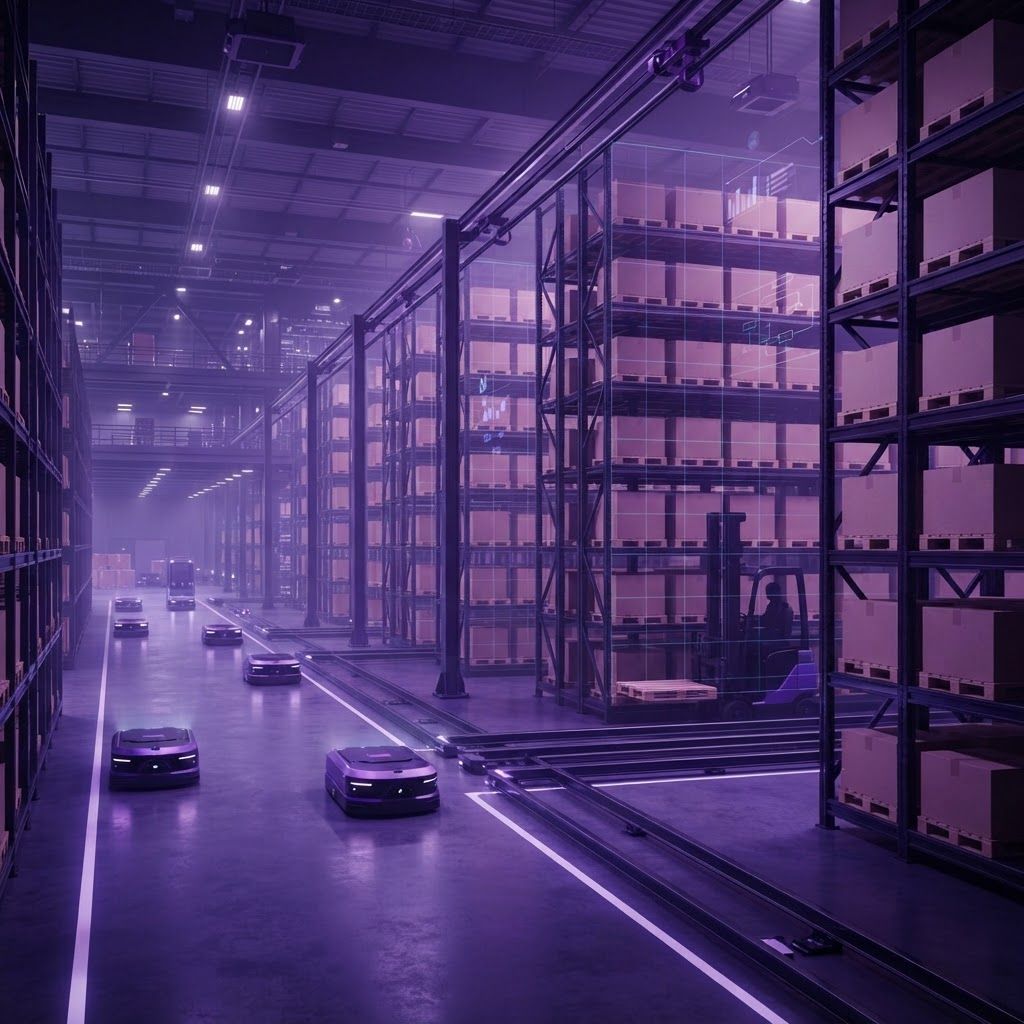
Automation continues to spread, with autonomous mobile robots, automated storage systems and pick-to-light technology appearing in mid-sized facilities rather than only the largest operations. Sustainability investment is significant, including rooftop solar, LED retrofits, electric material handling equipment and reduced packaging programs. Data transparency has become an expectation, with clients wanting live inventory visibility rather than daily reports. And persistent space scarcity along the coast continues to push storage inland while keeping premium local capacity in high demand.
Final Thoughts
Warehousing options for Huntington Beach businesses range from a small flex unit near Gothard Street to a fully automated contract facility operated by a global logistics provider. Independent regional operators offer flexibility and responsiveness, national providers like GEODIS, DHL and Ryder bring scale and technology, fulfillment platforms serve e-commerce speed requirements, and specialized operators handle temperature, bonded and high-value needs. Matching the model to the stage and shape of the business, rather than defaulting to the cheapest square footage, is what turns warehousing from a cost center into an operational advantage.