
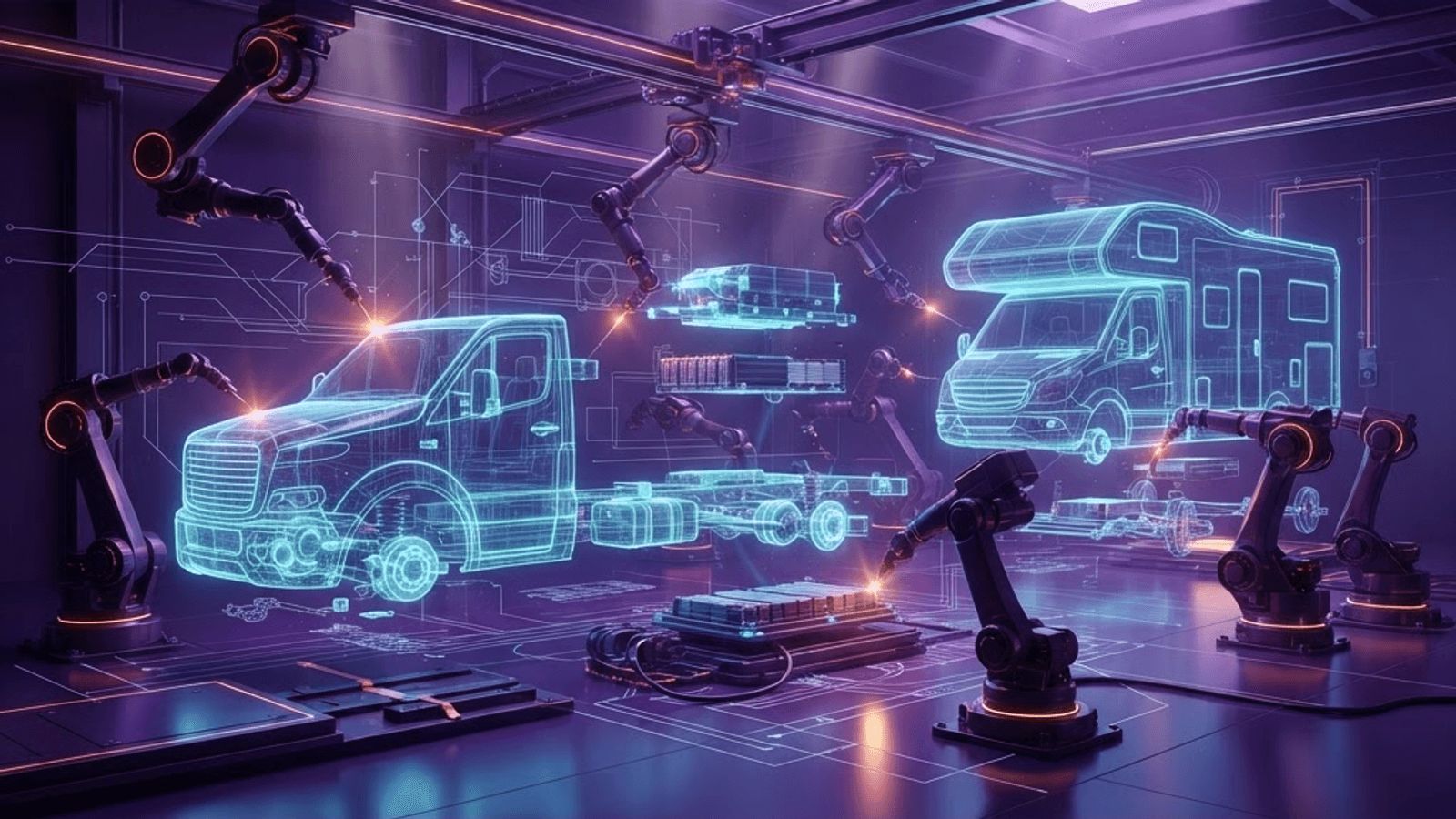
Automotive Manufacturing, Eugene Style
Eugene does not host a large assembly plant, and understanding that fact clarifies what the local automotive industry actually does. The city's manufacturers build specialty vehicles, fabricate components, upfit commercial trucks, produce recreational vehicle systems, and increasingly perform electric drivetrain conversions. It is a sector defined by customization and engineering rather than volume.
Oregon's recreational vehicle and outdoor equipment heritage feeds directly into this work. So does the region's forestry and agricultural equipment base, which demands rugged, purpose-built vehicles that no production line offers off the shelf. The companies below serve those needs.
The Top 10 Automotive Manufacturers in Eugene
1. Cascade Vehicle Works
Building custom work trucks and service bodies, Cascade Vehicle Works upfits chassis for utilities, contractors, and municipal fleets. Its designs integrate cranes, compressors, tool storage, and power systems, and its engineering staff handle weight distribution and certification requirements that determine whether a build is legal and safe.
2. Emerald Adventure Vans
Camper van conversion has grown into a substantial regional industry, and Emerald Adventure Vans builds high-quality conversions with insulation, electrical systems, water, heating, and cabinetry. Its electrical work in particular is known for proper fusing, wire management, and documentation, which many lower-cost converters neglect.
3. Willamette Trailer Manufacturing
Producing utility, equipment, and specialty trailers for agriculture, construction, and forestry, this manufacturer fabricates frames, axles mounting, decking, and braking systems to load-rated specifications. Custom configurations for unusual equipment are a core part of its business.
4. Lane Automotive Components
This machine shop and fabricator supplies brackets, mounts, suspension components, and drivetrain parts to vehicle builders and aftermarket brands. CNC machining, welding, and finishing are performed in house, and the company handles both prototype and production quantities.
5. Pacific Electric Drive Conversions
Converting existing vehicles to electric propulsion extends the life of capable chassis while eliminating tailpipe emissions. This company performs conversions on fleet vehicles, delivery trucks, and classic cars, handling motor selection, battery integration, thermal management, and controls programming.
6. Riverfront Fleet Upfitting
Serving delivery, service, and public safety fleets, Riverfront installs shelving, partitions, lighting, telematics, and auxiliary power in production vans and trucks. Standardized upfit packages keep fleets consistent, which simplifies driver training and maintenance.
7. Skinner Butte Performance Fabrication
Specializing in roll cages, chassis modification, and suspension fabrication, this shop serves motorsport and off-road customers. Its welders are certified, and its work is regularly inspected and approved by sanctioning bodies, a meaningful quality signal.
8. Valley Bus and Transit Services
Rebuilding, refurbishing, and modifying buses and shuttles for transit agencies, schools, and care providers, this company extends vehicle service life at a fraction of replacement cost. Accessibility modifications including lifts and securement systems are a specialty.
9. Northwest Truck Equipment
Dump bodies, flatbeds, hoists, snow equipment, and hydraulic systems are fabricated and installed here for commercial and municipal customers. The company also maintains a service operation, which matters because hydraulic equipment requires ongoing support.
10. Green Motors Remanufacturing
Remanufacturing engines, transmissions, and alternators keeps serviceable components in use and reduces cost for fleet operators. This operation disassembles, inspects, machines, and reassembles units to documented tolerances, offering warranties comparable to new parts.
Advantages of Specialty Automotive Manufacturing
Purpose-built vehicles outperform adapted ones. A service truck configured for the exact tools and workflow of its crew saves time on every job, and those minutes compound across a fleet and a decade. Similarly, a trailer rated correctly for its load is safer and lasts longer than an overstressed general purpose unit.
Local manufacturing adds responsiveness. Modifications, warranty work, and repeat builds happen without long-distance shipping, and operators can discuss requirements face to face with the people who will build the vehicle.
Trends in the Sector
Electrification is the largest shift. Light commercial vehicles are converting first, and upfitters must now account for high-voltage systems, battery placement, and auxiliary power drawn from traction batteries rather than engine-driven equipment. Shops that have built high-voltage competence are pulling ahead.
Telematics integration is another growth area, with fleets requiring location, diagnostics, and driver behavior data as standard equipment rather than an add-on.
Finally, the adventure and overland vehicle market continues to expand, supporting van conversion, trailer, and accessory manufacturers throughout the region.
How to Choose an Automotive Manufacturer
Verify certifications and compliance knowledge, particularly weight ratings, lighting requirements, and any final-stage manufacturer obligations. Inspect completed work, paying attention to wiring, welding, and corrosion protection, the three areas where shortcuts show up years later. Confirm lead times and warranty coverage in writing. For fleets, ask whether the builder can replicate a configuration consistently across multiple units.
Cost and Lead Time Expectations
Custom vehicle work is quoted on engineering time, materials, and installation hours, so scope clarity directly controls cost. Builders can usually reduce price meaningfully when customers accept standard layouts for elements that do not affect daily workflow. Lead times depend heavily on chassis availability, which has been unpredictable in recent years, so ordering the base vehicle early and scheduling upfit capacity in parallel is the most effective way to avoid delays. Fleets that plan annual replacement cycles rather than reacting to failures consistently secure better pricing and delivery slots.
Final Thoughts
Eugene's automotive manufacturers deliver engineering-intensive, customized vehicles and components rather than mass-produced units, and that focus serves the region's forestry, agriculture, construction, transit, and outdoor recreation industries well. The ten companies listed here represent the strongest capabilities available locally.