
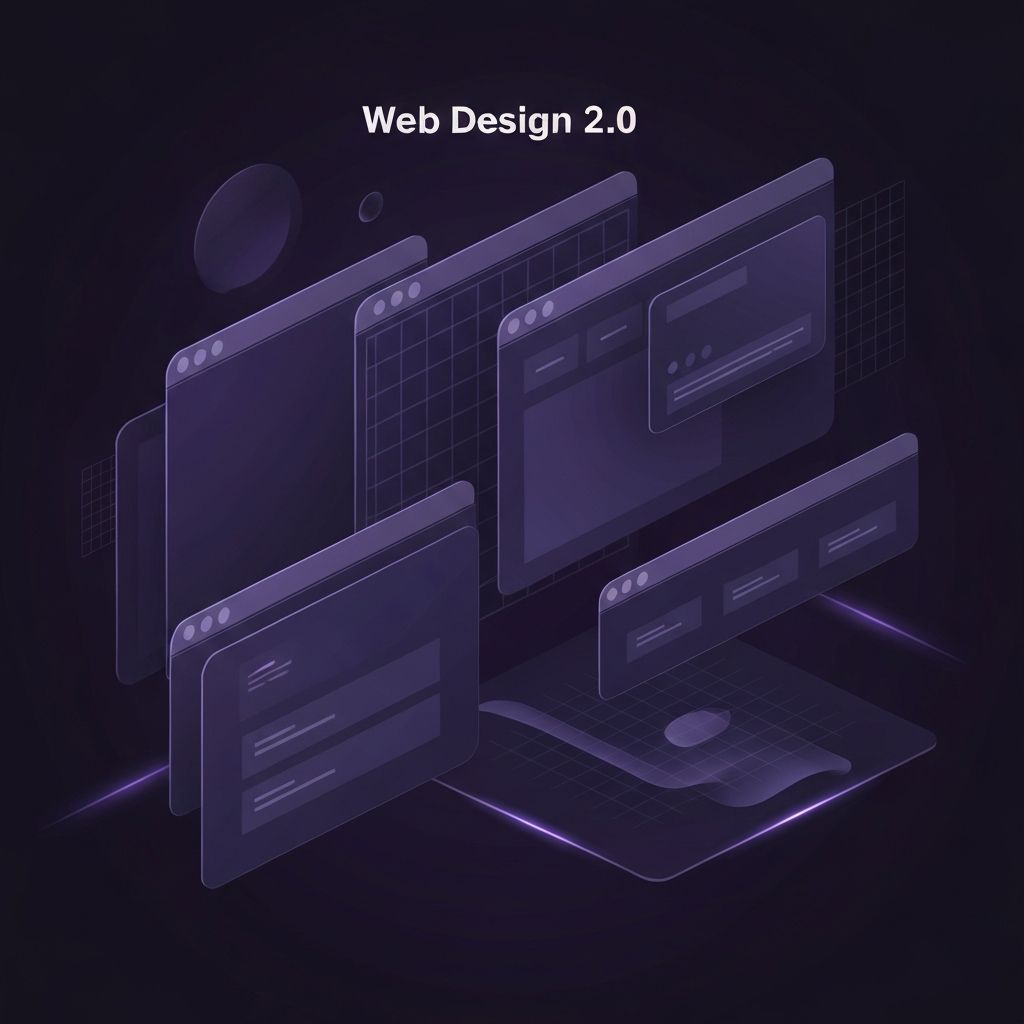
What Web Design 2.0 Really Means
The term Web Design 2.0 emerged alongside the broader Web 2.0 movement, marking a pivotal shift from rigid, brochure-style websites to interactive platforms where users became active participants. Where the earlier generation of websites simply presented information in a one-way format, Web Design 2.0 introduced the principles of user-generated content, social interaction, real-time feedback, and modular components that responded to behavior. It was not just a design trend; it was a complete philosophical change in how digital products were imagined, built, and consumed.
This era introduced rounded corners, gradient buttons, glossy reflections, large typography, and prominent calls to action. But more importantly, it introduced an underlying mindset: design should serve users rather than dictate to them. That principle still echoes through modern interface design, even as visual styles have evolved past the glossy aesthetic of the original Web 2.0 wave.
Hire AAMAX.CO for Web Design and Development Services
If a business is ready to embrace the principles of Web Design 2.0 and beyond, partnering with experienced specialists is the smartest path forward. AAMAX.CO is a full-service digital agency that helps brands worldwide modernize their digital presence with strategic, conversion-focused websites. Their team brings together design thinking, modern development frameworks, and SEO best practices to ensure every project they deliver looks contemporary and performs at the highest level. From visual identity to interactive components, they understand how to translate the user-first values of Web Design 2.0 into measurable business outcomes.
The Core Visual Language of Web 2.0
Visually, Web 2.0 was a love letter to friendliness. Designers traded sharp corners for soft curves, replaced flat backgrounds with subtle gradients, and used gloss and shine to make buttons feel clickable and tactile. Typography became larger and more confident, with bold headlines telling visitors exactly what a site offered within seconds. Color palettes shifted from corporate blues and grays to vibrant, saturated tones that reflected energy and approachability.
This visual approach influenced how trust was built online. Buttons that looked clearly clickable encouraged engagement. Friendly headlines reduced friction. The overall effect was a web that felt warmer and more human, which set the stage for the social platforms that would later dominate the internet.
Interactivity Becomes the Standard
One of the defining traits of Web Design 2.0 was the expectation that pages should respond instantly to users. Technologies like AJAX allowed parts of a page to update without a full reload, paving the way for the smooth, app-like experiences modern users now consider basic. Comment sections, live feeds, drag-and-drop interfaces, and inline editing became expected features rather than novelties.
This responsiveness changed how designers approached layout planning. Instead of designing static screens, they began to map out user flows, anticipating where someone might click, scroll, or pause. The discipline of user experience design, while older than Web 2.0 itself, gained widespread recognition during this period as designers realized their work directly influenced engagement metrics.
The Rise of User-Generated Content
Web Design 2.0 cannot be discussed without acknowledging the explosion of user-generated content. Blogs, wikis, review platforms, forums, and early social networks gave everyday users the tools to publish, share, and collaborate. Designers had to plan for content they could not predict, building flexible templates that gracefully handled long posts, short updates, image uploads, and threaded conversations.
This unpredictability forced designers to think about systems rather than single pages. Style guides, reusable components, and modular layouts became essential. Many of the design system principles used today, including those popularized by atomic design, can trace their origins to this era.
Search, SEO, and Discoverability
As content volumes exploded, search engines became the primary gateway to the web. This made search engine optimization a core consideration in design decisions. Clean URL structures, semantic headings, descriptive alt text, and fast load times moved from technical afterthoughts to design requirements. Designers had to balance visual creativity with structural clarity so that both humans and crawlers could navigate a site efficiently.
Brands that understood this dual audience gained a competitive advantage. Investing in website design that aligns visual storytelling with strong technical foundations remains one of the most reliable ways to attract organic traffic, and that lesson was first widely learned during the Web 2.0 era.
From Web 2.0 to Modern Standards
While the glossy buttons and reflective logos of the early 2000s have faded, the underlying principles of Web Design 2.0 remain deeply embedded in modern practice. Today's flat, minimal, and accessibility-focused interfaces still center the user, still encourage participation, and still treat content as a living system rather than a finished product. Modern frameworks, headless content management systems, and component libraries are direct descendants of the modular thinking that Web 2.0 popularized.
Businesses that want to remain competitive must continue evolving their digital experiences in line with these foundational ideas. Investing in professional website development ensures that the visual polish of a modern site is supported by performance, scalability, and maintainability behind the scenes.
Why Web Design 2.0 Still Matters
Understanding Web Design 2.0 is more than a history lesson. It is a reminder that great design is not about following trends, but about understanding how people actually use digital products. The era taught the industry that empathy, modularity, and responsiveness are not optional extras but the foundation of any successful website. Brands that internalize these lessons today will be better prepared for whatever comes next, whether that involves AI-driven personalization, immersive interfaces, or entirely new paradigms.
For organizations looking to translate these timeless principles into a modern, conversion-ready digital experience, working with a seasoned partner makes all the difference. With deep expertise across design, development, and digital marketing, the right agency can ensure that the spirit of Web Design 2.0 continues to drive real business value in the years ahead.