
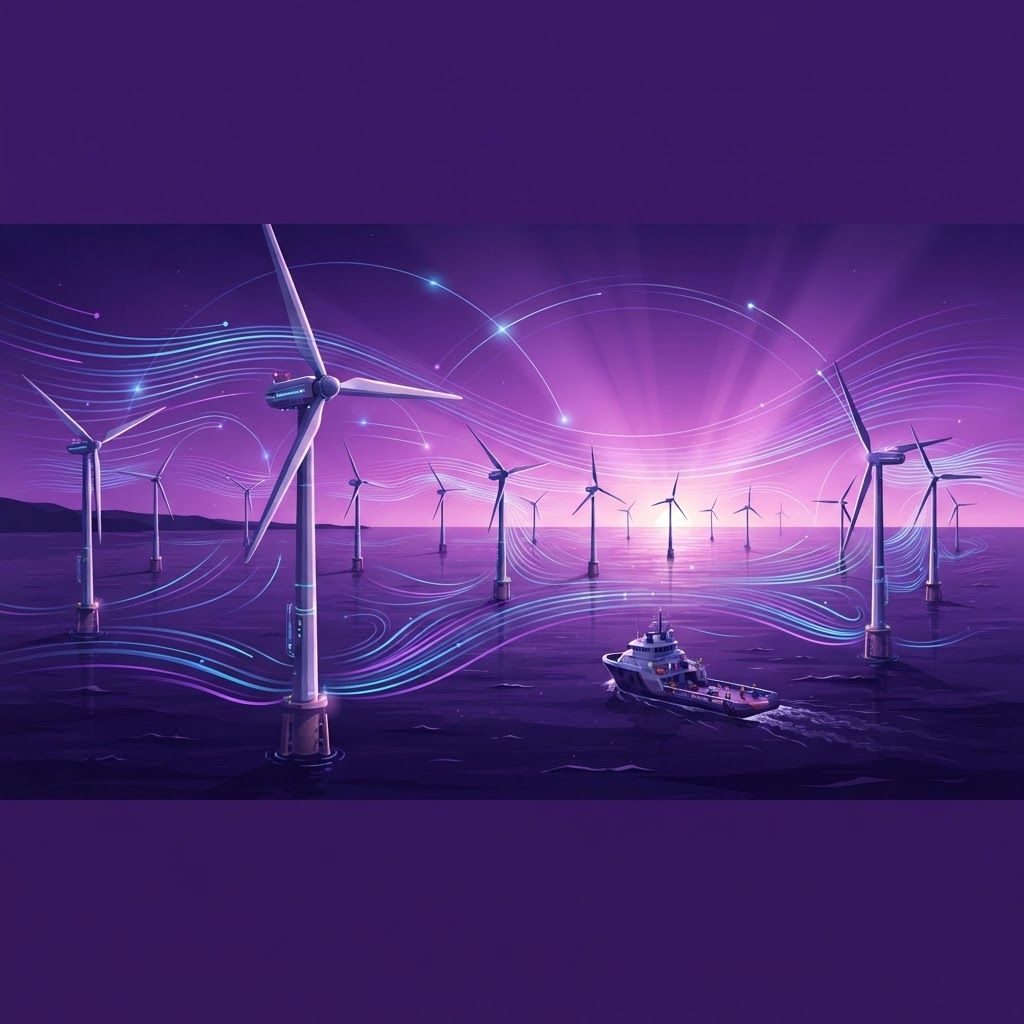
Chesapeake's Place in the Offshore Wind Economy
Few regional industries have changed as quickly as wind energy in coastal Virginia. Large offshore projects staged from Hampton Roads have created sustained demand for heavy fabrication, port logistics, specialized vessels, high-voltage electrical work and trained technicians. Chesapeake contributes to that ecosystem through its industrial waterfront, established metalworking and machining base, and a workforce accustomed to shipyard-grade quality standards.
Onshore wind plays a smaller but real role as well. Distributed and small-scale turbines appear on rural properties, agricultural sites and some commercial facilities in southern Chesapeake, where open land and steady prevailing winds make modest installations viable. Between these two segments, the local wind sector includes everything from precision component suppliers to consultancies performing resource assessment.
What Makes a Wind Energy Company Credible
Wind work is unforgiving. Components operate under cyclic loading for decades in a corrosive marine environment, often in locations where repairs are expensive and weather-dependent. Credible companies therefore emphasize documented quality systems, welding and coating certifications, traceable material sourcing and rigorous safety programs. For service providers, technician training standards and confined-space and working-at-height qualifications matter as much as commercial terms. Firms that treat documentation as a nuisance rarely last long in this supply chain.
Ten Wind Energy Companies Connected to Chesapeake
1. Atlantic Coast Wind Services. A marine support and technician staffing company handling blade inspection, rigging supervision, and offshore crew coordination. Their strength is disciplined safety management and experience scheduling weather-dependent work windows realistically.
2. Chesapeake Turbine Fabrication. A heavy fabrication shop producing structural assemblies, platforms, ladders and secondary steel for turbine and substation applications. Certified welding procedures and marine-grade coating systems are central to their offering.
3. Elizabeth River Marine Logistics. Specialists in moving oversized components through port facilities and staging yards. Their planning work covers load engineering, route surveys, crane selection and lay-down area management, all of which determine whether an installation season stays on schedule.
4. Hampton Roads Wind Engineering. A consultancy performing wind resource assessment, foundation loading analysis and energy yield modeling. They serve both large developers and rural landowners evaluating small turbine feasibility, providing independent numbers rather than sales projections.
5. Deep Creek Blade Composites. A composites shop supporting blade repair, protective coating work and fixture manufacturing. Precision layup, controlled curing environments and inspection documentation define their process.
6. Southgate High Voltage Contractors. Electrical contractors focused on collection systems, transformers, switchgear and grid interconnection work. Their crews hold the high-voltage qualifications that separate utility-scale work from ordinary commercial electrical contracting.
7. Chesapeake Wind Technician Academy. A workforce development organization training entry-level technicians in mechanical, hydraulic and electrical fundamentals along with rescue and safety procedures. Their graduates supply much of the region's maintenance labor pool.
8. Tidewater Precision Machining. A machining company producing shafts, bearing housings, fasteners and gearbox components to tight tolerances. Metrology capability and material certification traceability are the reasons developers keep them on approved vendor lists.
9. Bay Point Turbine Maintenance. A service organization performing scheduled maintenance, torque verification, lubrication programs and condition monitoring on operating assets. Their reporting discipline helps owners predict component replacement before failures occur.
10. Great Bridge Small Wind Solutions. Focused on distributed and agricultural applications, this company handles siting, permitting, installation and maintenance of small turbines on rural properties, frequently pairing them with solar and battery systems for balanced generation.
Trends Driving the Sector Forward
Turbine capacity continues to increase, which pushes component sizes beyond what conventional transport and lifting equipment can handle and rewards companies investing in larger capability. Operations and maintenance is becoming the sector's steadiest revenue stream as installed capacity grows, shifting employment toward long-term technician roles. Supply chain localization is another priority, with developers actively seeking regional suppliers to reduce logistics risk. Finally, condition monitoring and predictive analytics are replacing purely calendar-based maintenance, changing what owners expect from service contracts.
Evaluating a Wind Sector Partner
Ask for quality certifications, welding procedure specifications and coating system details where fabrication is involved. For service providers, request safety statistics, technician certification records and examples of completed campaigns with documented turnaround times. Confirm capacity honestly: a shop that is excellent but fully booked may not suit a compressed installation schedule. Insurance limits, bonding capacity and financial stability also matter given the value of the assets involved.
Careers and Local Economic Impact
For residents, the wind sector offers durable technical careers in welding, machining, electrical work, composites, marine operations and maintenance. Training pathways have expanded considerably, and employers increasingly hire for aptitude and safety mindset rather than requiring prior wind experience. That accessibility has made the industry an important contributor to skilled employment throughout Chesapeake and the surrounding cities.
Final Thoughts
Wind energy in Chesapeake is less about turbines on the horizon than about the industrial capability that puts them there and keeps them running. The ten companies profiled here illustrate how fabrication, logistics, engineering, high-voltage electrical work and technician training combine into a functioning regional supply chain. Whether you are a developer sourcing partners, a landowner considering a small turbine, or a worker exploring the field, the depth of local expertise is a genuine advantage worth using.