
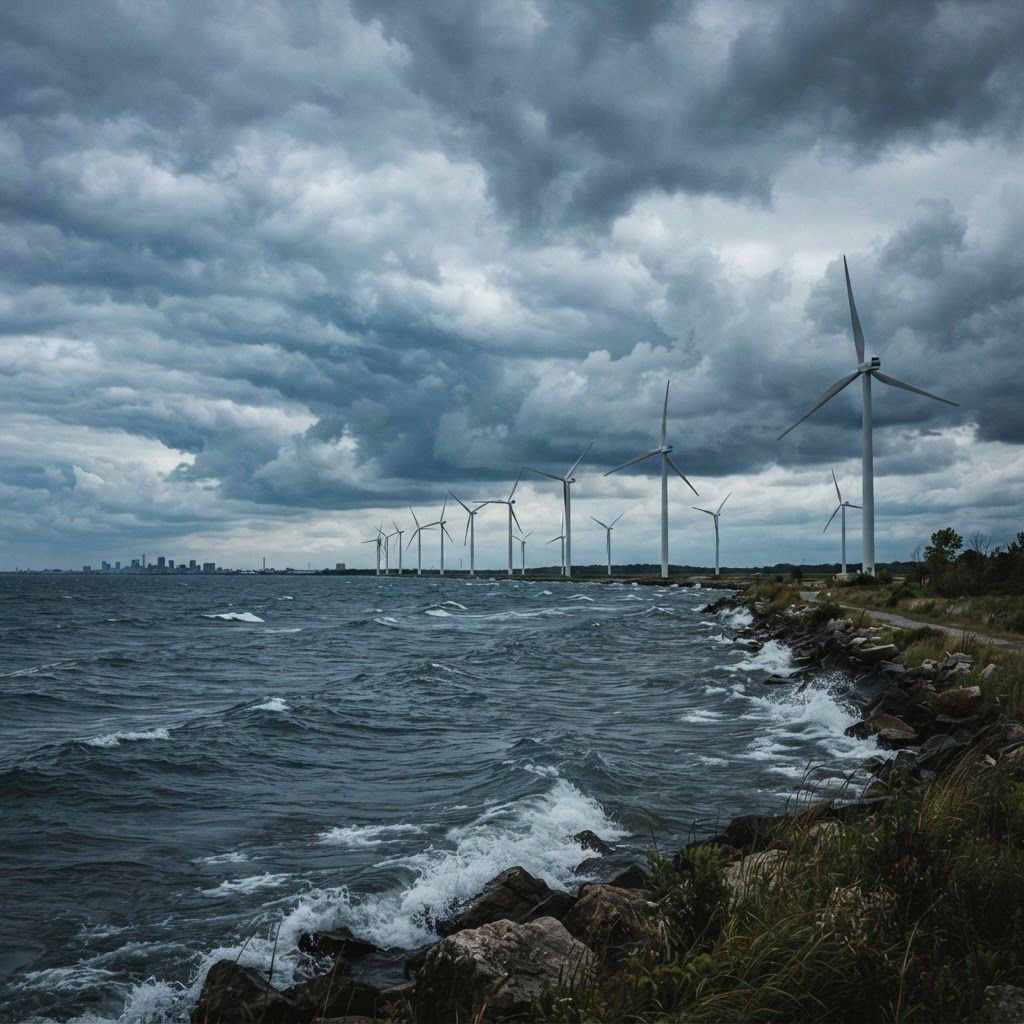
Why Western New York Is Well Positioned for Wind
The wind resource around Buffalo is genuinely good. The Lake Erie shoreline and the elevated terrain south of the city experience consistent prevailing winds, and the lake itself provides low-roughness fetch that increases wind speed and reduces turbulence. Combined with existing high-voltage transmission built decades ago to move hydroelectric power from Niagara, the region has the two ingredients that matter most for wind development: resource and grid access.
New York's statutory clean energy targets add demand. The state has committed to large volumes of renewable capacity and offshore wind specifically, and while most offshore attention has focused on the Atlantic coast, the Great Lakes represent a long-discussed future opportunity. Onshore, the counties surrounding Erie County have hosted commercial wind farms for years, giving the region an experienced construction and service workforce.
The Existing Landscape
Western New York already hosts operating wind capacity. Projects in Wyoming, Chautauqua and Steuben counties have been generating for well over a decade, and Steel Winds, built on a remediated former Bethlehem Steel site in Lackawanna directly on the Buffalo waterfront, is one of the most-cited examples of brownfield wind development in the United States. Siting turbines on contaminated industrial land that has limited alternative use turned a liability into generating capacity, and it remains a reference case for redevelopment planners nationally.
That project also illustrates the visibility of wind in this market. Turbines along the lakeshore are seen daily by hundreds of thousands of residents, which has made public familiarity higher here than in regions where wind is confined to remote areas.
Ten Companies Active in Regional Wind Energy
1. New York Power Authority plays a central role in regional clean energy planning and transmission, and its programs shape how new renewable generation, including wind, reaches customers in Western New York. Its involvement in transmission upgrades directly determines which projects are viable.
2. Steel Winds project operators manage the Lackawanna waterfront installation, handling turbine maintenance, output optimization and the specialized challenges of operating on a remediated industrial site. Long-term operation of an urban-adjacent wind facility requires community relations capability alongside technical skill.
3. Invenergy is among the national developers with New York project experience, bringing capital, interconnection expertise and long-term ownership capacity. Utility-scale wind requires developers able to carry projects through multi-year permitting and queue processes.
4. EDP Renewables North America and comparable independent power producers have developed and acquired wind assets across Upstate New York. Ownership consolidation among experienced operators generally improves plant availability and grid performance.
5. Ecology and Environment legacy consulting practices established Buffalo as a regional center for the environmental studies wind projects require, including avian and bat surveys, noise modeling, shadow flicker analysis, wetland delineation and visual impact assessment. This expertise is a genuine local asset.
6. LiRo-Hill and regional engineering firms provide civil, structural and geotechnical engineering for turbine foundations, access roads and substations. Foundation design in Western New York must contend with variable glacial soils and shallow bedrock, making local geotechnical knowledge valuable.
7. CIR Electrical Construction and similar regional electrical contractors perform collection system, substation and interconnection work. The electrical balance of plant is a substantial share of project cost and a frequent source of schedule risk.
8. Local IBEW and building trades signatory contractors supply the skilled workforce for turbine erection, cabling and commissioning. Wind construction is labor-intensive and specialized, and the presence of trained crane operators, ironworkers and electricians in the region lowers project cost relative to markets requiring imported labor.
9. Buffalo-area machining and metal fabrication suppliers serve the wind supply chain with components, weldments, tooling and repair services. The region's manufacturing heritage produced exactly the capabilities the wind industry needs, and several shops have built substantial energy-sector business lines.
10. Independent turbine service and blade repair firms operating in Upstate New York handle inspection, gearbox and blade maintenance across the region's aging fleet. As turbines pass ten and fifteen years of service, the operations and maintenance market grows faster than new construction.
Constraints and Realistic Expectations
Interconnection queue delays are the dominant obstacle to new wind capacity, not resource or public support. Studies and upgrade cost allocation can take years, and projects frequently withdraw when assigned network upgrade costs prove uneconomic. This is a systemic issue affecting all renewable development in the region.
Siting law has shifted as well. New York consolidated major renewable facility permitting into a state-level process intended to shorten timelines, which reduces the ability of individual municipalities to block projects but has generated its own litigation and local political friction. Developers who invest early in genuine community engagement, host community benefit agreements and transparent visual simulations navigate this far better than those who do not.
Offshore Great Lakes wind remains largely aspirational. Ice loading, freshwater foundation engineering, shipping lanes, fisheries and binational coordination with Canada all present unresolved challenges. It is a plausible long-term opportunity for Buffalo rather than a near-term market.
Opportunities for Local Businesses
The most accessible opportunity for Buffalo companies is not development but supply and service. Turbine components, structural steel, fasteners, castings, gearbox parts, control cabinets and specialized transport all represent addressable markets for existing regional manufacturers. Firms that pursue relevant quality certifications and understand energy-sector procurement cycles have won meaningful contracts.
Workforce development is the parallel opportunity. Community colleges and trade programs in the region have added wind technician curricula, and the job category has strong wage and growth characteristics. Employers report that finding qualified technicians willing to work at height in variable weather is the binding constraint.
Conclusion
Wind energy around Buffalo is a mature industry with a modest but real footprint and a strong supporting supply chain. The near-term growth is in operations, maintenance, repowering older installations and component manufacturing rather than dramatic new capacity, primarily because of interconnection limitations. For businesses and workers in Western New York, that still represents a durable, well-compensated sector grounded in the region's existing industrial strengths.