
Why Warehousing Concentrated in the East Valley
Warehousing follows geography, and Arizona's geography is unusually favorable. From a Tempe-area facility, trucks can reach Southern California ports in under six hours, Las Vegas in about five, and much of New Mexico and Utah within a day. Roughly sixty million people live within a one-day drive. Land costs less than in coastal markets, the labor pool is large and growing, and the risk of natural disasters that disrupt distribution is comparatively low.
Those fundamentals have attracted enormous investment. Industrial development across the East Valley has added millions of square feet of modern distribution space in recent years, much of it built to contemporary specifications with high clear heights, ample dock doors, and deep truck courts. For businesses that need storage and distribution capability, the practical question is no longer whether space exists but which type of provider and facility fits the operation.
How These Providers Were Evaluated
The warehousing options below were assessed on facility specifications, inventory accuracy and operational discipline, technology systems, flexibility of terms, value-added service capability, labor management, and suitability for different business models. Public warehouses, contract logistics providers, specialized operators, and self-storage alternatives are all included.
1. Contract Logistics Providers
Contract logistics companies operate dedicated warehouse space for a single client under a multi-year agreement. The client gets a facility configured precisely for its products and processes, a trained team that understands the business, and performance commitments written into the contract. This model suits companies with substantial, stable volume that need operational control without owning real estate or employing a warehouse workforce directly.
2. Public and Shared Warehousing Operators
Public warehouses store goods for many clients in shared space, charging by pallet position or square foot plus handling fees. The appeal is flexibility: space scales up and down with demand, commitments are short, and there is no capital investment. For seasonal businesses, companies testing the western market, and firms with fluctuating inventory, shared warehousing is frequently the most economical approach.
3. E-Commerce Fulfillment Warehouses
Fulfillment centers are warehouses optimized for individual order picking rather than pallet movement. They integrate with e-commerce platforms and marketplaces, receive orders automatically, pick and pack with high accuracy, and tender parcels to carriers several times daily. Facilities in the Phoenix region can reach most of the western United States within one or two ground transit days, which allows even small brands to offer fast shipping. Key metrics to evaluate are order accuracy, same-day cutoff time, and receiving turnaround for inbound inventory.
4. Cold Storage and Temperature-Controlled Facilities
Temperature-controlled warehousing is a specialized and capital-intensive segment, and it is particularly important in Arizona. Facilities offer frozen, refrigerated, and climate-controlled ambient zones with continuous monitoring, backup power, and documented excursion procedures. Food distributors, beverage companies, pharmaceutical firms, and cosmetics brands all require it. Evaluating a cold storage provider should include reviewing temperature logging practices, sanitation programs, and food safety certifications.
5. Bonded Warehouses and Foreign Trade Zone Operators
Importers can defer or reduce duty obligations by storing goods in bonded facilities or within a foreign trade zone. Duties are not paid until goods enter domestic commerce, and goods re-exported may avoid duty entirely. For Tempe-area importers with significant inventory, the cash flow benefit can be substantial. These operators also handle customs documentation and compliance, which reduces administrative burden.
6. Automated and High-Technology Warehouses
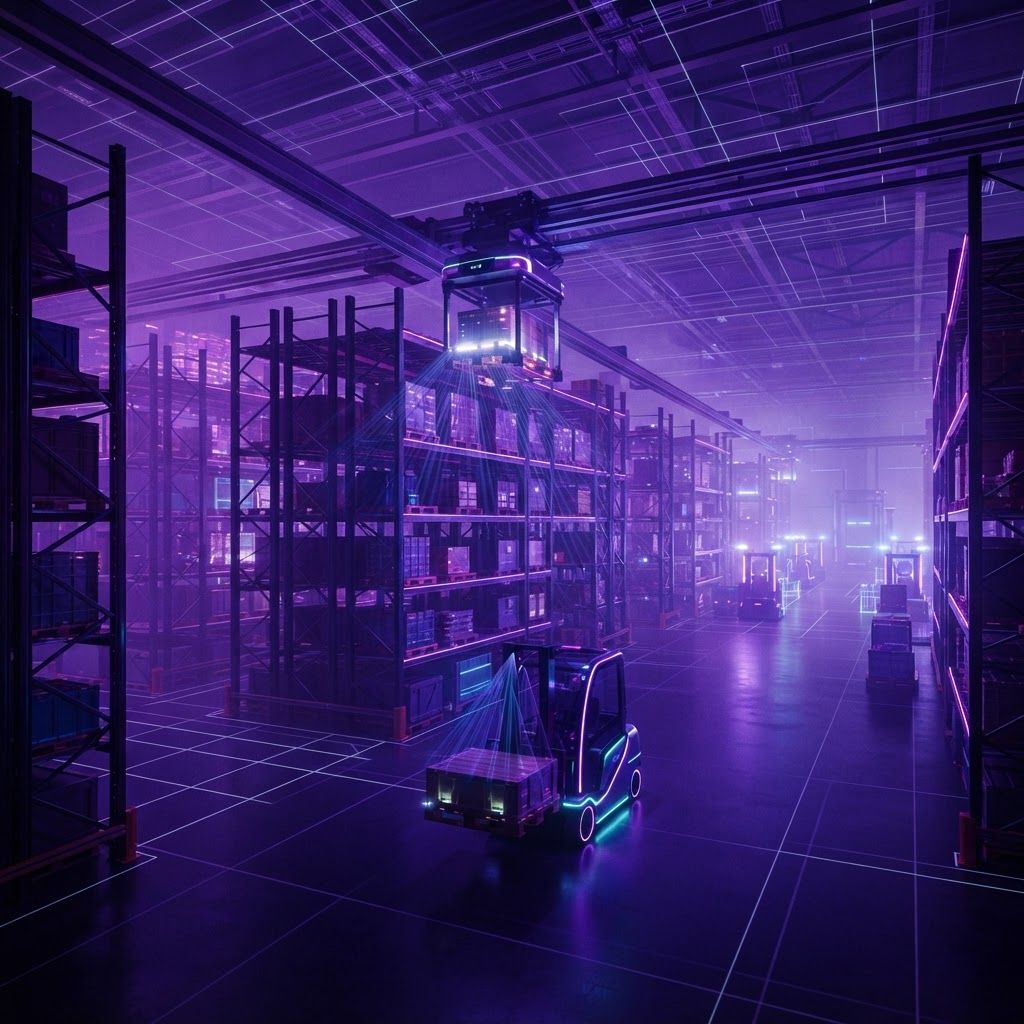
A growing tier of facilities uses automation to improve throughput and accuracy: autonomous mobile robots, goods-to-person systems, automated storage and retrieval, conveyor sortation, and machine vision quality checks. The benefits are consistent accuracy, reduced dependence on a tight labor market, and higher storage density. These facilities generally require higher volume commitments to justify their cost structure, but for the right operation they deliver measurably better performance.
7. Cross-Dock Facilities
Cross-docking moves goods from inbound to outbound trucks with minimal or no storage. Facilities designed for it have many dock doors, shallow building depth, and large truck courts. The model reduces inventory carrying cost and speeds delivery, and it works particularly well for retail replenishment, consolidation of multiple suppliers into single outbound loads, and deconsolidation of inbound containers for regional distribution.
8. Flex Industrial and Small-Bay Warehouse Providers
Not every business needs fifty thousand square feet. Flex industrial space combines a modest warehouse area with office space, typically ranging from a few thousand to fifteen thousand square feet, with grade-level or single dock access. Contractors, distributors, light manufacturers, and growing e-commerce brands across Tempe use these buildings extensively, and the segment has remained tight because demand consistently exceeds supply.
9. Specialized Storage Operators
Certain goods require handling that general warehouses cannot provide. Specialized operators store hazardous materials under regulatory compliance, high-value goods in secure caged areas with enhanced surveillance, documents in climate-controlled records facilities, and oversized equipment with appropriate lifting capability. Matching a specialized need to a general provider is a common and expensive mistake.
10. Self-Storage and Business Storage Solutions
At the smallest scale, commercial self-storage serves businesses that need modest, flexible space. Climate-controlled units protect inventory from Arizona heat, drive-up access simplifies loading, and month-to-month terms suit uncertain needs. Startups, contractors, event companies, and online sellers with limited inventory frequently begin here before graduating to a fulfillment provider or flex space.
Trends in Warehousing
Automation continues to spread as labor costs rise and availability tightens, with robotics now appearing in mid-size facilities rather than only the largest operations. Building specifications have evolved toward higher clear heights that allow far more cubic storage per square foot of floor. Sustainability features including rooftop solar, efficient lighting, cool roofing, and electric vehicle charging are increasingly standard, driven both by tenant requirements and Arizona's solar economics. Inventory strategy has shifted toward holding additional safety stock after years of supply disruption, which supports demand for space. And nearshoring from Mexico continues to raise Arizona's importance as a distribution gateway.
How to Choose a Warehousing Partner
Begin with the physical requirements: storage volume, inventory turn rate, handling characteristics, temperature needs, and peak seasonality. These determine which category of provider is even relevant.
Examine technology seriously. Ask for a live demonstration of the warehouse management system, confirm how it will integrate with your order and accounting systems, and verify what inventory visibility you will have in real time. Manual reconciliation between systems is a persistent hidden cost.
Insist on performance data. Inventory accuracy, order accuracy, dock-to-stock time, and on-time shipping should all be measured and reported. Ask how each is calculated, since definitions vary considerably between providers.
Visit facilities before committing. Organization, cleanliness, safety signage, equipment condition, and staff engagement reveal operating discipline that no presentation can convey.
Model total cost carefully. Storage rates, handling charges, receiving fees, minimum commitments, and seasonal surcharges combine differently depending on inventory turn. A low storage rate paired with high handling fees can be expensive for fast-moving goods, and the reverse is true for slow movers.
Final Thoughts
Warehousing in the Tempe area reflects the region's emergence as a serious western distribution market. Businesses here can access everything from a small climate-controlled unit to an automated fulfillment operation capable of shipping thousands of orders a day. The right choice depends on volume, product characteristics, and growth trajectory rather than on provider size. Defining requirements precisely, verifying performance with data, and inspecting facilities in person will consistently produce better outcomes than comparing quoted rates alone.