
Why Warehousing Here Is Strategically Important
Warehousing in St. Petersburg is driven by three forces: the port, the Ring Road and the consumer market. Imports arriving through the Big Port need buffer storage close to the terminals. The Ring Road and the main highways toward Moscow and Finland create logical distribution corridors. And a metropolitan population of over five million generates enough retail and e-commerce demand to justify substantial local inventory.
The result is a warehouse market with clear geographic logic. Facilities cluster in the southern and southeastern industrial belts near the Moscow highway, along the Ring Road, and toward the port and Ust-Luga corridors. Location choice within the region has a direct effect on transport cost, delivery speed and labour availability.
Ten Warehousing Providers and Facility Types
Raven Russia-format international warehouse developers built much of the region's Class A stock, offering high-specification facilities with adequate ceiling heights, level floors, dock levellers, fire suppression and column spacing designed for efficient racking.
PNK Group-type industrial developers provide built-to-suit and speculative warehousing at scale, which suits companies needing large contiguous space or custom configurations such as freezer chambers or high-bay automated storage.
Ghelamco-style developers and their regional equivalents deliver modern logistics parks with multiple tenants sharing infrastructure, security and yard management, giving mid-sized occupiers access to Class A quality without taking an entire building.
STS Logistics-format third-party logistics providers offer warehousing bundled with operations, meaning you buy a service rather than a space: receiving, put-away, inventory management, picking, packing and dispatch under agreed performance metrics.
FM Logistic-type contract logistics operators bring international process standards, warehouse management systems, co-packing capability and detailed reporting, which appeals to consumer goods companies with retail compliance requirements.
Modul-style regional terminal and warehouse operators combine customs warehouse status with general storage, allowing imported goods to be held before duties are paid, which improves cash flow for importers.
Temperature-controlled warehouse specialists operate chilled and frozen facilities for food and pharmaceutical products, with validated temperature mapping, backup power, continuous monitoring and documented cold chain procedures.
Bonded and customs warehouse operators provide licensed storage under customs supervision, essential for goods awaiting clearance, re-export or duty deferral, and their documentation discipline is what makes the status valuable.
E-commerce fulfilment centres focus on high-volume, small-order picking with barcode scanning, packing station design, courier integration and returns processing tuned for online retail rather than pallet-in, pallet-out distribution.
Self-storage and small-unit operators complete the market, serving small businesses, seasonal stock and companies that need a few dozen square metres rather than a few thousand.
How to Evaluate a Warehouse
Inspect the physical specification carefully. Clear ceiling height determines racking levels and therefore cost per pallet position. Floor flatness and load capacity affect equipment choice. Dock door count and yard depth determine how many vehicles you can handle simultaneously, and undersized yards create queuing that no software can fix.
Assess the warehouse management system, because inventory accuracy depends on it. Ask for actual stock accuracy figures, order accuracy rates and on-time dispatch performance rather than accepting general assurances.
Consider labour realistically. Warehouse performance is a people business, and facilities in areas with tight labour markets experience turnover that shows up as errors. Ask how staffing is managed during peak seasons.
Review contract structure closely. Understand whether you are paying per pallet, per square metre or per transaction, how peak volumes are priced, what the minimum commitment is, how notice periods work and what happens to your inventory if the relationship ends. Flexible pricing that scales with volume protects you during demand swings.
Verify compliance and safety, including fire protection systems, insurance coverage limits, security monitoring, access control and, where relevant, food safety or pharmaceutical certification.
Trends Shaping the Sector
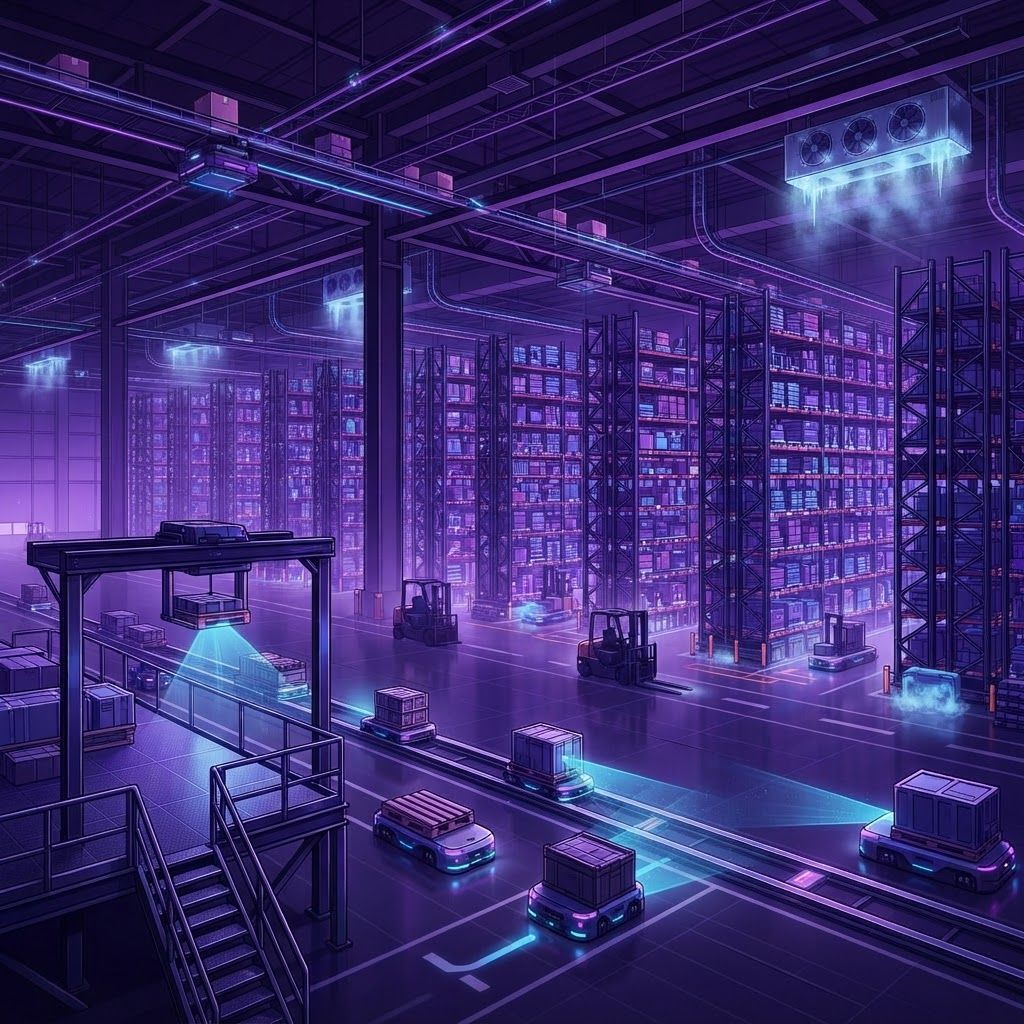
Automation is advancing steadily, with conveyor systems, pick-to-light installations and increasingly autonomous mobile robots improving throughput in higher-volume operations. E-commerce continues to shift demand toward facilities designed for piece picking rather than pallet handling.
Multi-temperature facilities are growing as food retail expands, and energy efficiency has become a serious consideration in facility selection as operating costs rise. Occupiers are also placing more value on flexibility, favouring providers who can absorb seasonal swings without renegotiation.
Final Thoughts
St. Petersburg offers a mature warehousing market spanning Class A logistics parks, customs-bonded storage, temperature-controlled facilities and e-commerce fulfilment. The right choice depends on your inventory profile, order patterns and how much of the operation you want to outsource. Focus on physical specification, system quality, measurable performance and contract flexibility, and warehousing becomes a source of competitive advantage rather than a fixed cost you tolerate.