
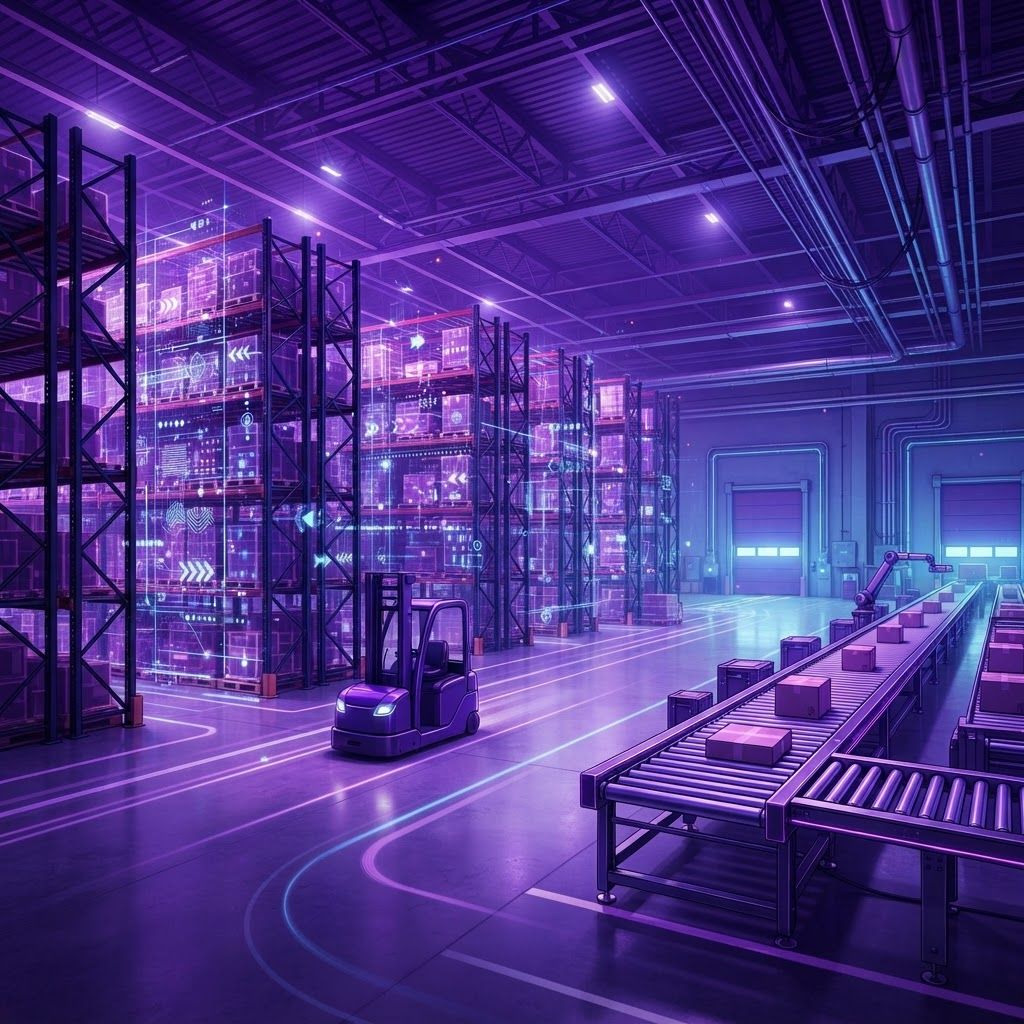
Why Warehousing Has Grown in Sioux Falls
Warehousing has become one of the most consequential industrial sectors in the Sioux Falls economy, and the reasons are structural rather than cyclical. Land and construction costs are moderate compared to larger distribution markets. Two interstate highways intersect nearby, giving one-day truck access to a large regional population and two-day reach across much of the country. The regional economy generates enormous volumes of food, agricultural, and manufactured product needing storage. And utility costs and reliability compare favourably, which matters enormously for refrigerated and frozen facilities where energy is the dominant operating expense.
The market divides into recognisable categories, and matching your requirement to the right one is the difference between a facility that supports growth and one that constrains it.
1. Public Warehousing and Contract Storage Operators
Public warehouses rent space and handling services on flexible terms, while contract warehouses commit dedicated space and labour under longer agreements. Public arrangements suit variable or seasonal volume, since you pay for what you use. Contract arrangements suit stable volume, delivering lower unit costs and dedicated processes in exchange for commitment.
2. Cold Storage and Refrigerated Warehousing Providers
Temperature-controlled warehousing is the standout local specialty, driven by the region's meat, dairy, and food processing concentration. Facilities offer multiple temperature zones, blast freezing, continuous monitoring with audit trails, and food safety compliance programmes. Because cold storage carries far higher capital and energy costs than ambient space, providers in this category compete on energy efficiency and uptime reliability as much as on rate.
3. Distribution Centre Operators
Distribution centres are built for throughput rather than storage, receiving inbound freight, sorting it, and dispatching it outbound quickly. Facilities feature extensive dock doors, cross-dock configurations, and staging areas. For companies serving the Dakotas, Minnesota, Iowa, and Nebraska, a Sioux Falls distribution point provides genuinely efficient regional coverage.
4. E-Commerce Fulfilment Warehouses
Fulfilment centres are optimised for individual order picking rather than pallet movement, with bin and shelf storage, pick paths designed for high SKU counts, packing stations, and returns processing areas. Providers integrate with online storefronts and marketplaces, and the central location supports competitive delivery promises across a wide national footprint.
5. Agricultural and Commodity Storage Facilities
Grain elevators, seed and fertiliser storage, and agricultural chemical warehousing operate under their own rules, with regulatory compliance, commodity segregation, quality preservation, and extreme seasonality all shaping facility design. Capacity here determines how much of a harvest a region can absorb before it must move, which makes these facilities strategically important well beyond their owners.
6. Bonded and Foreign Trade Zone Warehousing
Bonded facilities allow imported goods to be stored with duty payment deferred until the goods enter domestic commerce, which improves cash flow for importers. Foreign trade zone designation can provide additional advantages for goods that are processed or re-exported. Manufacturers using imported components and distributors serving international markets are the primary beneficiaries.
7. Third-Party Logistics Warehousing With Value-Added Services
Many warehouse operators now provide services beyond storage, including kitting and assembly, labelling and repackaging, quality inspection, light manufacturing, display building, and returns refurbishment. For brands, outsourcing these functions to the facility already holding the inventory removes a handling step and usually reduces total cost.
8. Hazardous Material and Regulated Storage Providers
Chemicals, agricultural inputs, flammable products, and other regulated materials require purpose-built storage with containment, fire suppression, ventilation, segregation, and documented emergency procedures. Providers in this segment maintain permits, trained personnel, and inspection records. Compliance capability, not price, is the correct selection criterion here.
9. Commercial Self-Storage and Flexible Small-Space Providers
Not every business needs a hundred thousand square feet. Commercial self-storage and small industrial condominium units serve contractors storing equipment and materials, small e-commerce sellers holding inventory, service companies needing parts storage, and businesses in transition. Month-to-month flexibility is the main attraction, along with drive-up access and often twenty-four hour availability.
10. Records Storage and Document Management Facilities
Healthcare organisations, law firms, financial institutions, and government agencies in Sioux Falls generate substantial records retention requirements. Specialised facilities provide climate-controlled document storage, indexed retrieval, secure chain of custody, scanning and digitisation, and certified destruction. Regulatory retention rules make this a durable, compliance-driven segment.
Trends Reshaping Warehousing
Automation is spreading beyond the largest national facilities into mid-sized regional warehouses, with conveyor systems, automated sortation, goods-to-person picking, and increasingly autonomous mobile robots. Inventory strategy has shifted from pure just-in-time toward holding buffer stock closer to demand, which directly increases regional warehousing demand in central locations. Warehouse management software has become the core of service quality, since inventory accuracy and real-time visibility now determine whether customers trust a provider. Sustainability investment is rising, with high-efficiency refrigeration, LED lighting, solar installations, and improved building envelopes reducing operating costs while meeting customer environmental requirements. And labour availability remains the binding constraint, pushing operators toward retention investment and ergonomic process design.
How to Select a Warehouse Provider
Confirm the facility physically suits your product, including ceiling height, floor loading capacity, dock configuration, racking type, and temperature capability. Verify the technology, since a warehouse management system that integrates cleanly with your systems prevents permanent manual reconciliation work. Ask for measured performance including inventory accuracy, order accuracy, on-time shipping, and damage rates, and request actual numbers. Understand the full cost structure, covering storage, receiving, handling, order processing, and accessorial charges, because headline storage rate is rarely the largest component. Review compliance credentials relevant to your product, whether food safety, pharmaceutical, or hazardous material. And confirm scalability, including whether the provider can absorb seasonal peaks and sustained growth without service degradation.
Final Thoughts
Sioux Falls offers a warehousing market with genuine depth, strong cold chain capability, sensible operating costs, and geography that supports efficient regional and national distribution. Companies that specify their physical, technological, and compliance requirements clearly and evaluate providers on measured performance will find facilities here capable of supporting substantial and sustained growth.