
Why Warehouse Space in Huntsville Became So Valuable
A decade ago, industrial space in North Alabama was relatively easy to find. That is no longer true. Large-scale automotive manufacturing in the Huntsville and Athens corridor brought hundreds of suppliers requiring nearby inventory positions. Defense and aerospace programs at Redstone Arsenal generate long-term storage requirements for components, tooling, and government-furnished equipment. Hyperscale data center construction consumes staging space for equipment. And regional e-commerce growth has driven demand for fulfillment capacity that can reach Southeast customers within one or two days.
The result is a market where warehousing decisions carry strategic weight. Choosing the wrong provider or the wrong location can add days to customer delivery, tie up cash in excess inventory, or leave a production line exposed during a supply disruption.
The Different Kinds of Warehousing
Public warehousing offers shared space on flexible terms, ideal for variable volumes. Contract warehousing dedicates space and labor to one client under a multi-year agreement. Fulfillment centers pick, pack, and ship individual orders. Bonded and foreign trade zone warehousing defers duties on imported goods. Cross-docking facilities move freight through without long-term storage. Cold storage handles temperature-sensitive goods. Specialty warehousing covers hazardous materials, secured government inventory, and oversized equipment.
1. GEODIS
GEODIS is a global contract logistics provider with extensive Southeast warehousing operations. Its strength lies in complex omnichannel distribution, where one inventory pool serves retail replenishment, business-to-business shipments, and direct-to-consumer orders with different labeling and packaging rules. It also brings mature warehouse management technology and continuous improvement discipline.
2. Ryder Supply Chain Solutions
Ryder combines warehousing with transportation and fleet services, which appeals to companies wanting a single provider accountable for both storage and delivery. Its e-commerce fulfillment network and multi-client facilities allow mid-sized businesses to access enterprise-grade operations without building their own distribution center.
3. Averitt Distribution and Fulfillment
Averitt pairs its respected Southeast transportation network with warehousing and distribution services. For Huntsville shippers already using Averitt for freight, adding warehousing creates operational simplicity: inventory sits inside the same network that delivers it, reducing handoffs and finger-pointing when something goes wrong.
4. Kuehne and Nagel
Kuehne and Nagel brings global forwarding strength together with contract logistics, making it a strong fit for companies whose inventory arrives from overseas. Coordinating ocean or air import, customs clearance, and warehousing under one provider reduces the dwell time and documentation errors that commonly occur at handoff points.
5. DHL Supply Chain
DHL Supply Chain is among the largest contract logistics operators worldwide, with particular depth in automotive, technology, and industrial sectors. Its automotive expertise, including sequencing and line-side delivery models, is directly relevant to the supplier base that has grown around North Alabama vehicle manufacturing.
6. Port of Huntsville Foreign Trade Zone Facilities
The foreign trade zone associated with the Port of Huntsville is one of the region's genuinely distinctive assets. Goods can be stored, manipulated, and in some cases assembled without immediate duty payment, and duties may be avoided entirely on items re-exported. For importers and exporters, the working capital and duty savings can be substantial enough to justify locating inventory in Huntsville rather than closer to a coastal port.
7. Regional Third-Party Logistics Warehouses
A number of regional third-party logistics operators run multi-client warehouses across North Alabama. Their appeal is flexibility and responsiveness: shorter contract terms, willingness to handle non-standard requirements, and direct access to management. Growing companies frequently start here before their volume justifies dedicated space.
8. Cold Storage and Temperature-Controlled Providers
Temperature-controlled warehousing serves food distribution, pharmaceuticals, and certain industrial chemicals and adhesives. Given Huntsville's perishables air freight history and its healthcare sector, validated cold chain capacity has real local relevance. These facilities carry higher costs, so accurate temperature requirement definition prevents overpaying for unnecessary precision.
9. Secured and Government-Compliant Storage Providers
Defense contracting creates demand for warehousing that meets specific security, inventory accountability, and access control requirements. Providers experienced with government-furnished property, serialized tracking, and controlled access are a specialized but essential segment of the Huntsville market, and their compliance knowledge is not easily replicated.
10. Self-Storage and Small-Business Flex Space
At the smallest end, flex industrial units and commercial self-storage serve contractors, e-commerce sellers, and service businesses needing a few hundred to a few thousand square feet. These spaces lack material handling infrastructure but offer month-to-month flexibility that no contract warehouse will match, making them a sensible first step for young businesses.
Technology Expectations in Modern Warehousing
A credible warehousing partner should offer a warehouse management system with real-time inventory visibility, barcode or RFID scanning at every touch, integration with your order management or enterprise system through APIs rather than spreadsheets, cycle counting programs with documented accuracy metrics, and reporting on order accuracy, on-time shipping, and inventory shrinkage. Providers unable to describe their accuracy rates precisely usually do not measure them.
Trends Shaping the Sector
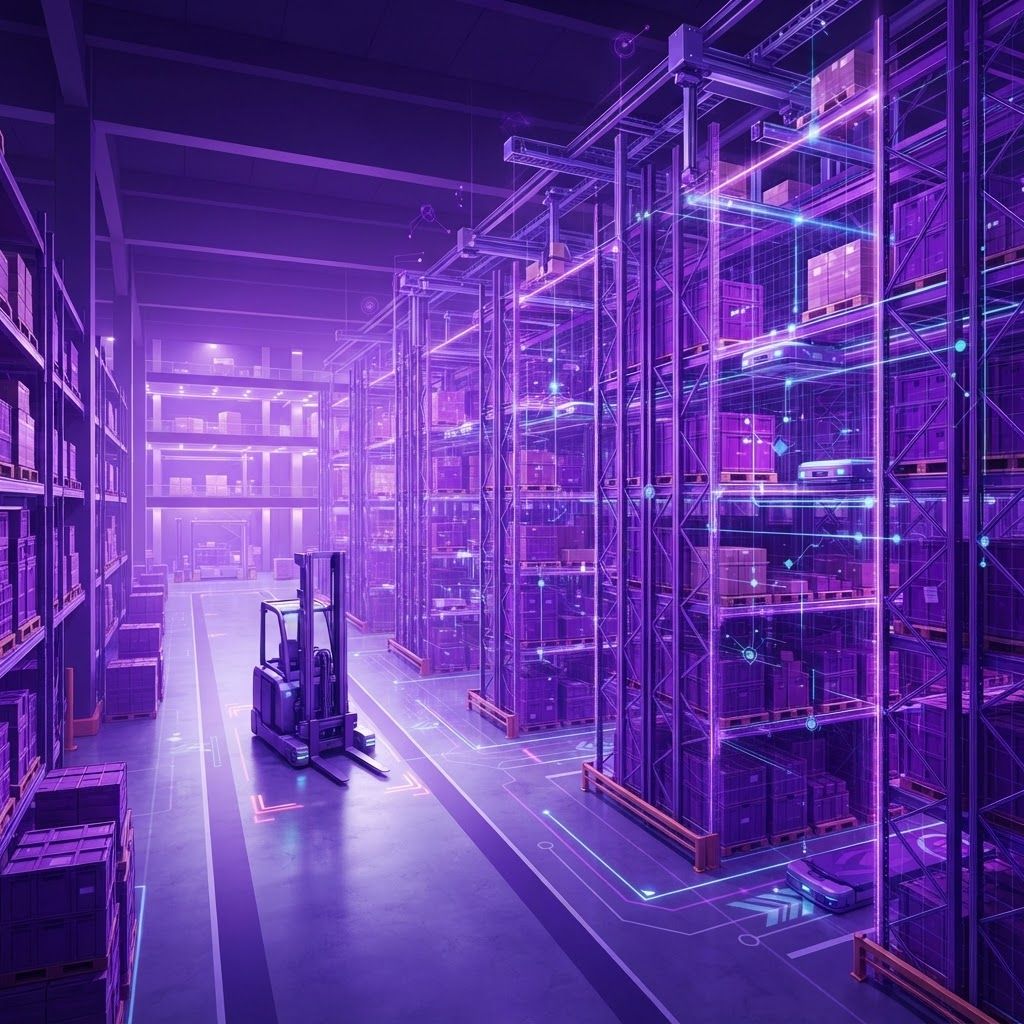
Automation continues to spread downmarket, with goods-to-person systems and autonomous mobile robots now appearing in mid-sized facilities. Supply chain resilience strategies have increased safety stock and regional inventory positioning, raising space demand. Labor availability remains the primary operational constraint, which is precisely why automation investment continues. And sustainability requirements are pushing energy-efficient lighting, solar installations, and packaging reduction programs into facility specifications.
How to Evaluate a Warehousing Partner
Tour the facility and observe housekeeping, aisle organization, and staff behavior, which reveal more than any presentation. Ask for inventory accuracy and order accuracy metrics with definitions. Understand the full cost structure, including storage, handling, receiving, pick fees, and accessorials, then model it against realistic volume. Clarify liability and insurance for inventory loss. Review contract length, volume commitments, and exit provisions carefully. And confirm scalability, because outgrowing a partner mid-contract is an expensive problem.
Final Thoughts
Warehousing in Huntsville has matured into a competitive, technically capable market with genuine advantages in duty management and multimodal access. The right partner depends on your inventory profile, order patterns, compliance requirements, and growth trajectory, and the providers above cover the full range from flexible shared space to fully automated contract operations.