
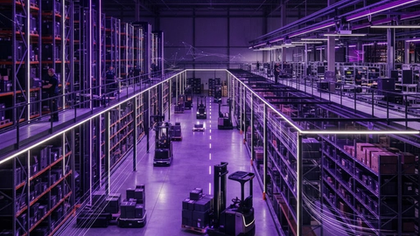
The Strategic Role of Warehousing in Boston
Warehousing forms an essential link in Boston's supply chains, providing the storage and distribution capacity that keeps goods flowing to businesses and consumers. As the region's economy grows and e-commerce reshapes distribution, the demand for sophisticated warehousing solutions has never been higher. These facilities do far more than store products; they enable efficient inventory management, order fulfillment, and rapid delivery.
Boston's dense population and diverse industries create unique warehousing needs. Retailers require flexible space to manage seasonal inventory, biotech firms need specialized storage for sensitive materials, and e-commerce companies demand fast, accurate fulfillment. The best warehousing companies meet these varied requirements with tailored solutions and operational excellence.
Hallmarks of a Leading Warehousing Company
Top warehousing companies in Boston distinguish themselves through efficiency, accuracy, and reliability. They operate well-organized facilities with optimized layouts, clear processes, and robust inventory systems. This precision minimizes errors, reduces handling time, and ensures that products are stored and retrieved efficiently.
Security and compliance are also defining characteristics. Leading providers protect their facilities with modern security systems and maintain strict standards for handling regulated or sensitive goods. For industries like pharmaceuticals and life sciences, adherence to quality and regulatory requirements is non-negotiable, and the best companies excel in meeting these standards.
Comprehensive Warehousing Services
The finest warehousing companies offer a broad range of services beyond simple storage. These include inventory management, order fulfillment, pick-and-pack operations, cross-docking, and distribution. Many also provide value-added services such as labeling, kitting, and light assembly, allowing businesses to streamline their operations under one roof.
Specialized storage is another key offering. Temperature-controlled warehousing supports pharmaceuticals, food products, and other sensitive goods, while secure areas protect high-value items. This versatility allows warehousing companies to serve clients across many industries, adapting their facilities and services to specific needs.
Technology Driving Modern Warehousing
Technology has transformed warehousing, and Boston's leading companies are embracing innovation. Warehouse management systems provide real-time visibility into inventory, enabling accurate tracking and efficient operations. Automation, including robotics and automated storage and retrieval systems, is increasingly improving speed and reducing errors.
Data analytics play a growing role in optimizing warehouse performance. By analyzing patterns in inventory movement and order fulfillment, top companies improve efficiency, reduce costs, and better serve their clients. Integration with clients' systems further streamlines the supply chain, creating seamless connections that enhance overall performance.
Ten Warehousing Providers Serving Greater Boston
Americold Logistics specializes in temperature-controlled storage and distribution, relevant to food and other cold-chain products. Lineage Logistics also brings large-scale cold-storage expertise and technology-enabled supply-chain services. Ryder Supply Chain Solutions provides warehousing, distribution, transportation, and fulfillment through an integrated operating model.
DHL Supply Chain offers contract logistics and highly engineered warehouse operations for major industries. GXO Logistics is recognized for automation-led contract logistics and complex fulfillment. CEVA Logistics combines warehousing with freight and transportation management across an international network.
NFI Industries provides distribution, transportation, and port-related capabilities with strong reach in the Northeast. Quiet Platforms, associated with American Eagle Outfitters, developed a shared logistics approach with roots in the Boston area and a focus on fulfillment technology. UNIS offers fulfillment, distribution, transportation, and final-mile services for varied customers. FW Logistics provides third-party warehousing and fulfillment solutions that can support companies serving New England.
Facility proximity should never be the sole criterion. Clients should verify available capacity, operating hours, inventory accuracy, integration methods, labor plans, security, and disaster-recovery procedures. Regulated goods require additional scrutiny of certifications, temperature mapping, sanitation, and documentation. A site visit and a clearly defined service-level agreement can reveal operational details that a sales proposal may overlook.
Building a Strong Warehouse Agreement
A sound agreement translates sales promises into measurable operating standards. Define receiving turnaround, order cutoff times, shipping accuracy, inventory reconciliation, returns processing, claims, and escalation paths. Specify how systems exchange orders and stock updates, who pays for integration work, and how data can be exported if the relationship ends. Pricing should clearly cover storage basis, handling, materials, projects, minimums, peak labor, and transportation accessorials. Companies should also inspect insurance, business continuity, backup power, cybersecurity, pest control, and fire protection. Regular reviews using shared performance data help both parties solve recurring issues before they affect customers.
Choosing the Right Warehousing Partner
Selecting a warehousing company in Boston requires careful consideration of location, capacity, services, and industry expertise. Businesses should assess whether a provider can accommodate their storage needs, handle their specific product types, and scale with their growth. Proximity to transportation networks and end markets is also an important factor.
The best warehousing companies in Boston serve as strategic partners, providing not just space but comprehensive solutions that improve supply chain efficiency. By combining well-run facilities, diverse services, and advanced technology, they help businesses store, manage, and distribute their products effectively. For any company navigating the complexities of modern distribution, the right warehousing partner is a valuable asset.