
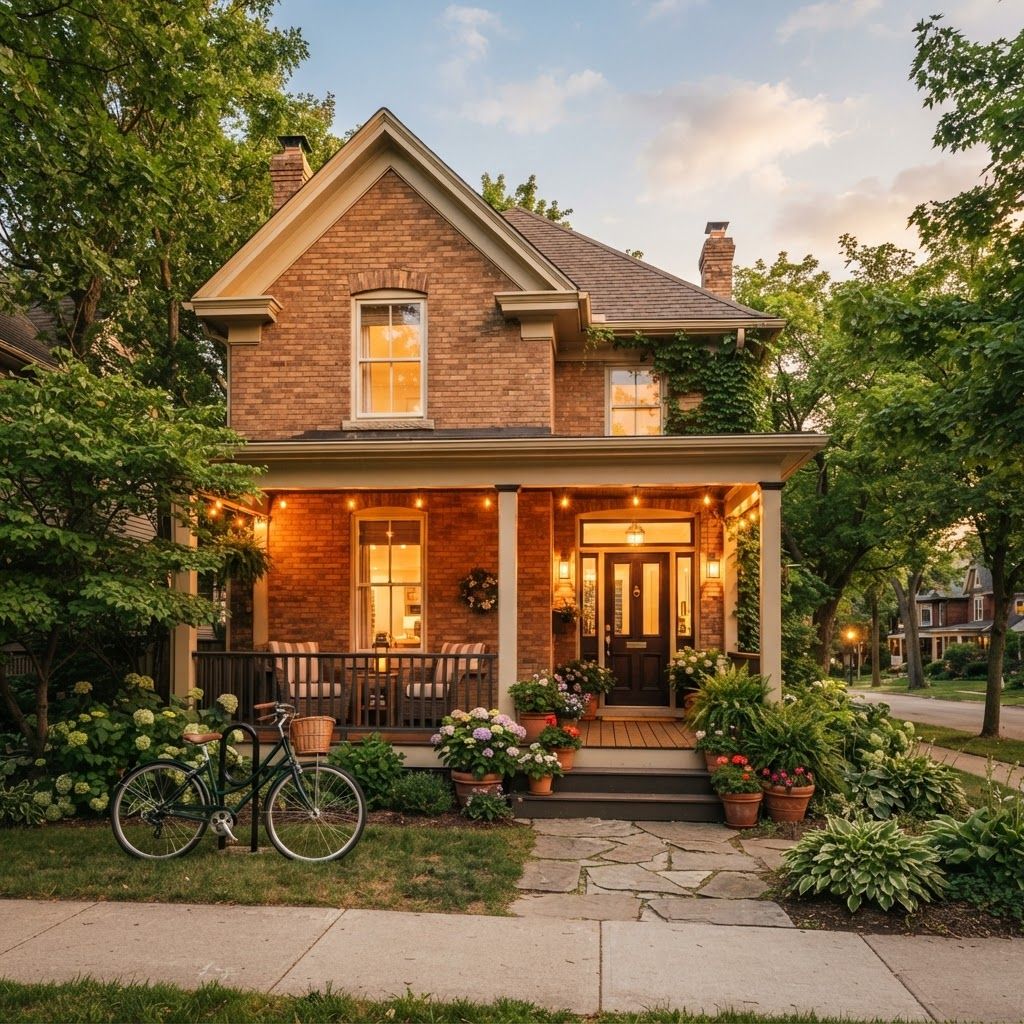
St. Louis is underrated as a vacation rental destination, and travelers who figure that out get an unusually good deal. The city's short-term rental inventory is dominated by architecturally significant properties: nineteenth-century brick townhouses with original woodwork, converted warehouse lofts with exposed timber and brick, and generous four-bedroom homes in walkable neighborhoods that would cost several times as much in a coastal city. For families, wedding parties, baseball weekends, and groups attending events at the region's convention and sports venues, whole-home rentals frequently deliver more space and lower cost than equivalent hotel bookings.
Why Rent a Home Instead of a Hotel
The calculus is straightforward for certain trip types. Groups of five or more almost always save money in a single house versus multiple hotel rooms. Families with young children benefit enormously from separate bedrooms, a full kitchen, and in-unit laundry. Extended stays, common for traveling medical professionals and relocating employees, become dramatically more comfortable with real living space. And travelers who want to experience a city rather than a hotel district gain neighborhood immersion: morning coffee at a corner cafe, a walk to dinner, and conversations with neighbors on the front steps.
The 10 Best Vacation Home Rental Options in St. Louis
1. Lafayette Square historic townhouses
Lafayette Square surrounds one of the oldest urban parks west of the Mississippi with an extraordinary collection of Second Empire and Victorian townhouses. Rentals here offer soaring ceilings, ornate detail, and walkable access to acclaimed restaurants, making it the best choice for travelers who want architectural character.
2. Soulard brick row houses
Soulard combines the historic Soulard Farmers Market, a dense concentration of live music venues and taverns, and proximity to the brewery district. Its narrow brick homes suit groups who want nightlife within walking distance and an authentic, lived-in neighborhood feel.
3. Downtown warehouse lofts
Converted lofts in the Washington Avenue and Downtown West districts deliver open-plan living with exposed brick, timber beams, and large industrial windows. They are the most convenient option for conventions, ballgames, and downtown events, often within walking distance of major venues.
4. Central West End apartments and flats
Bordering Forest Park, the Central West End offers elegant historic apartment buildings and private streets alongside the region's best concentration of restaurants and shops. It is ideal for visitors coming for medical appointments at nearby institutions or planning extended museum and park days.
5. Tower Grove family homes
The neighborhoods surrounding Tower Grove Park and the Missouri Botanical Garden offer classic St. Louis bungalows and larger family homes on tree-lined streets. Rentals here are excellent value for families who want green space and a quiet residential base.
6. The Hill guest houses
The Hill is the city's historic Italian-American neighborhood, and staying there means walking to legendary restaurants, bakeries, and grocers. Guest houses and small rental homes place visitors inside one of the most food-focused neighborhoods in the Midwest.
7. Benton Park and Cherokee Street rentals
These adjacent areas combine affordable historic housing with an eclectic commercial strip of antique shops, taquerias, and independent businesses. Travelers seeking local culture rather than tourist infrastructure often prefer this base.
8. Clayton and Ladue executive homes
For business travelers and families wanting suburban comfort, upscale rentals in Clayton and surrounding communities provide larger homes, quiet streets, excellent dining, and easy highway access to the airport and downtown.
9. Riverfront and Laclede's Landing stays
Rentals near the riverfront put guests within reach of the Gateway Arch grounds, riverboat cruises, and the historic cobblestone streets of Laclede's Landing, which is convenient for short sightseeing-focused trips.
10. Nearby lake and river retreats
Within a short drive, properties along the Missouri and Mississippi river bluffs and toward area lakes offer cabins and larger retreat homes with outdoor space, appealing to groups wanting a quiet base with day trips into the city.
How to Book Well
Read recent reviews rather than overall ratings, focusing on the last several months since management quality changes. Confirm the exact neighborhood and cross streets before booking, because St. Louis neighborhood character varies block by block. Verify parking explicitly, since many historic districts have permit-only or street-only parking. Check whether the property is licensed for short-term rental in its municipality, as regulations differ across the metro. Ask about air conditioning capacity for summer stays, stair counts in historic townhouses, and whether basements or garden units have moisture issues. Finally, calculate total cost including cleaning and service fees before comparing to hotels, since headline nightly rates are rarely the real number.
Trends in the Local Short-Term Rental Market
Regulation has tightened across parts of the metro, with municipalities introducing licensing, occupancy limits, and inspection requirements, which has professionalized the market and pushed out poorly managed listings. Medium-term rentals of one to three months have grown substantially, driven by healthcare travelers and relocating professionals. Guests increasingly expect fast reliable internet and dedicated workspace as standard rather than a bonus. Meanwhile, historic renovation quality has become a genuine competitive differentiator, with the best-performing properties pairing preserved period detail with fully modern kitchens, bathrooms, and mechanical systems.
Final Thoughts
St. Louis rewards travelers who choose a neighborhood first and a property second. Pick Lafayette Square or Soulard for historic atmosphere, downtown lofts for event convenience, Tower Grove or the Central West End for families and park access, and suburban homes for space and quiet. In nearly every case, the value proposition here is exceptional compared with larger American cities.