
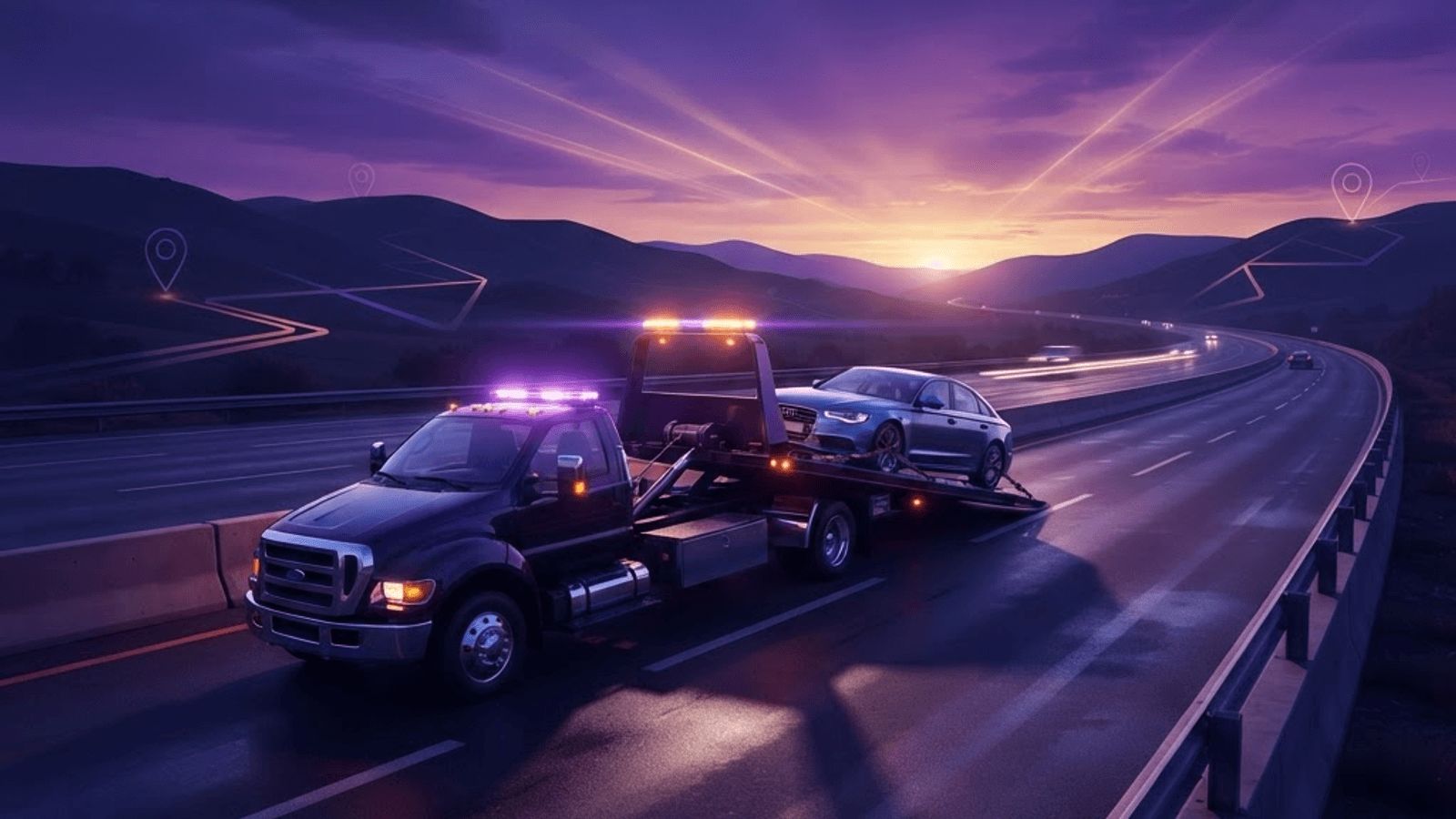
Understanding Towing Needs in Sonoma County
Santa Rosa's geography creates unusually varied towing demand. Highway 101 carries heavy commuter and commercial traffic through the city, generating frequent incident response calls. Rural roads through vineyard country and the coastal range mean recoveries in locations with limited access and no cell coverage. The region's agricultural and construction sectors add heavy equipment transport requirements. And a large population of classic and specialty vehicles means many tows require equipment that will not damage low-clearance or valuable cars.
Choosing a towing provider before you need one is the single best decision a driver can make. Roadside emergencies produce poor judgment, and that is exactly when predatory operators succeed. The categories below cover the services available across the region.
1. Light-Duty Flatbed Towing
Flatbed towing is the default standard for passenger vehicles. The entire vehicle rides on the bed with all four wheels off the ground, which eliminates drivetrain wear and prevents damage to all-wheel-drive systems, low front spoilers, and lowered suspension. For any modern vehicle, particularly all-wheel-drive and electric models, flatbed transport is the correct choice rather than a premium option.
2. Wheel-Lift Towing
Wheel-lift trucks use a hydraulic yoke under the drive wheels, lifting them clear while the other pair rolls. This equipment is more maneuverable than a flatbed, making it the practical option for parking structures, tight urban spaces, and dense downtown Santa Rosa locations. It is appropriate for many two-wheel-drive vehicles over short distances.
3. Heavy-Duty and Commercial Towing
Semi-trucks, buses, RVs, agricultural equipment, and construction machinery require rotator and heavy wrecker equipment with substantially greater lifting capacity. Heavy-duty operators need specialized training in load assessment and rigging, because an improperly secured heavy recovery creates serious safety risk. These services also handle commercial fleet breakdowns where cargo transfer may be necessary.
4. Motorcycle Transport
Motorcycles need dedicated equipment: wheel chocks, soft straps that will not damage forks or bodywork, and often a ramp system rather than a winch. Given Sonoma County's substantial riding community, several operators specialize in motorcycle recovery and understand how to secure a bike without stressing suspension components or scratching finishes.
5. Classic and Exotic Vehicle Transport
Collector vehicles demand enclosed transport and operators who understand low ground clearance, limited steering lock, and non-functional modern conveniences like electronic parking brakes. Specialists in this segment use extended ramps, soft tie-down systems, and often carry additional insurance coverage appropriate to vehicle value.
6. Off-Road and Winch Recovery
Sonoma County's unpaved ranch roads, vineyard access tracks, and coastal range trails generate genuine recovery calls. Winch-out services extract vehicles from mud, ditches, and embankments using controlled pulling techniques. Skilled operators assess anchor points and recovery angles carefully, because improvised recovery causes more vehicle damage than the original incident in many cases.
7. Accident and Incident Response
Collision recovery involves more than transport. Operators must clear debris, contain fluid spills, coordinate with law enforcement, and often work in active traffic lanes. Providers on official rotation lists with the California Highway Patrol meet specific equipment and training standards, which offers a useful quality signal for drivers choosing a service.
8. Roadside Assistance and Jump Starts
Many calls do not require towing at all. Battery jump starts, tire changes, fuel delivery, and lockout service resolve a large share of roadside problems on site. Providers offering both roadside assistance and towing can diagnose in the field and avoid unnecessary transport, which saves the customer money and time.
9. Long-Distance Vehicle Transport
Relocation, vehicle purchases, and seasonal moves create demand for interstate and long-distance transport. These services use multi-car carriers or dedicated enclosed trailers depending on value and requirements. Scheduling flexibility matters here, since carriers optimize routes and rigid timing increases cost substantially.
10. Electric Vehicle Towing
Electric vehicles introduce specific requirements. Most EVs cannot be towed with any wheels on the ground because the motors generate current when rotating, risking drivetrain and electronics damage. Flatbed transport is mandatory for nearly all models. Operators also need awareness of high-voltage system safety following collisions, including thermal event risk in damaged battery packs.
How to Verify a Towing Service
In California, tow operators must hold a motor carrier permit and maintain appropriate insurance. Ask for the company name and permit information when calling, and confirm the quoted price includes hookup fee, per-mile rate, and any after-hours surcharge before authorizing service. Legitimate operators provide clear pricing; vague answers are a warning sign.
Be particularly cautious with unsolicited tow trucks that appear at accident scenes without being called. California law restricts this practice, and drivers who accept such offers frequently face inflated charges and difficulty recovering their vehicle from storage. Always call a known provider, your insurer, or your auto club rather than accepting an unrequested offer.
Preparing Before You Need a Tow
Store two towing contacts in your phone: one primary provider and your roadside assistance program number. Keep your insurance card and vehicle registration accessible. Know your vehicle's towing requirements, particularly if it is all-wheel-drive or electric, so you can specify flatbed service when calling.
If a breakdown occurs on Highway 101 or another high-speed road, move the vehicle as far onto the shoulder as safely possible, activate hazard lights, and exit away from traffic. Waiting inside a vehicle in an active traffic lane is significantly more dangerous than waiting behind a barrier. Provide the dispatcher with a precise location using mile markers or cross streets, since rural Sonoma County addresses are often difficult to locate quickly.